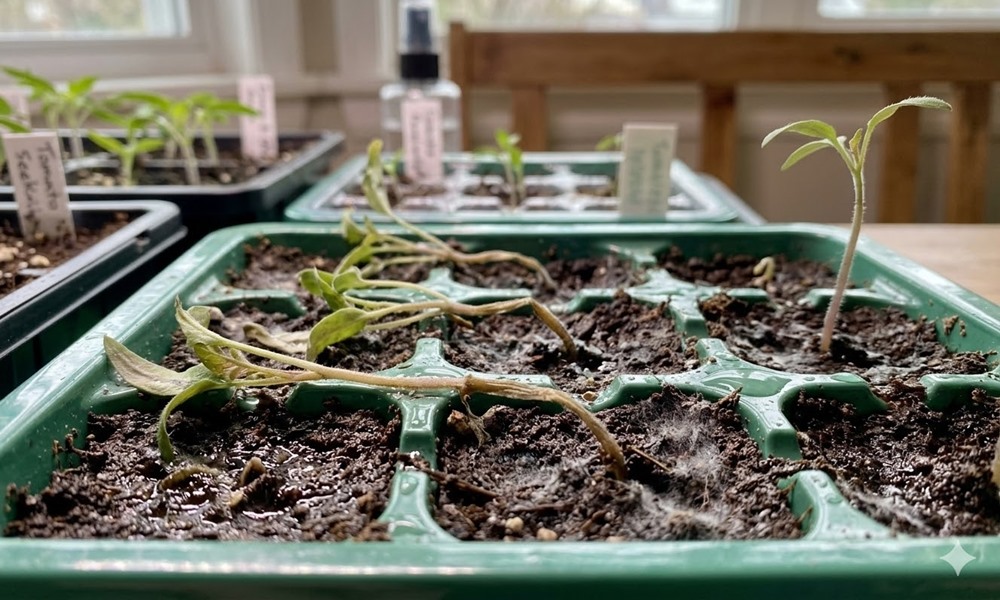

One of the most frustrating moments in seed starting comes when healthy-looking seedlings suddenly fall over and die. The evening before they seemed fine. By morning they are lying flat, their stems narrowed and weakened near the soil line. Many gardeners blame the seeds or assume they forgot to water properly. In reality, the problem is often the growing medium itself. The condition, composition, and handling of seed-starting mix can determine from the very beginning whether young plants survive or fail.
Contaminated Soil – Trouble Starts in the Tray
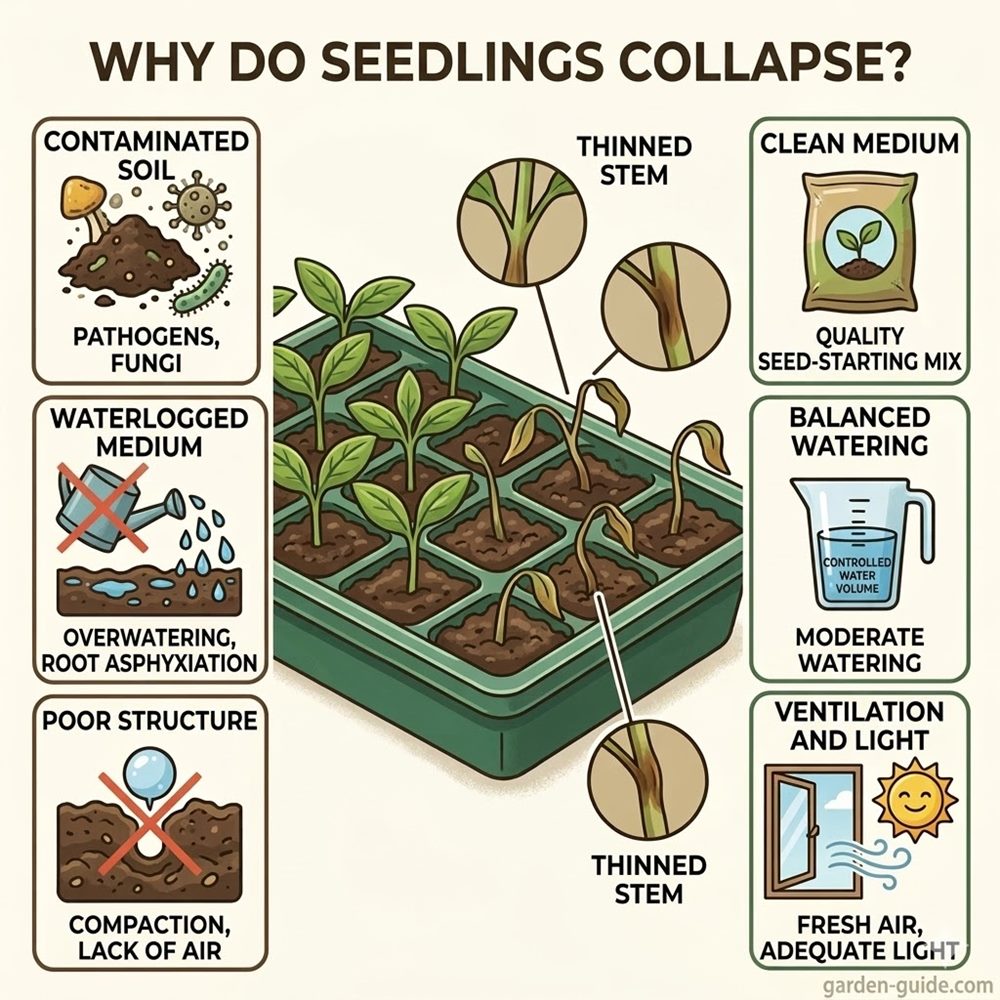
A major risk arises when seedlings are grown in contaminated or poorly prepared soil. Reused potting mix, ordinary garden soil, or old leftover compost may contain hidden problems.
These can include:
- fungal pathogens,
- bacteria,
- pest eggs,
- weed seeds.
Young seedlings are extremely vulnerable. Their roots and stems are not yet strong enough to cope with biological pressure from contaminated media. A proper seed-starting mix should be clean, airy, well-drained, and low in disease risk.
Overly Wet Growing Medium
Another classic mistake is overwatering. It feels logical to think that more water will help seeds germinate faster and seedlings grow better. But once the growing medium becomes waterlogged, oxygen levels around the roots drop sharply. This stresses the plants and creates ideal conditions for harmful microorganisms.
Excessively wet mix may lead to:
- root suffocation,
- fungal infections,
- slow or uneven growth.
Seed-starting mix should stay evenly moist, never saturated.
Damping-Off – The Sudden Collapse
Damping-off is one of the most common and frustrating seedling problems. It is usually caused by several soilborne pathogens acting together, especially in warm, humid, poorly ventilated conditions.
Typical symptoms include:
- thinning stems near the soil surface,
- water-soaked or brown lesions,
- sudden collapse of the seedling.
Once symptoms become visible, recovery is unlikely. By the time the plant falls, the damage is already severe.
Soil Structure Matters Too
Beyond cleanliness and moisture, physical structure is equally important. A medium that is too fine or compact prevents proper oxygen flow and root development.
The ideal seed-starting mix is:
- loose,
- well-draining,
- moisture-retentive without becoming soggy,
- fine-textured but not compacting.
Heavy clay soils or overly rich garden soils are not suitable for fragile seedlings.
Prevention Starts Early
Preventing seedling collapse depends on a few consistent practices:
- use clean, high-quality seed-starting mix,
- disinfect trays and containers,
- water moderately,
- ventilate regularly,
- provide adequate light.
Healthy seedlings do not need excessive care. They need stable, balanced conditions.
The Real Trap in Seed Starting
Many growers assume seedling loss is caused by rare disease or bad luck. Most often, however, the explanation is much more ordinary: poor soil, too much water, not enough air.
In seed starting, success often begins before the seeds even sprout. It starts when the containers are filled. The fate of a seedling is often decided by the growing medium long before the gardener notices anything above the surface.