


Spring pruning of roses often feels intimidating. Gardeners look at a dormant shrub and hesitate: which stems should be removed and which should remain? Most garden roses belong to the genus Rosa, and many of them actually benefit greatly from spring pruning. Proper pruning encourages strong new shoots, better airflow, and more balanced growth. The main goals of spring pruning are simple: remove winter damage, guide new growth and shape the plant.
Identifying Winter Damage
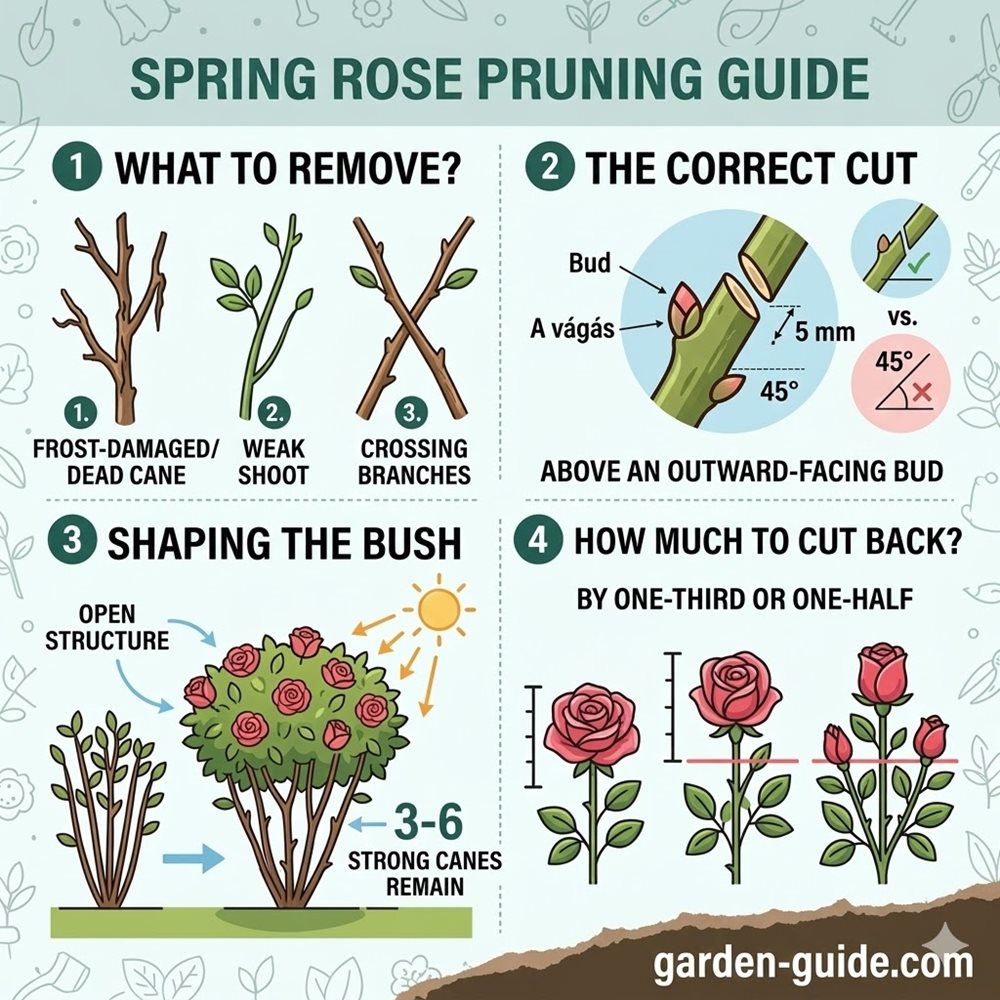
After winter, some rose canes may be partially or completely damaged by frost. Healthy stems reveal pale green tissue when cut. If the inside appears brown or grey, that section is dead and should be removed.
Signs of frost-damaged canes include:
- dark or blackened bark
- shriveled stems
- brittle branches
Cut back the cane gradually until healthy tissue becomes visible.
Pruning Above a Bud
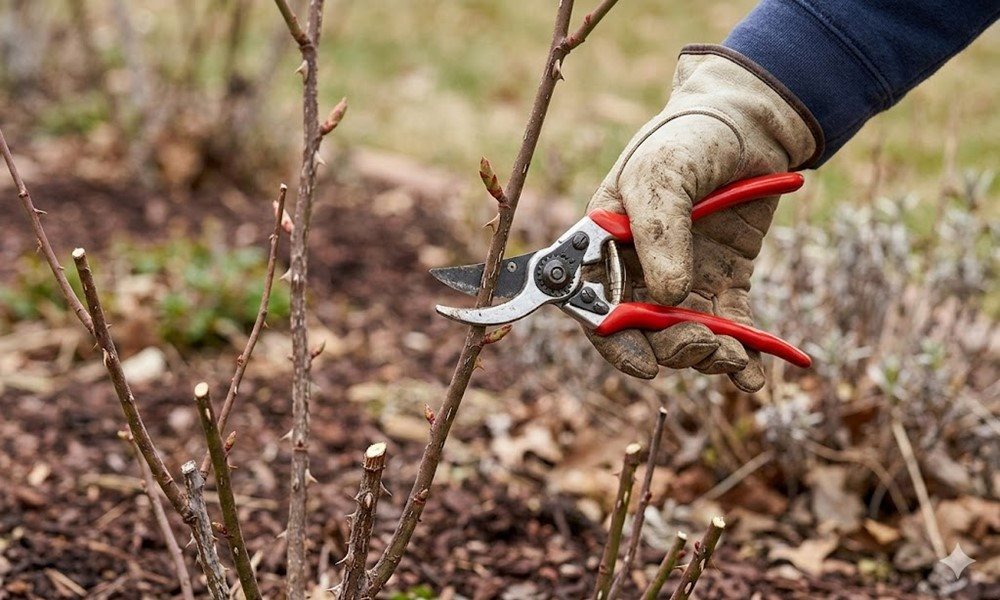
One of the key techniques in rose pruning is cutting just above a bud. Ideally the cut should be made above a bud that faces outward from the center of the shrub. This encourages the new shoot to grow away from the middle of the plant and helps maintain an open structure.
A correct cut usually follows three principles:
- the cut sits about half a centimeter above the bud
- the cut surface is slightly angled
- the slope directs water away from the bud
Shaping the Rose Bush
Pruning is not only about removing damaged wood. It also helps shape the plant. A healthy rose bush typically has an open center that allows light and air to move through the plant. This reduces the risk of disease and encourages stronger flowering shoots.
When shaping the shrub, gardeners usually remove:
- inward-growing stems
- crossing branches
- very thin or weak shoots
After pruning, many bush roses are left with three to six strong main canes.
How Hard Should Roses Be Pruned?
The intensity of pruning depends on the type of rose and the overall vigor of the plant. Hard pruning tends to produce fewer but stronger shoots and often larger flowers. Lighter pruning produces more shoots but sometimes smaller blooms. For many garden roses, shortening stems by about one-third to one-half provides a balanced result.
The Most Common Spring Mistake
Many gardeners are afraid of cutting too much, so they remove only the tips of the stems. This often leads to tall, sparse plants with fewer flowers. Roses generally respond better to confident pruning than to hesitant trimming.
Roses Are Remarkably Resilient
Most roses recover quickly from pruning. Even if the cut is slightly stronger than intended, the plant usually responds with vigorous new growth.
The real problem arises when roses are not pruned at all for several years. With proper spring pruning, roses often reward gardeners with healthier growth and a more impressive flowering display.