
By September 28, many northern gardens are changing pace. The soil may still be warm enough for roots to grow, even as flowers fade and the first leaves begin to fall. In the Southern Hemisphere, the same date brings the opposite turn: spring growth gathering speed.
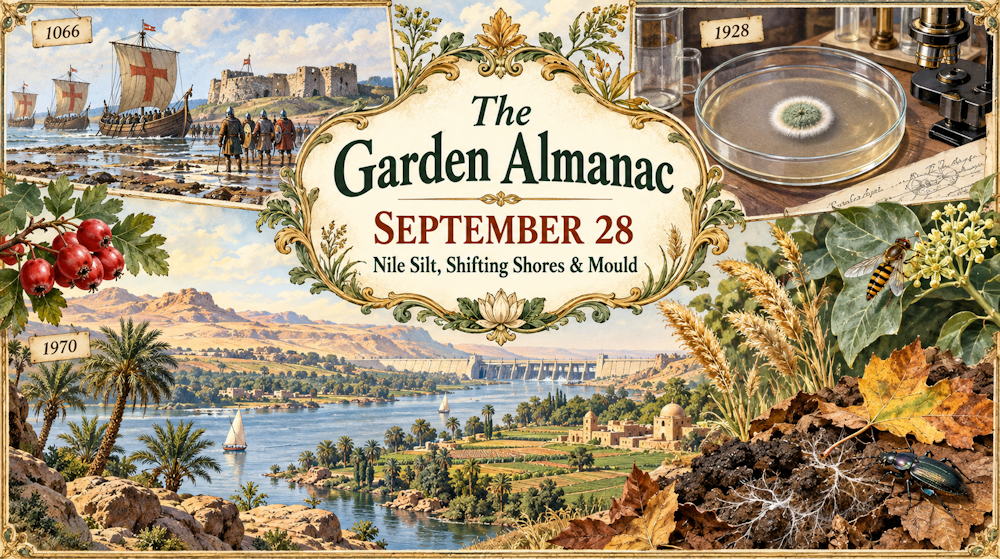
This day also opens three unexpected views of the ground beneath our feet. A river shaped farmland, a coastline changed around a historic landing place, and a patch of mould revealed how much life goes unnoticed. Each story offers a practical reason to look more closely at a garden today.
1970 – Nasser’s Nile and the Question of What Water Carries
Egyptian president Gamal Abdel Nasser died on September 28, 1970. One of the defining projects of his presidency, the Aswan High Dam, had been completed that year. Its purpose was ambitious: to reduce destructive flooding, store water for dry periods, generate electricity and make irrigation more dependable.
For centuries, the Nile’s seasonal floods had brought water and fine sediment onto farmland. The dam changed that rhythm. Farmers gained a more reliable water supply, but much of the sediment that once travelled downstream settled in the reservoir instead. It is a reminder that a river carries more than water – it also moves material that helps shape soils, deltas and habitats.
Reliable irrigation has its own demands. In parts of Egypt, keeping land watered throughout the year made drainage and soil salinity especially important. When water evaporates from poorly drained ground, dissolved salts can remain near the surface and make it harder for plants to take up water. The lesson is wider than any one river valley: adding water helps only when roots have air and excess water has somewhere to go.
A garden offers a small, useful way to see this. After rain or irrigation, check how long a bed stays wet below the surface. If it remains soggy while neighbouring soil drains, more watering is unlikely to help a struggling plant. Improve the soil’s structure with organic matter where appropriate, keep its surface protected, and choose plants suited to the site’s drainage rather than treating every patch as though it were the same.
Garden Science – Why can a well-watered plant still wilt?
Roots need oxygen as well as moisture. When soil stays waterlogged, its air spaces fill with water and roots may struggle to function. Check the soil a few centimetres down before watering again; a damp surface alone does not tell you what is happening around the roots.
1066 – The Shoreline That Moved Away from Pevensey
On September 28, 1066, William of Normandy’s fleet landed at Pevensey on the south coast of England. The place looks different to visitors today. The sea once came much closer to the old fort; over the centuries, sediment accumulated and people drained and reclaimed parts of the surrounding marshland.
That changing shoreline is the most revealing part of the story for a nature lover. The Pevensey Levels are still a wetland landscape, crossed by ditches and shaped by water management. What appears to be settled ground on a modern map has a long history of tidal water, deposition and human decisions about where water may flow.
The same principle applies at garden scale. A low spot that collects rain, a former pond filled in years ago or a strip of heavy soil can retain its character long after its history has been forgotten. Watch a site during a downpour before redesigning it. The places where water lingers may suit moisture-loving plants; they are less promising for bulbs that require free-draining soil.
What to Observe Right Now – Where does rain go?
- Notice which beds dry first and which remain damp a day later.
- Look for leaves or fine soil washed into the same corner after each shower.
- Compare plants growing only a few metres apart. Their different vigour may reveal a change in drainage or shelter.
1928 – Fleming’s Mould and the Life We Cannot See
On September 28, 1928, Alexander Fleming observed that a mould on one of his laboratory plates had left a clear area where bacteria had failed to grow. The observation led to penicillin, though turning it into a usable medicine required years of further research. Its gardening connection is the wider insight behind that small, clear circle: microorganisms interact, compete and change the places in which they live.
Autumn makes some of this hidden activity easier to notice. Fallen leaves and dead stems become food for decomposer fungi and other organisms. As they break plant material down, nutrients return to the soil and organic matter develops. A pale network beneath a leaf pile can be part of that ordinary process, although a visible mould alone cannot tell you which species is present or whether a diseased plant is safe to compost.
For a gardener, the useful distinction is between decomposition where it belongs and disease on living plants. Save healthy fallen leaves for leaf mould or use them beneath shrubs. Remove clearly diseased plant material when its disease could persist and spread, and clean tools after working with affected plants. There is room for a lively soil community alongside sensible garden hygiene.
Wildlife Note – Who benefits from a less thorough autumn tidy-up?
Leaves gathered beneath shrubs can shelter ground-dwelling insects, while standing stems and seedheads offer cover and food as the season changes. Keep paths clear where needed, but leave some quiet corners undisturbed. A garden can look cared for without being cleared bare.
Garden Reminder – Useful Jobs for Late September
In temperate Northern Hemisphere gardens, this is a good moment to work with the warmth still held in the soil:
- Plant spring-flowering bulbs such as daffodils and crocuses in suitable, well-drained ground. Check the planting guidance for each species; tulips are often planted later in autumn.
- Set out hardy perennials where autumn planting suits your climate and soil. Water them in, then check moisture around the roots while they establish.
- Start a leaf-mould pile as leaves fall. Keep the leaves contained and lightly moist, then allow time for fungi to do the slow work.
- Leave some flowers to set seed. Keep a selection of sound seedheads standing for wildlife and winter structure, while clearing plants affected by persistent disease.
In Southern Hemisphere gardens, use the same habit of observation for spring conditions: check whether new growth needs water, and respond to the drainage, weather and plants in front of you.
Looking Ahead
September 28 is a reminder that a garden is shaped by movements we do not always see: water through soil, sediment across a landscape, and fungi at work beneath fallen leaves. Watching those processes before intervening leads to better choices than watering, digging or clearing on a fixed schedule. A few minutes spent checking drainage, noticing wildlife and leaving useful organic matter in place can make next season’s garden healthier.