


Early September is a season of arrivals and departures. Seeds loosen in their pods, migrating birds begin to gather, harvest baskets fill, and gardeners quietly take stock of what the year has produced.
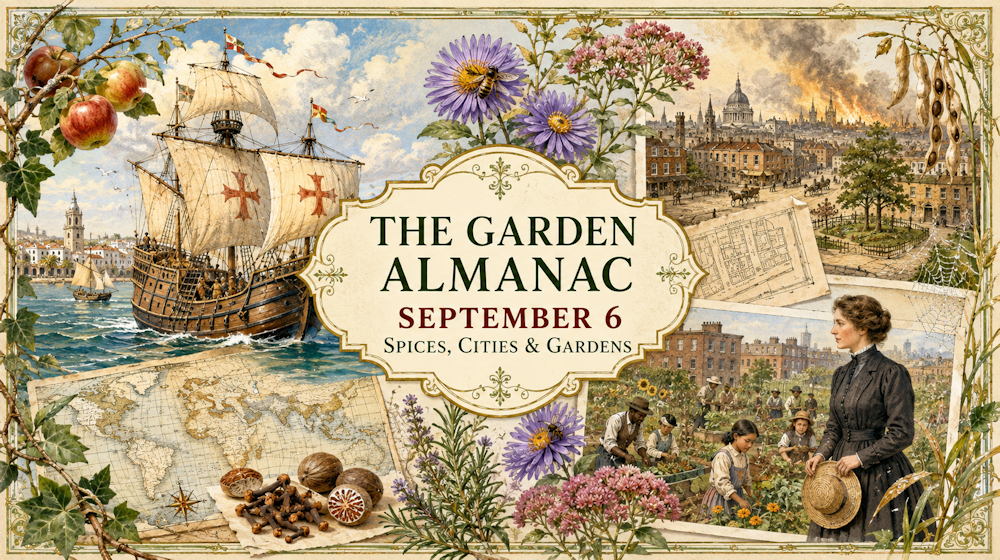
In the Garden Almanac, September 6 carries that sense of movement on a much larger scale. On this day, a battered ship completed the first voyage around the world, the last flames of a great urban fire were extinguished, and a future social reformer was born whose work would help turn neglected city land into gardens.
September 6, 1522 – The Spice Ship That Encircled the Earth
On September 6, 1522, the Victoria reached Sanlúcar de Barrameda in Spain after completing the first circumnavigation of the globe. The expedition had left the same port almost three years earlier with five ships and more than 250 people. Only one vessel returned, commanded on its final stages by Juan Sebastián Elcano, with just 18 surviving European crew members aboard.
The voyage had been planned primarily to find a western route to the Spice Islands. Cloves were among its most valuable cargo – dried flower buds from a tropical tree native to the Maluku Islands. Nutmeg, mace, pepper and other plant products were not merely kitchen ingredients in sixteenth-century Europe; they were coveted commodities capable of shaping trade routes, financing expeditions and provoking imperial conflict.
The Victoria’s return also marked a turning point in the human movement of plants. Oceans no longer appeared to separate completely isolated worlds. Crops, seeds and botanical knowledge would travel ever greater distances, transforming diets and agriculture – but also carrying weeds, pests, diseases and invasive species into ecosystems that had not evolved alongside them.
For today’s gardener, this history is present in almost every vegetable bed. Tomatoes and beans originated in the Americas, many brassicas were shaped in Europe, aubergines were domesticated in Asia, and numerous familiar herbs followed old trading networks. A garden can be wonderfully international, but moving living plants still demands care: locally produced, healthy stock is generally a safer choice than unregulated material carried across borders.
Garden Science – Why can moving one plant change an ecosystem?
Plants rarely travel alone. Soil around their roots may contain insects, nematodes, fungi, bacteria or seeds too small to notice. In a new environment, some organisms arrive without the predators and competitors that controlled them in their native range. This is why plant-health inspections, clean tools and responsible sourcing are important parts of modern gardening rather than unnecessary bureaucracy.
September 6, 1666 – When London’s Longest Night Finally Ended
By September 6, 1666, the Great Fire of London had finally been extinguished after devastating much of the medieval City. The flames had moved rapidly through densely packed streets lined with timber buildings, while stores of hay, pitch, oil and other combustible materials fed the fire. Thousands of houses and dozens of churches had been destroyed.
The disaster prompted new rules governing construction, including greater use of brick and stone. John Evelyn – a writer, gardener and keen observer of trees – proposed rebuilding London with broad streets and large public squares. His complete plan was never adopted, but its underlying idea remains strikingly modern: the arrangement of buildings, streets and open land can make a city healthier, safer and more pleasant.
Gardens cannot stop every wildfire, but thoughtful planting can reduce risks around a home. Remove dead stems and accumulated dry leaves from beside buildings, keep gutters clear, prune branches that touch roofs, and avoid storing firewood against exterior walls. In dry climates or during prolonged drought, well-spaced plants and maintained paths can also interrupt continuous stretches of flammable vegetation.
Seasonal Tips – What should be cleared from the garden in early September?
- Remove dry plant material that is touching sheds, fences or the house.
- Clear fallen leaves from drains, gutters and wooden steps.
- Cut out dead or diseased branches, but leave healthy seed heads where they pose no fire or disease risk.
- Move firewood and piles of dry prunings away from buildings.
- Water newly planted trees deeply so that their developing root zones do not dry out.
A perfectly tidy garden is not necessarily the safest or most wildlife-friendly one. The useful distinction is between hazardous debris and functioning habitat. Dry material accumulated against a wooden wall should be removed, while a small log pile in a shaded corner can support beetles, fungi and other decomposers without creating the same immediate risk.
September 6, 1860 – Jane Addams and the Garden as Common Ground
Jane Addams was born in Illinois on September 6, 1860. In 1889, she and Ellen Gates Starr established Hull House in a densely populated immigrant neighbourhood of Chicago. It became a centre for education, childcare, cultural activity and social reform, built around the belief that city residents deserved opportunities to learn, meet and shape their own surroundings.
Gardening became part of that work. Hull House helped coordinate vacant-lot cultivation at a time when industrial expansion and crowded housing left many working families without access to land. Gardeners used overlooked ground to grow food, preserve skills brought from other countries and create healthier outdoor spaces. Rooftop and open-air activities also gave children contact with sunlight, plants and seasonal change.
The lesson reaches far beyond one institution. A community garden is not defined only by how many kilograms of produce it yields. It can conserve culturally important crops, share practical knowledge between generations, provide nectar for insects and allow people without private gardens to participate in cultivation. Anyone helping to start such a space should first ask who can reach it, who can use the tools and water, and who is included in decisions about what will be grown.
Garden Inspiration – How can a shared garden welcome more people?
- Provide beds at different heights for gardeners with limited mobility.
- Keep some paths wide, firm and easy to navigate.
- Label plants with both common and botanical names – and, where useful, in community languages.
- Grow crops connected with the food traditions of local residents.
- Create a clearly shared area for herbs, pollinator plants or surplus produce.
Wildlife Note – Who Is Still Visiting September Flowers?
Early September is not the end of the pollinator season. In temperate gardens, late-flowering asters, sedums, ivy, single-flowered dahlias and herbs allowed to bloom can provide nectar when many summer flowers are fading. Butterflies may feed intensely on warm afternoons, while queen bumblebees build energy reserves before seeking places to overwinter.
Avoid cutting every flowering stem at once. Remove diseased growth, but leave some sound stems and seed heads standing through autumn. Their hollow interiors, sheltered joints and surrounding leaf litter can provide hiding or overwintering places for insects, while the seeds feed birds later in the season.
Garden Reminder – What Can You Do in the Garden This Week?
September often combines warm soil with cooler, more reliable air temperatures, making it a useful planting period in many temperate regions.
- Plant spring-flowering bulbs at the depth recommended for each species.
- Divide congested clumps of established perennials once flowering has finished.
- Collect ripe seeds only on a dry day and label them immediately.
- Continue watering recently planted shrubs and trees – light rain may not reach their deeper roots.
- Harvest damaged or overripe fruit promptly to reduce disease and wasp problems.
- Start a leaf-mould pile as soon as deciduous leaves begin to fall.
Check local conditions before transplanting. Where September remains hot or dry, waiting for cooler weather may be kinder to plants than following a fixed calendar date.
What to Observe Right Now – The First Signs of Seasonal Change
Look beyond autumn colour, which may still be weeks away. The season usually announces itself through smaller changes first: shadows lengthen, dew remains on leaves later in the morning, spider webs become more visible, and some plants begin redirecting energy from flowers into fruit and seed.
Notice which parts of the garden stay warm after sunset and which collect cool air overnight. Watch where birds pause before approaching a feeder or berrying shrub. Observe which late flowers still attract insects. These details can guide future decisions about frost-sensitive planting, wildlife shelter and the best positions for plants that need either warmth or moisture.
Looking Ahead
September 6 reminds us that gardens are shaped by movement, design and access. Plants crossing oceans can enrich human life or disturb ecosystems; cities can rebuild with greater resilience; and overlooked ground can become a source of food, habitat and community. The future of gardening lies not in closing the gate, but in making thoughtful choices about what we introduce, what we protect and whom we invite to take part. Every healthy plant, carefully managed boundary and genuinely shared growing space can help create a more resilient landscape.