
By mid-August, a garden can look wonderfully abundant and slightly exhausted at the same time. Seed heads are forming beside ripening fruit, dry soil is asking for attention, and the first hints of seasonal change can be found beneath summer’s fullest growth.
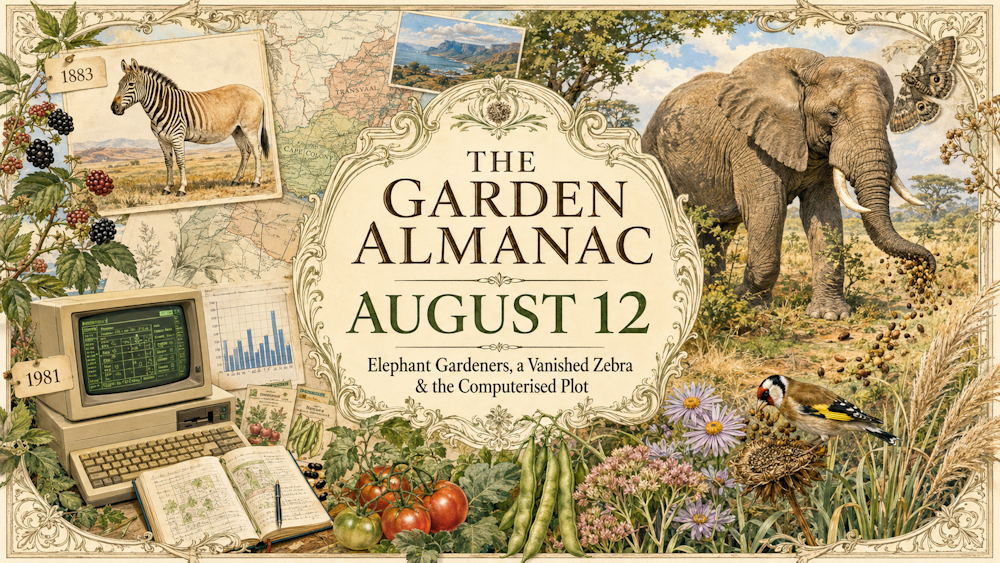
August 12 opens three very different doors onto that living landscape. It is a day for celebrating the largest gardeners on Earth, remembering an extinction that went unnoticed as it happened, and considering how a beige box unveiled in a New York hotel eventually changed the way ordinary growers observe, record and share what happens outdoors.
August 12, 2012 – World Elephant Day and the Planet’s Largest Gardeners
World Elephant Day was launched on August 12, 2012, through a collaboration between Canadian filmmaker Patricia Sims and Thailand’s Elephant Reintroduction Foundation. Its purpose was urgent and international: to draw attention to the pressures facing Asian and African elephants, including habitat loss, poaching and conflict with people. Yet the day also illuminates something easily missed when elephants are discussed only as endangered animals – they are powerful makers of landscapes.
An elephant does not move delicately through vegetation. It opens paths, breaks branches, strips bark, digs in dry ground and carries fruit seeds over long distances before depositing them in dung rich in organic matter. In forests, elephants can help large-fruited trees reproduce far from their parent plants. In savannas, their feeding changes the balance between woody growth and grassland, producing a mosaic of habitats used by many other species.
This is gardening on an ecological scale. Elephants demonstrate that disturbance is not always destruction: browsing, trampling, decay and seed movement can generate new niches when they occur as part of a functioning ecosystem. A garden benefits from the same principle in miniature. Uniformly clipped, continuously tidy ground supports fewer forms of life than a varied plot containing tall plants, low cover, open soil, leaf litter, water and decaying wood.
The practical lesson is not to imitate an elephant with a pruning saw, but to design for movement and variety. Connect flower beds with hedges, climbers or unmown strips so insects and small animals can travel safely. Allow some fruit and seed heads to remain, and leave a few sheltered places where organic matter can break down. The healthiest garden is not a frozen arrangement of plants – it is a network through which seeds, nutrients and wildlife can move.
Garden Science – Why does animal seed dispersal matter?
A seed that falls directly beneath its parent must compete for light, water and nutrients and may encounter the same pests and diseases. Animals carry seeds into new conditions, helping plants colonise suitable ground and maintain genetic exchange between populations. Gardeners can echo this process by collecting ripe seed from several healthy plants, mixing the seed before sowing, and avoiding repeated propagation from only one individual.
August 12, 1883 – The Quagga Disappears Before Anyone Notices
On August 12, 1883, the last known quagga died at Amsterdam’s Artis zoo. This South African relative of the plains zebra had dark stripes across its head and forequarters, fading towards a largely unstriped brown rear. Hunting had already eliminated it from the wild, but the animal’s passing was not immediately recognised as an extinction – people still assumed that other quaggas might survive somewhere beyond the areas they knew well.
The tragedy was intensified by a problem of names and attention. The word quagga had often been used loosely for zebras in general, obscuring the fact that a distinct regional form was disappearing. Later genetic work made the quagga the first extinct animal to have its DNA studied and established its close relationship to the plains zebra, but science could describe only what conservation had failed to retain: a unique population shaped by the grasslands of southern Africa.
For gardeners, the quagga offers a sharp lesson in noticing difference before it is lost. A familiar-looking bee may be one of several species, and an old local bean may hold traits absent from commercial seed. Record what grows and visits, photograph unusual insects, exchange regionally adapted seed where lawful, and keep several plants when saving an open-pollinated variety. Biodiversity is not merely a high count of organisms – it also resides in the variation within a species, and that variation can disappear quietly.
Wildlife Note – How can you make a garden easier to survey?
Choose one small area and observe it for ten minutes at roughly the same time each week. Note flowering plants, pollinator visits, birds, signs of feeding and any newly ripened seed. Consistent records reveal changes that casual glances miss, while photographs allow uncertain species to be checked later without disturbing them.
August 12, 1981 – When the Personal Computer Reached the Garden Gate
On August 12, 1981, IBM unveiled its Model 5150 personal computer at the Waldorf Astoria in New York. The basic machine had 16 kilobytes of memory and no disk drive, but its architecture helped establish a widely adopted personal-computing standard. What had largely belonged to institutions and specialist workplaces was beginning to become an everyday tool.
The garden connection arrived gradually but profoundly. Personal computers made it practical to store planting records, calculate costs and analyse harvests; networks later put weather data, plant databases and specialist growers within reach of a home gardener. Today, a phone can identify a frost warning, display rainfall totals or hold years of photographs from the same fruit tree – capabilities that descend from the shift towards personal access to computing.
Technology is most useful when it sharpens observation rather than replacing it. Start a simple garden record with dates for sowing, germination, first flowering and harvest, plus rainfall or unusual heat. After several seasons, those entries become more valuable than a generic calendar because they reveal the behaviour of plants in your own soil and microclimate. Record only information you expect to compare – a modest, consistent log will teach you more than a complicated system abandoned after a fortnight.
Garden Reminder – What should you do in the mid-August garden?
- Water deeply at soil level in the cool of morning, concentrating on containers, recently planted specimens and fruiting crops rather than sprinkling the whole garden lightly.
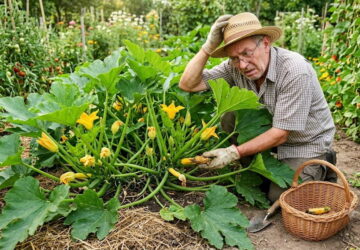
- Harvest courgettes, beans, cucumbers and tomatoes frequently so plants continue producing and overripe fruit does not conceal disease or pests.
- Sow quick crops such as radish and leafy salads where late-summer heat is easing, and choose varieties suited to shortening days.
- Stop feeding tender perennial growth with high-nitrogen fertiliser where autumn arrives early – soft new shoots are more vulnerable to cold.
- Leave healthy seed heads on selected flowers for birds and self-sowing, but remove diseased foliage instead of adding it to a casual cool compost heap.
What to Observe Right Now – Where Is the Season Beginning to Turn?
- Look for shorter shadows and notice which beds now lose direct sun earlier in the day.
- Watch seed-eating birds investigate sunflowers, grasses and other ripening heads.
- Check whether bees are shifting from fading summer flowers to ivy, sedum, asters or other later sources of nectar in your region.
- Compare soil beneath mulch with adjacent bare ground after a hot afternoon – the difference in moisture and temperature may be immediately apparent.
- Listen after dusk for the insects and bats that become active when daytime pollinators settle.
These observations are not another list of chores. They are signs that the garden’s calendar is written in light, moisture, flowering and animal behaviour, and that its dates vary with latitude, altitude and local weather.
Looking Ahead
August 12 reminds us that good gardening begins with seeing relationships: elephants carrying forests into the future, a vanished grazer revealing the value of variation, and careful records turning one season into knowledge for the next. We may work on much smaller ground, but we can still create connected habitats, preserve diversity and notice change before it becomes loss. Leave room for movement, keep records that matter and let at least part of the garden remain richly alive. Those are modest actions, but the landscapes of the future will be built from many such decisions.