


Hügel culture is one of those gardening methods that almost everyone has heard of, many have tried, and just as many have misunderstood. Some see it as a miracle solution, others as a pointless pile of wood and soil. As usual, the truth lies somewhere in between.
This article is for beginners who want to understand what actually happens inside a hügel bed, why it works, when it doesn’t, and what expectations are realistic.
What Hügel Culture Really Is
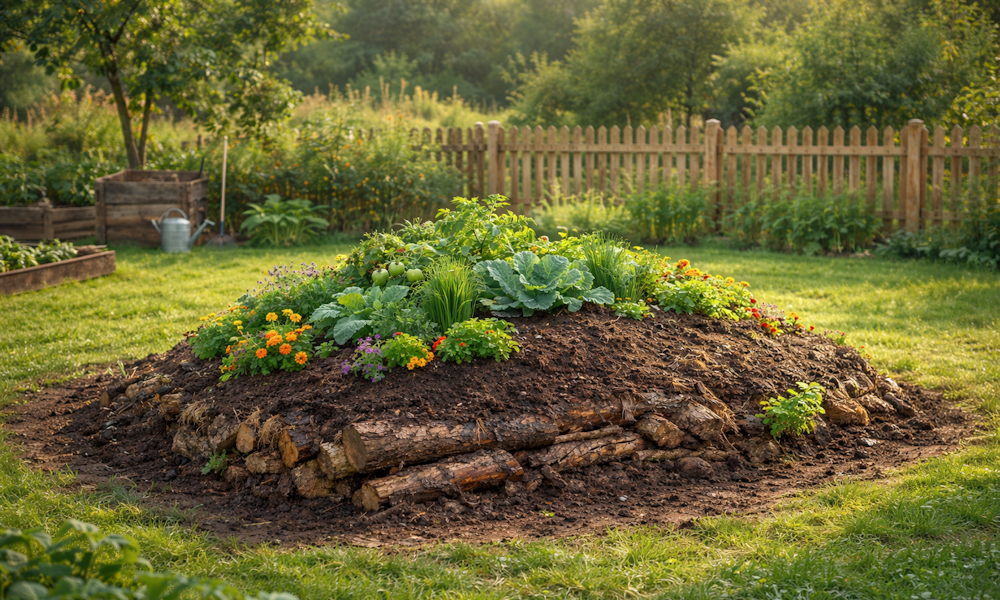
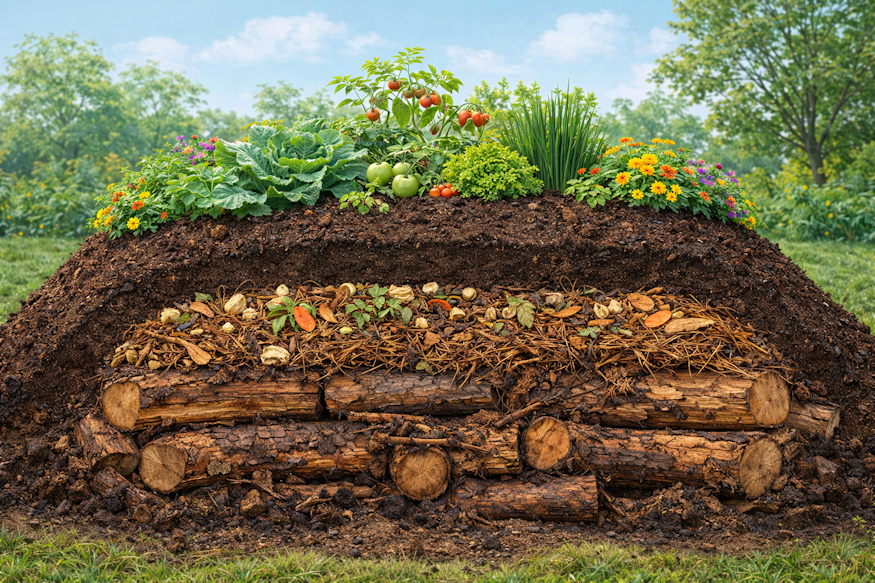
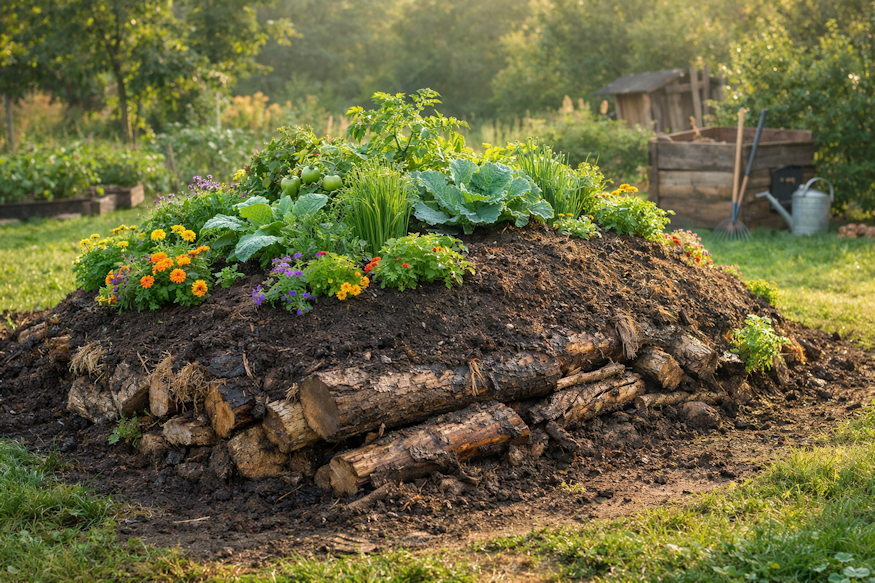
Hügel culture is a raised planting system built around buried wood. Logs and branches form the core, layered with organic matter and topped with soil. It is not compost, not a standard raised bed, and not forest debris—it is a slow, living system.
The key is decomposition. As the wood breaks down, it stores water, generates heat, improves soil structure, and releases nutrients gradually. Hügel beds are designed for long-term performance, not instant results.
Where Hügel Culture Comes From
Hügel culture is not a modern invention, nor did it originate as an online gardening trend. Its roots reach back to traditional Central European land-use practices, especially in German-speaking regions. The term “Hügelkultur” literally means mound culture, and variations of the method were already used in the 19th century.
Originally, it was a practical response to difficult conditions rather than a theory. In forest-edge landscapes, woody debris was not burned or removed but buried to improve poor soils and retain moisture. What we now describe as a sustainable system was once simply practical common sense.
The method gained renewed attention in the late 20th century alongside the rise of ecological farming and permaculture. At that point, it was named, systematized, and—inevitably—sometimes oversold.
Why It Works: The Biology Inside the Bed
Once buried, wood becomes food for fungi, bacteria, and soil organisms. This process:
- retains moisture,
- produces heat,
- improves soil structure,
- and slowly feeds plants.
This is why established hügel beds often require less watering and provide more stable growing conditions than flat soil.
What Hügel Culture Does Not Do
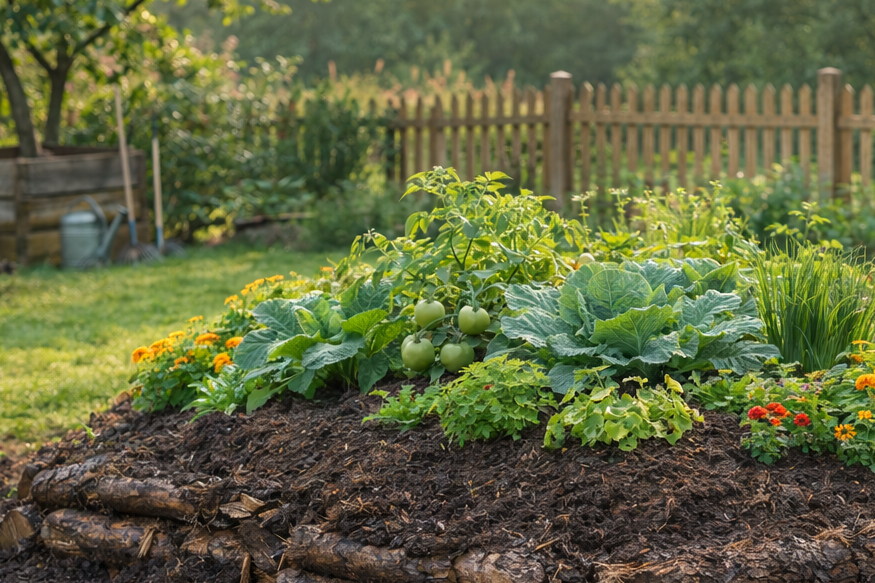
Hügel beds are not magic. They do not fix poor light, bad placement, or unsuitable crops. The first year is often about adjustment rather than abundance.
The real benefits appear over time. Gardeners expecting immediate miracles are often disappointed; those who think in systems usually are not.
Common Beginner Mistakes
Many hügel beds fail because they are built too small, filled with unsuitable wood, or treated as static structures. Hügel beds settle, change, and evolve.
They work best when thoughtfully layered and matched to the garden’s conditions.
Where Hügel Culture Makes Sense
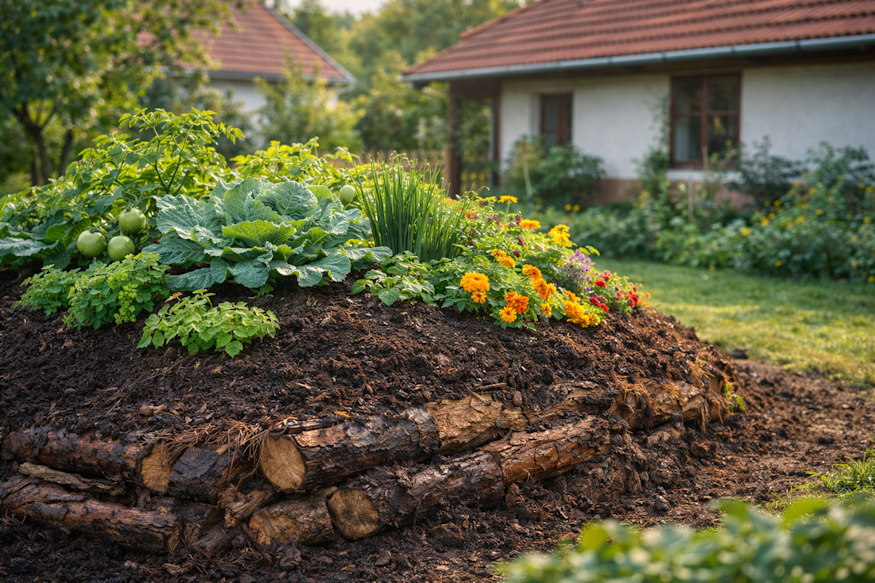
Hügel beds are especially useful in dry climates, on slopes, in poor soils, or where woody garden waste is abundant. They are less suitable in areas with high groundwater, constant saturation, or extremely limited space.
What to Keep in Mind
Hügel culture is not a trend—it is a way of thinking. It shifts the focus from control to cooperation with natural processes. Slower, yes—but often far more resilient.
For beginners, understanding why things happen matters more than getting everything perfect. The rest follows with time.