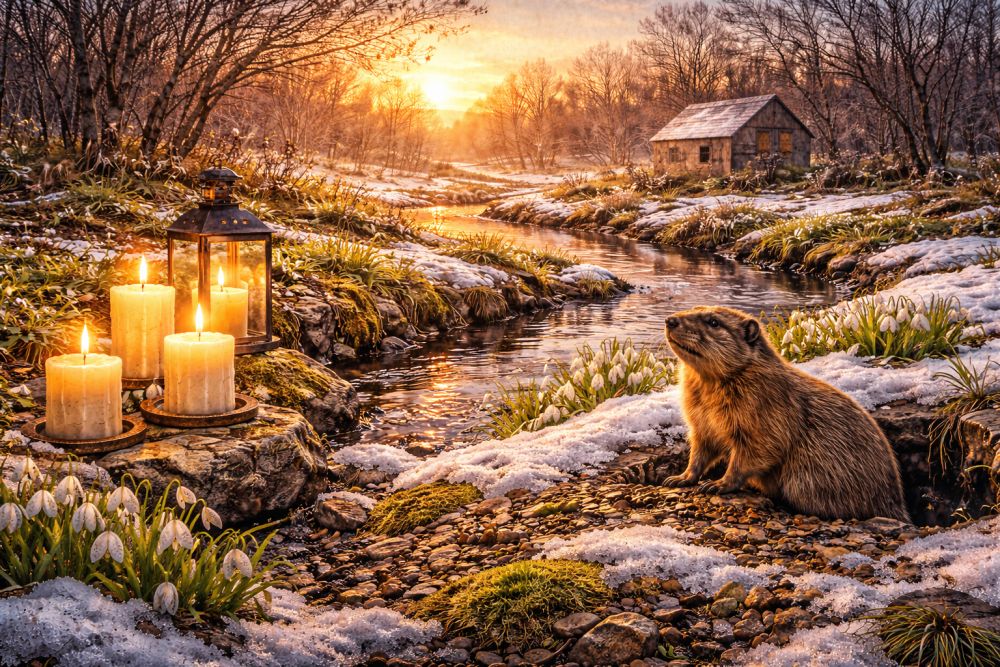

February 2 stands at one of the most symbol‑heavy points of the year. Across continents and traditions, this day gathers light, water, and weather into a shared language — one that has always spoken clearly to people who worked the land and watched plants closely.
Candlemas and the Measuring of Light
In Western Christianity, February 2 is known as the Feast of the Presentation of Jesus at the Temple, more widely remembered as Candlemas . Historically, it marked the blessing of candles for the coming year — a practical and symbolic act at once. Candles were not merely devotional objects; they were tools for surviving long evenings, tending animals, and working indoors while the land lay dormant.
For gardeners, Candlemas carried a clear meaning: light had returned far enough to be counted. From this point on, the lengthening of days became reliable, no longer theoretical. Many rural calendars treated Candlemas as a moment to assess stores, tools, and the condition of trees and hedges.
Weather Lore and Groundhog Day
February 2 is also famous for its weather lore. In Europe, Candlemas sayings often focused on sun and shadow, asking whether winter would tighten its grip or begin to loosen. In North America, this tradition survives as Groundhog Day, a playful but persistent echo of older European beliefs about light, shadow, and seasonal timing.
In garden terms, this was never a forecast of warmth, but of duration. A bright day did not promise early planting — it warned of a longer wait. Cloud and snow, paradoxically, were often read as signs of an earlier release.
Water, Thaw, and the Hidden Landscape
Beyond light, February 2 is deeply tied to water. In several traditions, including the celebration of Our Lady of the Candles and the Virgin of Candelaria, protection extended to travelers, sailors, and those dependent on safe passage — a reminder of water’s power and unpredictability at this time of year.
This connection finds a modern echo in World Wetlands Day, observed on February 2. Wetlands play a crucial role in storing winter water, buffering floods, and supporting early‑season life. For gardeners and farmers, these landscapes quietly determine how soil will behave once thaw begins: whether it drains gently, holds moisture, or turns destructive.
Plants at the Threshold
Above ground, February gardens remain restrained. Buds are set but sealed. Perennials hold tight to their crowns. Yet underground, changes are underway. Soil organisms respond to increasing light and marginal temperature shifts. Roots begin to transition from storage to readiness.
Candlemas was often seen as the point when cutting wood should slow and observation should increase. From now on, every warm spell mattered — not as an invitation to act, but as information.
A Day of Balance, Not Victory
Unlike later spring markers, February 2 does not celebrate triumph over winter. Even historic events remembered on this date, such as the end of the Battle of Stalingrad, underline endurance rather than sudden reversal.
The seasonal message is similar. Winter has not ended. But its dominance is no longer absolute.
What February 2 Reminds Us
February 2 teaches attention. It asks us to measure light, watch water, and respect thresholds. In gardens and natural landscapes, this is the moment when patience becomes informed rather than blind.
The candles are lit not because darkness has gone — but because we now know how it will leave.