
Eggplant brings a touch of Mediterranean drama to the vegetable garden, with glossy fruits that look ready for grilling, roasting or turning into a silky dip. But this elegant crop is also a little demanding: it wants warmth, sun, fertile soil and thoughtful care.
Choosing the right neighbors can help eggplant settle into the garden more comfortably. Companion planting will not solve every problem, but it can support pollinators, improve the use of space and create a healthier, more diverse vegetable bed.
What Eggplant Needs First
Before thinking about companion plants, it helps to understand what eggplant itself is asking for.
Eggplant (Solanum melongena) is a warm-season crop that grows best in a sunny, sheltered position with fertile, well-drained soil. It dislikes cold conditions, waterlogged ground and long periods of stress, especially when young.
It also belongs to the nightshade family, along with tomatoes, peppers and potatoes. That matters because closely related crops can share some of the same pests and diseases. In practice, this means eggplant should not be crowded too closely with its relatives, and crop rotation is especially important from year to year.
Basil: A Natural Kitchen Garden Partner
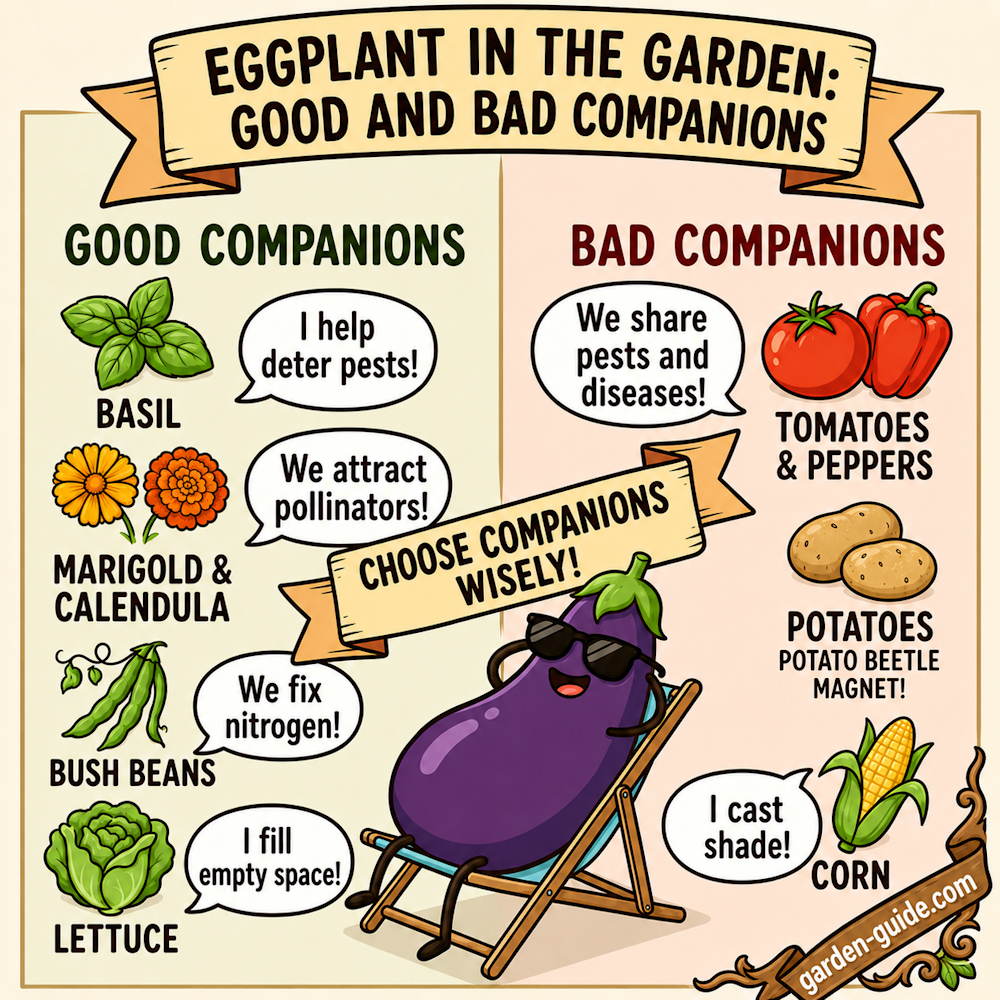
Basil is one of the most natural companions for eggplant. Both plants enjoy warm weather, and they look beautiful together in a sunny vegetable bed or raised bed.
When basil is allowed to flower, it can also attract pollinators and other beneficial insects. And although flavor is not a botanical argument, eggplant and basil are such a good pairing in the kitchen that many gardeners like growing them side by side.
Plant basil near eggplant, but avoid letting it crowd the base of the plant. Eggplant still needs airflow around its stems and leaves, especially in humid weather.
Marigolds and Calendula: Colorful Allies
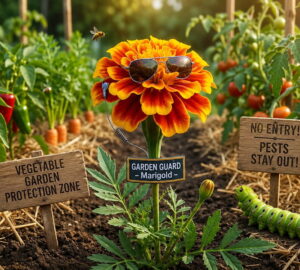
Marigolds and calendula can make an eggplant bed feel more alive, colorful and insect-friendly. Their flowers attract pollinators and beneficial insects, while adding a cheerful edge to what might otherwise be a very practical vegetable plot.
French marigolds (Tagetes patula) are often used in vegetable gardens because some research suggests they may help reduce certain root-knot nematodes in the soil. This does not make them a magic shield, but they can be a useful part of a more biodiverse planting plan.
This combination works especially well in a mixed kitchen garden, where vegetables, herbs and flowers are grown together rather than in bare, rigid rows.
Beans and Peas: Useful, But Choose Carefully
Beans and peas are valued in vegetable gardens because they belong to the legume family and can work with soil bacteria to fix nitrogen. Around eggplant, however, they should be used with some care.
Bush beans can be a reasonable neighbor if they do not shade the eggplant or compete too strongly for space. Pole beans are more complicated. They grow tall, and if placed too close, they can steal the sunlight that eggplant needs for strong growth and good fruiting.
The simple rule is this: low, open companions are usually better than vigorous climbers that cast shade.
Lettuce and Low Leafy Greens
When eggplants are still young, they do not yet fill the whole bed. This makes the space between plants useful for quick-growing leafy crops such as loose-leaf lettuce, corn salad or arugula.
These are best treated as temporary companions. Harvest them before the eggplant grows large and leafy, so they do not begin competing for water, nutrients or airflow.
This is a smart way to make better use of space in spring and early summer, especially in small gardens or raised beds.
Garlic, Chives and Other Alliums
Garlic, chives and other alliums are compact plants that can fit neatly around the edges of an eggplant bed. Their strong scent may help create a more varied “scent landscape” in the garden, which can make it harder for some pests to find their preferred host plants.
They are also practical in smaller gardens because they do not take up much room. Still, avoid overplanting. Eggplant does not like a crowded, damp base where air cannot move freely.
What Not to Plant Too Close to Eggplant
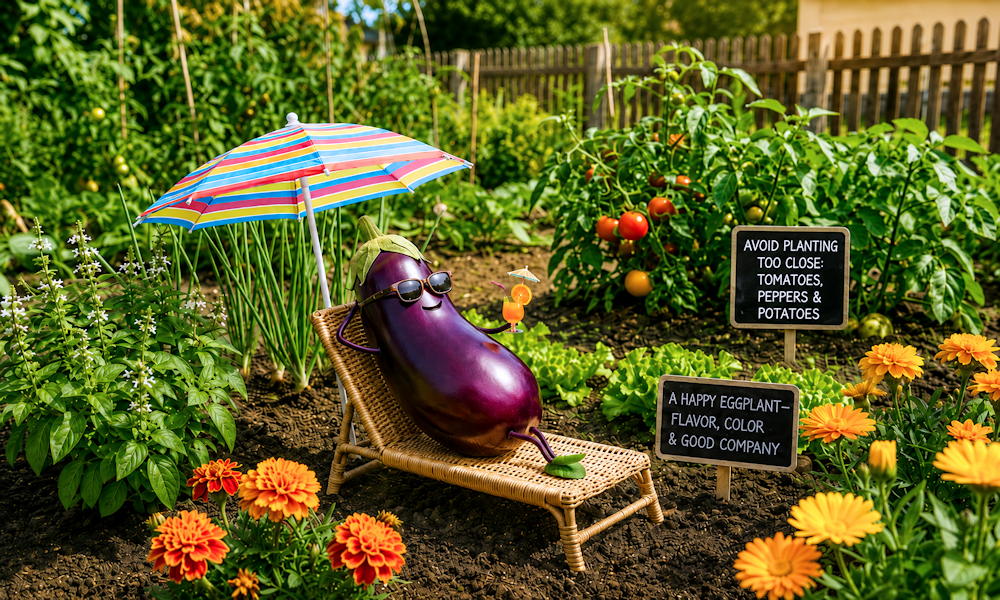
Avoid planting eggplant too closely with tomatoes, peppers or potatoes. These crops are all related, and they may share pests and diseases.
This does not mean they can never appear in the same garden, but they should not be packed together in a dense, poorly ventilated block. In crop rotation, it is also wise not to plant eggplant where tomatoes, peppers, potatoes or eggplants grew the previous season.
Very tall or heavily shading plants can also cause problems. Corn, sunflowers and pole beans may all reduce the light reaching eggplant if they are planted too close. For a sun-loving crop, that can mean weaker plants and fewer fruits.
Eggplant in Raised Beds and Mixed Beds
Eggplant can do very well in raised beds, where the soil warms up more quickly and drainage is usually better. Good companions in this setting include basil, marigolds, calendula, low-growing lettuce and a few alliums around the edges.
In a mixed vegetable bed, give eggplant the warmest, sunniest position. Keep taller plants behind it or well to one side, so they do not block the light.
Think of eggplant as a slightly fussy guest at the table: it does not need to sit alone, but it does need the right seat.
The Best Companions for Eggplant
Good companion plants for eggplant include basil, marigolds, calendula, bush beans, low leafy greens, garlic and chives. The best choices are plants that keep the bed diverse without stealing too much sun, water or space.
Companion planting is not a miracle cure. It is more like fine-tuning. Give eggplant warmth, light, fertile soil and room to breathe, then choose neighbors that make the garden more balanced, beautiful and alive.