
Pruning a fig tree is one of those tasks where impatience causes more mistakes than lack of skill. In spring, figs often look damaged, uneven, or partly dead after winter. This creates a strong urge to cut quickly and “tidy up.”
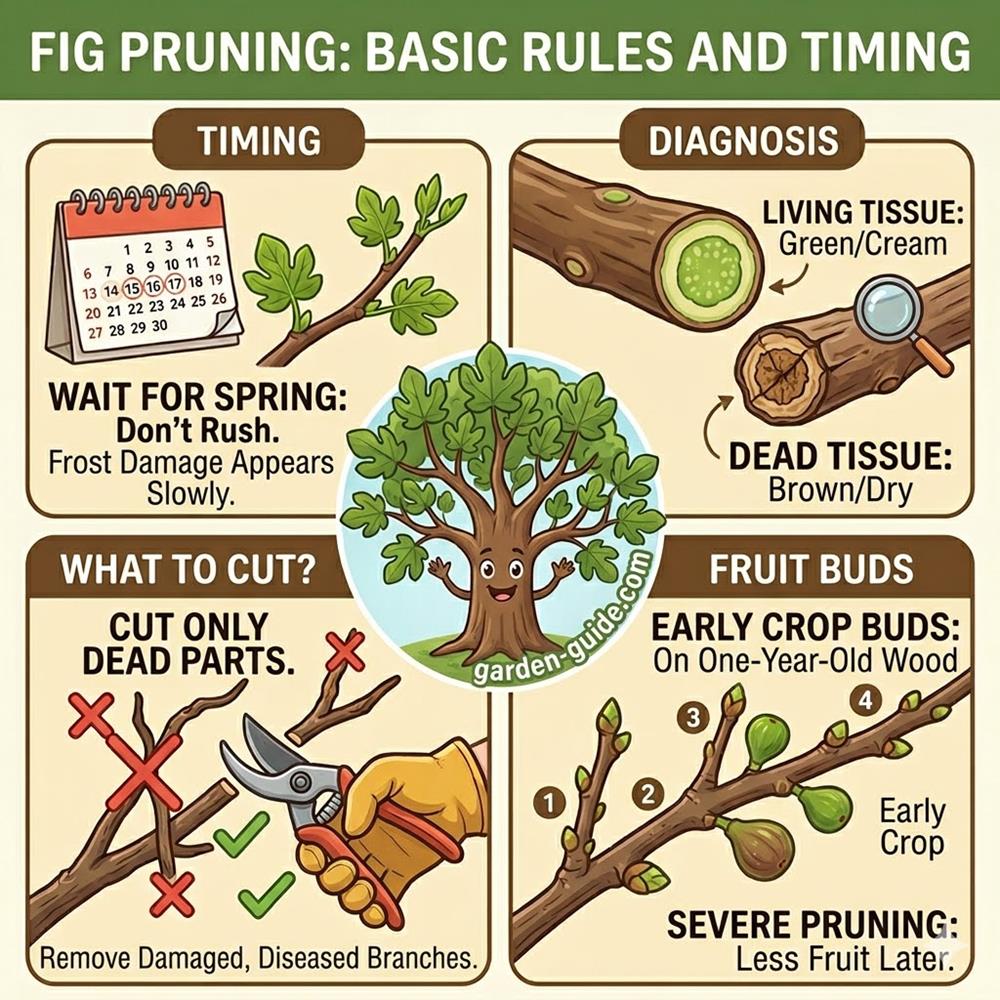
The problem is that fig, Ficus carica, does not always reveal immediately which shoots are dead and which are still capable of recovering. Pruning too early may remove living wood that would have sprouted later. Pruning too hard may also reduce fruiting potential.
Frost Damage Comes First
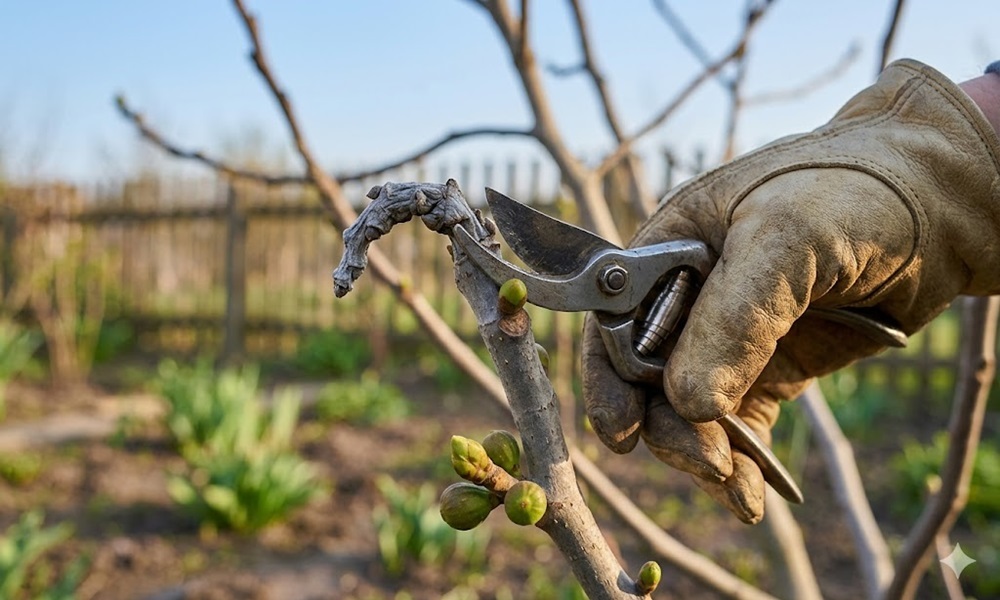
In many temperate gardens, winter damage is the main reason spring fig pruning becomes complicated. Some winters leave only minor injury, while others kill back substantial portions of one-year-old shoots. The boundary between living and dead wood is not always obvious at first glance. Shoots may appear shriveled or brownish, but certainty often comes only after growth begins. That is why one of the main rules of fig pruning is simple: do not rush.
Checking several shoots for living green tissue beneath the bark provides a better picture of the real damage.
Fruit Buds Matter
Many fig varieties produce part of their crop on shoots formed the previous year. If these shoots survive winter, they may carry the earliest fruit. Severe spring pruning can remove exactly those parts of the plant that would have produced the first harvest. That is why fig pruning should never be treated as routine shaping alone. Every cut may also affect fruiting.
The Best Time for Spring Pruning
In practice, spring fig pruning is safest once it becomes clear where new growth is actually emerging. This often means waiting until mid-spring rather than cutting at the first mild day of the season.
At that point it is easier to see:
- where frost damage ends,
- which buds remain alive,
- which shoots are worth preserving.
What Should Be Removed?
Spring pruning should focus mainly on:
- dead, frost-damaged shoot tips,
- fully lifeless branches,
- injured or diseased wood,
- excessive congestion inside the plant.
What usually should be avoided is heavy, purely cosmetic reshaping before the plant’s survival pattern is visible.
Growth Form Matters
Many gardeners grow figs as shrubs because this form recovers more easily after winter injury. Others shape them into small trees for aesthetics. Shrub-form figs usually tolerate winter setbacks better, while tree-form figs depend more heavily on the survival of their framework branches.
What Happens If You Prune Too Early?
The biggest risk is removing wood that still carries life and possible fruit buds. Early strong pruning can also stimulate vigorous new growth that remains vulnerable if cold weather returns.
And If You Do Not Prune At All?
Unpruned figs can still live and fruit, but they often become congested, less productive internally, and structurally harder to manage. The goal is not no pruning, but well-timed pruning.
The Core Principle
Good fig pruning begins not with cutting, but with waiting long enough to understand what winter actually left behind. The gardener who rushes to create order in early spring may easily cut away the very shoot that would have carried the first figs of the year.