
March 5 lands in that globally interesting stretch of the calendar where spring is starting in many places, but not in the same way everywhere.
In much of the Northern Hemisphere, we’re in early-spring habits: longer light, cold nights, and soil that’s still easy to damage. Meanwhile, the Southern Hemisphere is edging into autumn—often a better time for tidying, storage, and planning than for starting tender plants.
World Energy Efficiency Day: a garden-sized way to think about warmth
March 5 is widely marked as World Energy Efficiency Day, and it has a surprisingly good gardening lesson: don’t fight nature with brute force—work with small, smart efficiencies.
Energy-smart garden moves for early spring:
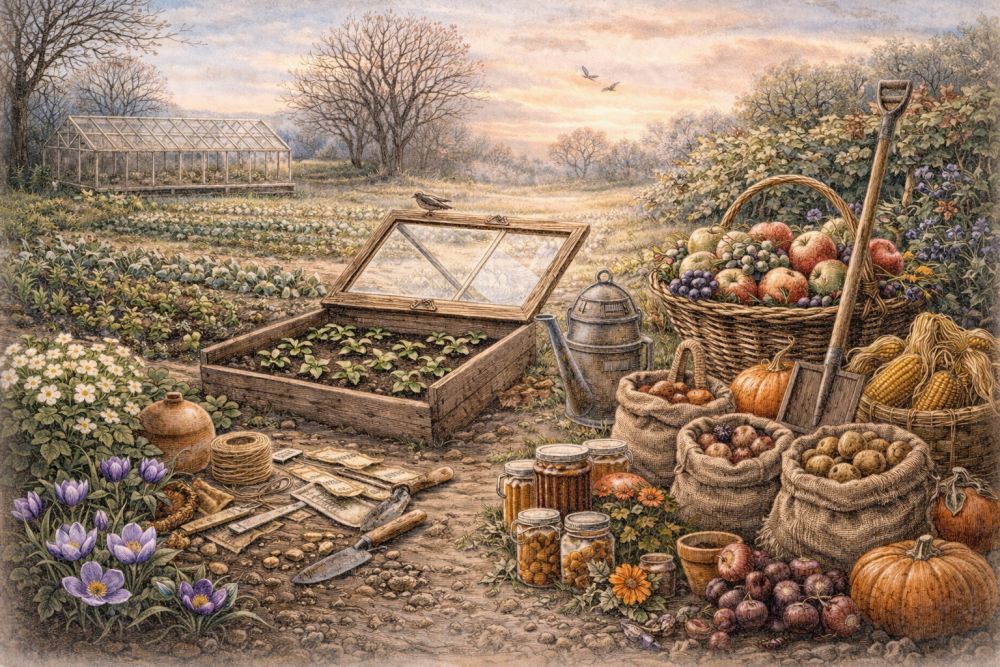
- Use what you already have as “thermal mass”: a few water-filled containers in a greenhouse or cold frame can smooth temperature swings.
- Close gaps before you add heat: draught-proof doors and vents, and fix torn plastic or cracked panes.
- Vent at the right moment: a short midday airing prevents damp and disease without dumping all your warmth.
St Piran’s Day in Cornwall: what tin miners can teach a gardener
In Cornwall, March 5 is St Piran’s Day, the national day of Cornwall, named for the patron saint of tin miners. It’s a neat reminder that soil isn’t just “dirt”—it’s geology, minerals, and time.
Garden translation:
- Pay attention to what your soil is: sandy, stony, clay-heavy, or rich loam. Each asks for a different rhythm.
- Compost is your great universal fixer, but it behaves differently depending on what it’s laid onto.
Early March inventory, the international version
Wherever you are, March 5 is ideal for one calm hour of “future-you will be grateful” work:
1) Seeds and timelines
- What can start now indoors?
- What should wait?
- What’s old enough that it’s become optimism rather than seed?
2) Containers and labels Wash, dry, stack. Early-season failures often come from messy starts—fungus, damp, and confusion—not from frost.
3) Storage and rodent-proofing If it can be smelled and reached, it can be taken. Tight containers and tidy corners aren’t glamorous, but they’re universal.
Watch the twigs: a worldwide spring signal
Before leaves, it’s buds. Willow, hazel, fruit trees—different species in different regions, same message: the season is turning. A five-minute walk and a look at buds tells you more about timing than any calendar slogan.
Mediterranean vs. cool-climate March: two springs, two rhythms
If you garden around the Mediterranean (or in other mild-winter climates), March can feel like the real on-ramp: soil warms earlier, growth comes fast, and moisture can disappear quickly. In cooler, frost-prone regions, March is more like a rehearsal: you’re preparing spaces and systems while waiting for consistent night temperatures.
A useful rule of thumb, wherever you are: match your pace to nighttime lows, not midday sunshine. If nights still dip hard, focus on protection and planning. If nights have softened, shift into steady sowing and soil work.
The equinox is coming: why light matters more than you think
We’re approaching the March equinox, when day and night balance and then the days tilt longer (in the Northern Hemisphere). For gardeners, this is a practical turning point: longer light supports sturdier seedlings, faster recovery after pruning, and steadier growth.
If your seedlings have been stretching, this is the moment to help them: brighter placement, clean trays, and not too much warmth too soon.
Southern Hemisphere note: early autumn wins
If you’re in the Southern Hemisphere, March is often a brilliant month for the opposite kind of work: clearing summer clutter, saving seed, drying and storing tools, and improving soil with compost while the ground is still warm. It’s also a good time to think about what you’ll want to plant as temperatures start easing down.
A tiny ritual for March 5
- Inventory seeds and tools.
- Prep one clean tray or box for seedlings.
- Keep your soil structure safe: don’t work wet ground.