
Late February has a particular kind of drama: not the loud, flowering kind—more like a backstage costume change. Light stretches by minutes, buds swell almost imperceptibly, and the garden starts making plans while winter pretends it hasn’t noticed.
On February 25, a few traditions around the world capture that exact mood: the first blossoms, the first “spring day” (at least on paper), and the old idea that this is the moment to protect what’s about to wake.
Kyoto’s Plum Blossom Day (Baikasai)
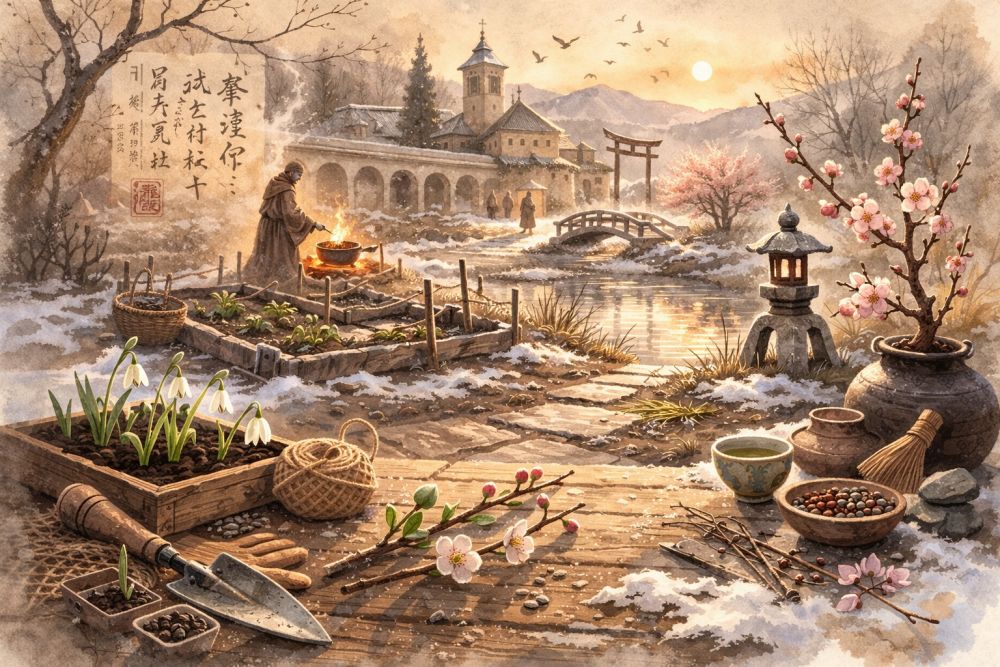
In Kyoto, the Kitano Tenman-gū Shrine marks February 25 with Baikasai, a plum blossom festival held in the shrine’s plum grove. It’s a mix of ritual, seasonal beauty, and a tea ceremony atmosphere that essentially says: if winter is ending, the earliest flowers deserve an audience.
In practical garden terms, plum and other Prunus trees are classic “spring teasers.” If you garden in a frost-prone area, this is your reminder to watch bud stages closely and take notes. A few days’ difference in bud development can decide whether blossoms become fruit—or just a very pretty heartbreak.
Hamburg’s Medieval “First Day of Spring” Energy
Around the feast of St Matthias (traditionally February 24), medieval Northern Europe treated this window as a kind of spring turning point—and, in commercial cities, the start of a new working year. Hamburg’s long-running tradition of the Matthiae meal carries that old calendar logic into modern ceremony.
In practical garden terms, this is a perfect time for your own garden “new year”: inventory seeds, check tools, sketch bed plans, and decide what you’ll do differently this season.
Walburga: Protection, Healing, and the Memory of Monastery Gardens
February 25 is also associated in many places with Saint Walburga (Walpurga). Beyond the better-known Walpurgis Night (April 30), Walburga’s traditions echo themes of protection and healing—and that dovetails neatly with the history of monastery gardens: herbs, orchards, dyes, and practical plant knowledge preserved and passed on.
Garden takeaway: think of “protection” broadly right now. Not just frost—also overwintering pests, fungal carryover, wind stress, soil compaction, and the temptation to work wet soil because spring impatience is real.
What to do in the garden now (temperate climates)
- Prune with restraint: apples/pears are often fine on mild, dry days; stone fruit timing depends on local disease pressure and weather.
- Dormant-season sprays (where used): timing matters—label instructions and local conditions are your compass.
- Tool reset: sharpen, clean, disinfect. A good pruner is a mood stabilizer.
- Seed reality check: test older seed, then adjust sowing plans.
- Indoor starts: peppers/celery/cabbage family can be underway if you have light; otherwise start smaller and stronger.
- Mulch and compost: protect the soil when it’s workable; keep it covered when it’s not.
A tiny seasonal prompt
Before the day ends, pick one plant and look closely. Bud scale tightness, a hint of green, a swelling tip—small details are how gardens whisper “soon.”