

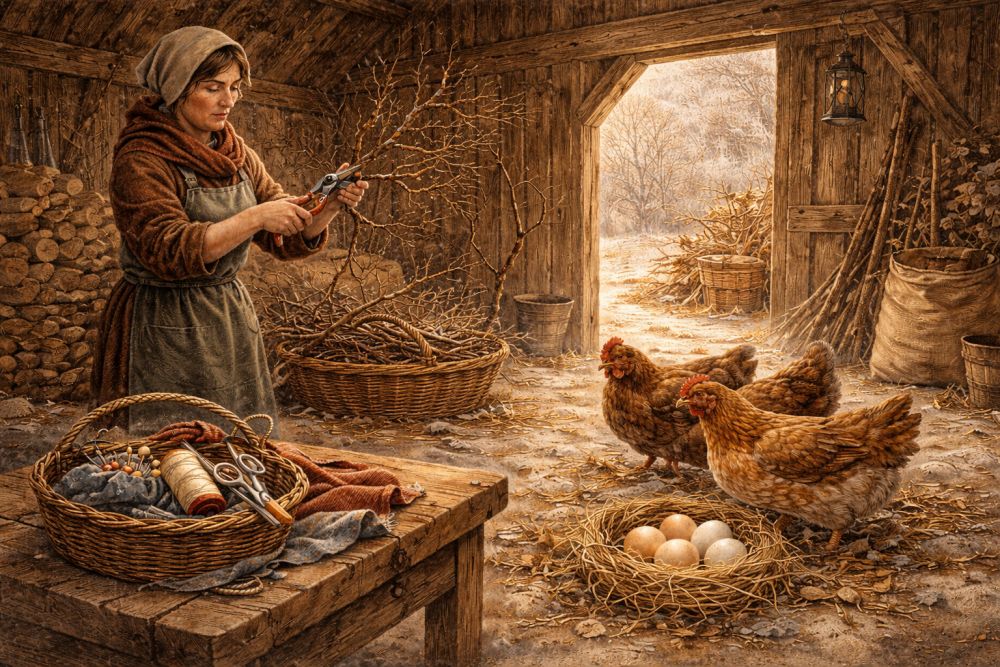

In traditional rural life, February 15 was marked in some regions as a day of restraint. Certain household tasks were avoided out of concern that careless actions might symbolically hinder fertility — especially egg production and livestock health. Behind the superstition lay a deeper agricultural awareness: mid-February is a sensitive turning point in the yearly cycle.
Lupercalia and Seasonal Cleansing
In ancient Rome, February 15 was associated with Lupercalia, also called Februa — a festival of purification and fertility. Ritual acts were meant to protect flocks, strengthen boundaries, and symbolically cleanse the community before the growing season.
For gardeners, the theme translates naturally. Late winter is a time of clearing and correction:
– Removing dead wood from fruit trees
– Cutting away diseased branches
– Cleaning tools before heavy seasonal use
– Repairing trellises and vineyard supports
Clearing is not destruction; it is preparation for growth.
Orchard and Vineyard Tasks
In milder climates, February 15 often falls within the pruning window for apples, pears, and grapevines. Structural pruning improves airflow and light penetration, shaping both yield and fruit quality.
Dormant vines are inspected for winter damage. Young trees may be planted where soil conditions permit. Compost systems are turned, and garden beds are assessed for drainage issues caused by thaw cycles.
Themes in Christian Observances
Several Christian feast days also fall on February 15 in different traditions, including figures remembered for perseverance, pastoral care, and community leadership. Though varied in geography and era, these commemorations echo agricultural virtues: steadiness, stewardship, and responsibility toward land and people alike.
A Day of Measured Preparation
February 15 reminds growers that renewal requires discipline. Before sap rises and buds open, structure must be sound.
Winter clearing.
Tool maintenance.
Thoughtful pruning.
Quiet assessment.
Spring will arrive on its own. The condition in which it finds the garden is up to us.