

January 21 rarely appears in bold letters on traditional calendars. There is no major feast, no dramatic turning point, no obvious signal that something has changed. And yet, across cultures and climates, this day was noticed — precisely because the change it carries is subtle.
After the deepest cold of winter, January 21 marks the moment when light, not temperature, begins to reclaim importance. The days are still short. The air is still cold. But the balance has shifted.
Europe: Agnes Day and the Return of Hidden Knowledge
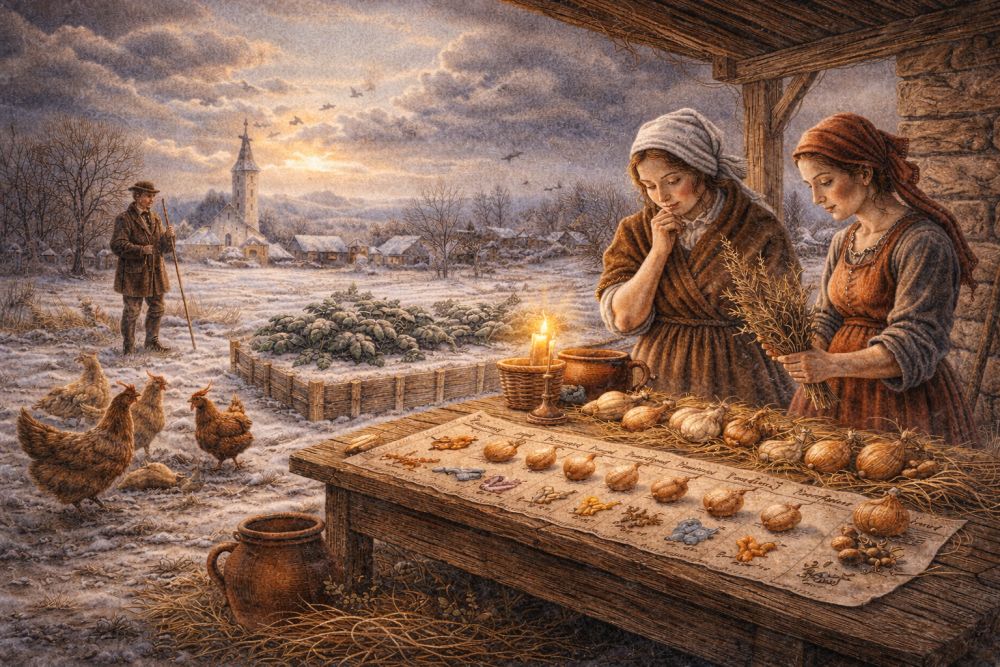
In parts of Central and Eastern Europe, January 21 is known as Agnes Day. Folk belief treated it as a magic-bearing day — not because something visible happened, but because knowledge itself was thought to stir.
Agnes Day was associated with divination, dreams, and quiet observation. People believed that what was sensed or dreamed on this day revealed truths about the year ahead. The logic was seasonal: after the deepest cold, light begins to return, and with it, clarity.
This made January 21 a day of watching rather than doing. Agricultural communities believed nature was beginning to reveal intentions, even if it had not yet changed its form.
In practical terms, this aligned with the growing awareness that daylight was slowly increasing. Evening darkness arrived later, workdays felt subtly longer, and the strict grip of winter began to loosen — not in temperature, but in perception.
Gardeners understood this as reassurance rather than instruction. Nothing was to be done yet. But something had begun.
In some rural traditions, Agnes Day dreams were taken seriously by gardeners. Dreams of water, green shoots, or light were interpreted as signs of a balanced year ahead, while restless or barren dreams warned of delays. These interpretations were not about prediction in a modern sense, but about tuning attention: winter was seen as the season when the mind, like the soil, prepared quietly for what would later emerge.
Roots Respond Before Leaves Do
Modern plant physiology confirms what old calendars only hinted at. Many plants respond to photoperiod — the length of daylight — independently of temperature.
By late January, increasing light can trigger subtle hormonal shifts in roots and buds. These changes are invisible, but they matter. The plant is no longer only enduring winter; it is preparing to respond when conditions allow.
January 21 sits squarely in this quiet preparatory phase.
Asia: After the Great Cold, Toward Balance
In East Asian seasonal systems, the days following Da Han (Great Cold) are understood as a slow return toward balance. Cold remains, but it no longer intensifies. Light, meanwhile, continues its steady advance.
Plants are seen as reorganizing internally — conserving energy while quietly adjusting to the changing rhythm of the day.
The message is consistent: renewal begins long before it becomes visible.
North America: Watching the Edges of the Day
Indigenous knowledge across northern regions often emphasizes attention to transitions rather than events. Late January was a time to watch dawn and dusk, to notice how shadows shifted and how long light lingered.
Evergreens, buds, and overwintering grasses offered clues. They did not grow yet, but they responded — adjusting orientation, water balance, and internal timing.
January 21 belonged to those who noticed small changes.
The Southern Hemisphere: Light at Its Peak
South of the equator, January 21 tells the opposite story. Here, light is abundant, days are long, and plants are fully active.
This contrast reinforces a global truth: light, not the calendar, sets the pace of life. What signals preparation in one hemisphere drives growth in another.
Why January 21 Still Matters
January 21 reminds us that seasonal change is rarely dramatic. It arrives quietly, minute by minute, through shifts that reward attention.
For gardeners, this day offers neither tasks nor urgency. It offers awareness.
The cold still holds. The soil remains closed. But light has begun to matter again.
And that quiet return — more than any temperature reading — is what gives January 21 its place in The Garden Almanac.