
Mid-February finds the farm in a thinking mood.
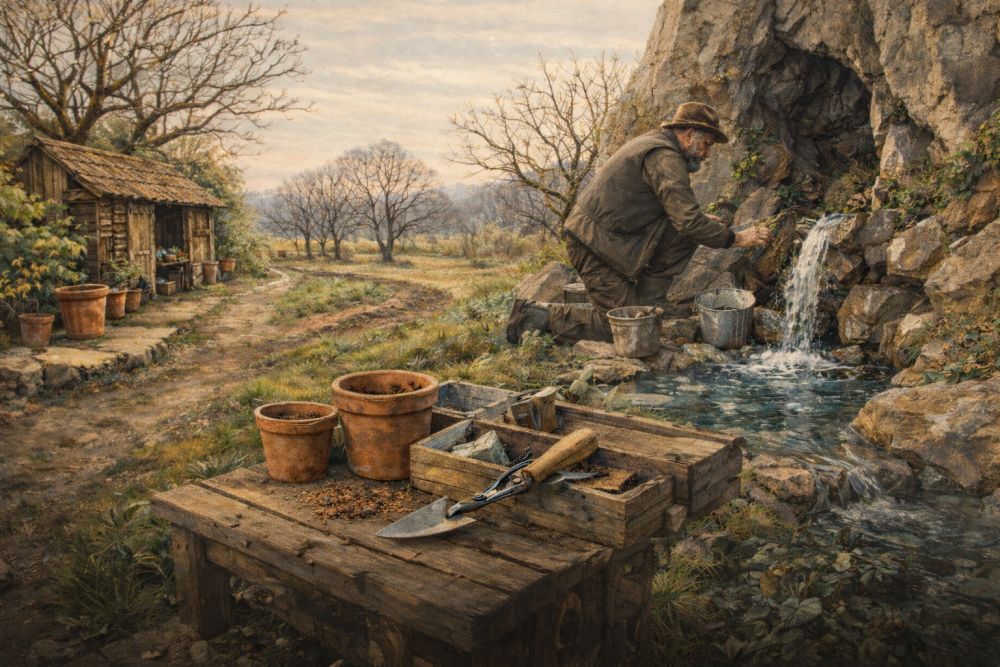
Fences are checked. Tools are laid out on the bench. The orchard stands bare against a pale sky, every branch visible, every past mistake revealed. It is a good day for looking closely.
In the Roman Catholic calendar, February 11 marks the remembrance of Our Lady of Lourdes, recalling the 1858 events in France that gave rise to a spring long associated with healing. The date is also observed as the World Day of the Sick. In Eastern Orthodox tradition, Saint Blaise is commemorated — historically invoked for the well-being of both people and livestock during the hardest stretch of winter. The Anglican Communion remembers Cædmon, the early English Christian poet (c. 680 CE). Other names linked to this day across traditions include Gobnait, Gregory II, Lazarus of Milan, Peter of Jesus Maldonado, and Soteris.
For those who work the soil, these observances land in a season that has always tested endurance. Hay stores run low. Root cellars are monitored. Seed catalogues lie open on the kitchen table. The year’s success is not yet visible — but it is already being shaped.
Notes from the orchard and garden
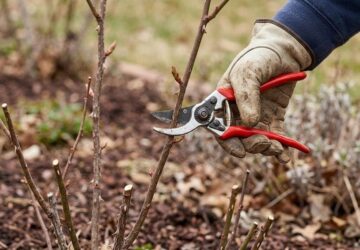
If the ground is firm and the forecast steady, this is a sound time for structural pruning of apples and pears. Remove crossing branches. Open the center to light. Make clean cuts just above outward-facing buds. Work steadily, not hurriedly.
Walk each row with intention.
Look for:
– Winter dieback at branch tips
– Sunscald on the southwest side of trunks
– Gnaw marks from vole or rabbit activity
– Loose ties and supports that may rub in spring winds
Sharpen tools before beginning. A sharp blade respects the tree.
Indoors, long-season crops — onions, leeks, certain herbs — may be started under strong light where climate requires. Older seed lots can be tested on a damp cloth near a warm stove. Compost heaps, if not frozen solid, may be turned to wake early microbial life.
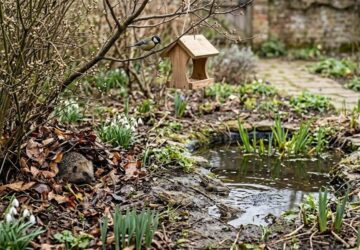
In milder regions, almonds may show the first haze of bloom. In colder country, snow still lies deep. Yet even beneath snow cover, roots respond to subtle changes in temperature and moisture.
On water and the hidden work of the soil
A spring running clear from rock is not only a symbol — it is a reminder. Water governs the garden. As thaw cycles begin, moisture seeps downward, carrying dissolved nutrients and stirring microbial communities that will later feed new growth.
Perennial roots remain physiologically alert whenever soil temperatures rise above freezing. Bud scales loosen imperceptibly. Sap pressure shifts. None of this announces itself loudly.
February 11 is a day to respect the unseen: the planning done before planting, the pruning before leaf, the patience before bloom.
Good seasons are built quietly.