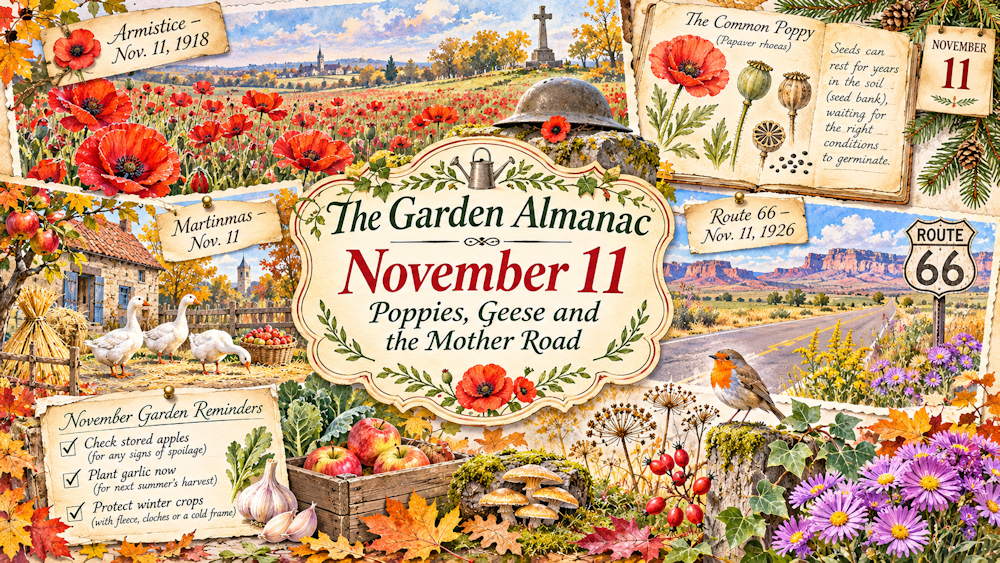

A red poppy blooming in a field, geese gathering on a village farm, and a road stretching across the American landscape might seem to have little in common. Yet November 11 gives each of them a remarkable place in history.
As autumn deepens across the Northern Hemisphere, this date brings together remembrance, old agricultural traditions and a changing relationship with the countryside. Behind these stories lie some surprising lessons about seeds that wait for the right moment, the seasonal rhythms of farming and the often-overlooked natural habitats beside our roads.
November 11, 1918 – How a Wildflower Became a Symbol of Remembrance
At 11 a.m. on November 11, 1918, the guns fell silent along the Western Front as the armistice ending the fighting in the First World War took effect. Across northern France and Belgium, years of bombardment had transformed fields, farms and villages into devastated landscapes. Yet amid the destruction, one familiar wildflower had appeared in extraordinary numbers: the common poppy, Papaver rhoeas.
The poppies were not simply a poetic symbol of hope. Their abundance had a botanical explanation. Common poppy seeds can remain dormant in the soil for years, and germination is encouraged when soil disturbance brings them close to the surface, where light can reach them. The shells and trenches of the Western Front had repeatedly churned the earth, creating favourable conditions for these opportunistic plants. Bright red flowers emerged from ground that had seemed almost lifeless.
The sight inspired Canadian military doctor John McCrae to write In Flanders Fields in 1915. After the war, the poppy became an international emblem of remembrance, particularly through the efforts of American educator Moina Michael and French campaigner Anna Guérin. The British Legion adopted the poppy in 1921, helping establish a tradition that continues today. A plant once regarded as an ordinary agricultural weed had become one of the world’s most recognisable memorial symbols.
For gardeners, the poppy’s story reveals something fascinating about the hidden life of seeds. Disturbed soil can produce unexpected wildflowers because its seed bank contains a record of plants that grew there in previous years. Common poppies prefer open, sunny ground and generally struggle to establish among dense perennial vegetation. In suitable climates, autumn is an excellent time to sow their seeds directly onto a prepared, lightly firmed soil surface. They need little covering, and excessive fertiliser can encourage leafy growth at the expense of flowers. A modest patch of poppies can bring both summer colour and a striking piece of natural history into the garden.
Garden Science – How Long Can Wildflower Seeds Survive Underground?
The soil seed bank is a hidden reserve of dormant seeds waiting for suitable conditions.
- Light: Some species, including common poppies, germinate best when seeds are exposed to light near the soil surface.
- Temperature: Many temperate wildflowers respond to seasonal temperature changes, which help prevent germination at unsuitable times.
- Moisture: Seeds generally require water to begin germinating, although too much moisture can cause decay.
- Dormancy: Depending on the species and conditions, some viable seeds can survive underground for many years or even decades.
This explains why digging an old vegetable bed can sometimes produce wildflowers that have not been seen in the garden for years.
November 11 – Martinmas, the Goose and the End of the Farming Year
Long before modern agricultural calendars, November 11 was an important turning point in rural European life. Known as Martinmas, or St. Martin’s Day, it marked the feast of Martin of Tours, a fourth-century Christian saint. Over time, the date became closely associated with the end of the agricultural year, the settlement of rents and wages, and the preparation of farms for winter.
The traditional Martinmas goose was more than a festive meal. By late autumn, geese raised through the growing season had reached a suitable size for the table. Farmers also needed to decide how many animals they could afford to feed through winter, when pasture growth was limited and stored fodder had to last until spring. In wine-growing regions, Martinmas was associated with tasting or blessing the year’s new wine. The feast was therefore closely connected to harvests, livestock management and the practical economics of rural life.
Martinmas also became a traditional weather-predicting day, with sayings linking its conditions to the character of the coming winter. Such forecasts are folklore rather than reliable meteorology, but they reflect generations of attention to seasonal change. Today’s gardeners can make better use of that observational tradition by recording first frosts, soil conditions and the final flowering dates of autumn plants. These observations are far more useful than predictions based on a single day. Martinmas is also a fitting moment to assess stored apples, inspect overwintering vegetables and make sure vulnerable plants are ready for colder weather.
Garden Reminder – What Should Be Done in the Garden Around Martinmas?
In temperate Northern Hemisphere gardens, mid-November is an ideal time to complete several important seasonal tasks.
- Check stored produce: Remove damaged apples, pears and root vegetables before decay spreads to neighbouring produce.
- Protect winter crops: Use horticultural fleece or suitable covers for vulnerable vegetables when severe frost is forecast.
- Plant garlic: In regions where autumn planting is suitable, plant healthy cloves in well-drained soil, usually around 5 cm deep.
- Prepare empty beds: Cover exposed soil with leaf mould, compost or another suitable organic mulch to reduce erosion and protect soil structure.
- Inspect fruit trees: Remove fallen, diseased fruit and check young trees for damaged guards, stakes or ties.
Avoid unnecessary digging when the ground is wet, especially on heavy clay soils.
November 11, 1926 – Route 66 and the Landscape That Changed America
On November 11, 1926, an American road received a designation that would eventually make it famous around the world: U.S. Highway 66. Running from Chicago towards Los Angeles, Route 66 connected towns, farming districts, grasslands, mountains and deserts across approximately 2,448 miles. It would become known as the Mother Road, a symbol of travel, migration and changing American life.
The road’s significance went far beyond tourism. During the Dust Bowl years of the 1930s, thousands of families travelled west along Route 66 after drought, wind erosion and economic hardship devastated agricultural communities in parts of the Great Plains. The landscape itself was changing. The removal of native grassland vegetation, combined with prolonged drought and unsuitable farming practices, had left enormous areas of soil vulnerable to erosion. Powerful winds carried away the fertile topsoil on which farming depended.
Today, the story of Route 66 raises a different question: what happens to nature when roads divide the landscape? Roads can fragment habitats and interfere with wildlife movement, while poorly managed roadside vegetation may increase erosion or encourage invasive plants. Yet carefully managed verges can also provide flowering resources and habitat for insects, particularly where native vegetation is restored. The same principles matter beside garden paths, driveways and boundaries. Keeping suitable ground covered with plants, choosing deep-rooted species and reducing unnecessary paved surfaces can help protect soil, manage runoff and create useful habitat. A roadside strip may look insignificant, but across a landscape, such spaces can add up.
Wildlife Note – Can Roadside Flowers Help Pollinators?
Road verges, field margins and other narrow strips of vegetation can support bees, butterflies and other insects when they contain suitable flowering plants.
Their value depends on several factors:
- A variety of flowering species provides nectar and pollen over a longer season.
- Native plants often support local insects more effectively than ornamental mixtures chosen only for appearance.
- Leaving some vegetation uncut provides shelter and overwintering sites.
- Reducing unnecessary mowing allows suitable plants to flower and set seed.
However, roadside habitats also carry risks, including traffic, pollution and maintenance operations. In gardens, similar benefits can often be created more safely along sunny boundaries, beside hedges or in dedicated wildflower areas away from busy roads.
What to Observe Right Now – November’s Changing Landscape
With most deciduous trees shedding their leaves, November reveals details that are easy to overlook during the growing season.
Look for seedlings in open soil. Common poppies, chickweed and other annual plants may germinate during mild autumn weather. Some overwinter as small rosettes or seedlings before growing rapidly in spring.
Watch the behaviour of birds. Fieldfares and redwings may gather around berry-bearing trees and shrubs in parts of Europe. Their arrival and movements reflect changing food availability and seasonal migration.
Notice where leaves accumulate. Wind often carries fallen leaves into sheltered corners, beneath hedges and around fences. These natural gathering places can provide insulation and habitat for soil organisms and small invertebrates.
Examine the condition of bare ground. After heavy rainfall, exposed soil may show surface crusting, small channels or areas where fine particles have washed away. Such signs can reveal erosion problems before they become serious.
Look for the final autumn flowers. Ivy, late asters and certain chrysanthemums may still provide food for insects during mild spells. Their value is especially noticeable when most other flowering plants have finished for the year.
Looking Ahead
November 11 reminds us that familiar landscapes often contain histories we cannot immediately see. A poppy can reveal the persistence of seeds beneath the soil, an old farming festival can illuminate the practical rhythms of seasonal life, and a famous highway can lead us to reconsider the importance of vegetation and healthy ground. As gardens move towards winter, protecting soil, supporting wildlife and observing seasonal changes are simple ways to put these discoveries into practice. The next growing season begins, in many ways, with the choices we make now.