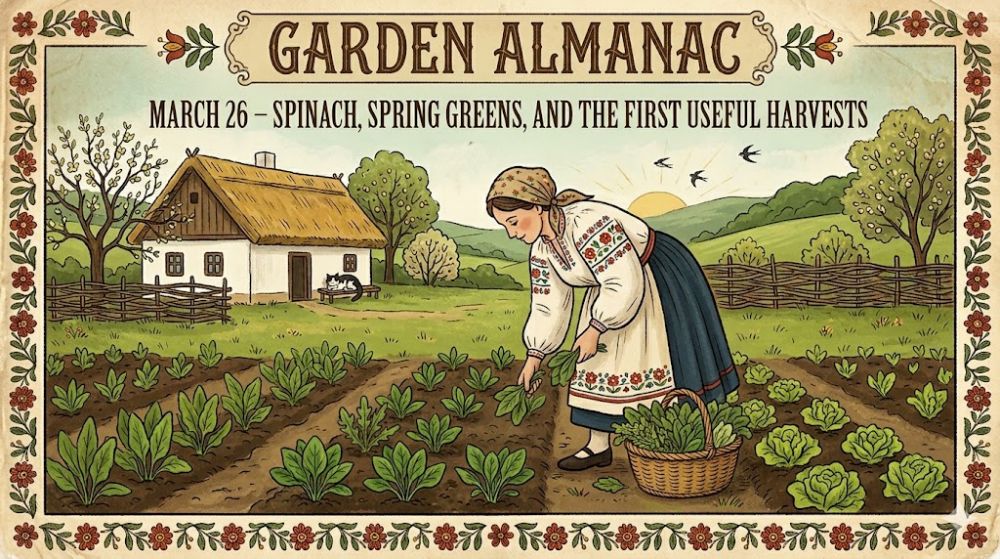

March 26 lends itself naturally to one of the quietest and most satisfying themes of the spring garden: the return of usable green. Across many climates, late March is the season when the first quick leaf crops begin to matter again — not as symbols, but as food. Spinach belongs perfectly to this moment.
This makes the date especially good for a more international garden reading. March 26 is widely marked in the United States as National Spinach Day, but the plant itself carries a much longer and broader story, moving from western and central Asia into the Mediterranean and then through Europe, where it became one of the defining cool-season leafy crops. Spinach is international not because of a modern observance alone, but because it has travelled so well through climates, cuisines, and garden traditions.
A Crop That Belongs to Cool Weather
Spinach is at its best in the cool conditions of spring or autumn. That is one reason it feels so characteristic of this part of the year. While heat-loving vegetables still wait for settled warmth, spinach gets to work early. It germinates into the season’s uncertainty and often rewards the gardener before the more dramatic crops have even found their rhythm.
This gives it a special place in the almanac imagination. It is not glamorous, but it is deeply reassuring — one of the first plants to turn prepared ground into something edible again.
Soil, Timing, and Tender Growth
Good spinach depends on timing as much as fertility. It prefers fertile, well-drained soil rich in organic matter, with enough moisture to keep growth rapid and leaves tender. Sown too late into warming conditions, it can bolt quickly and lose the softness that makes it such a spring favourite.
That is why succession sowing makes so much sense here. Rather than planting everything at once, gardeners often sow smaller amounts over time, extending the season of usable leaves and working with spring’s changing pace instead of against it.
Beyond Spinach: The Logic of Spring Greens
Once seen this way, March 26 is not only about spinach. It also belongs to the wider family of spring greens — rocket, sorrel, young lettuces, and other leaves that bridge the gap between winter storage and summer abundance. They do not announce the season with spectacle. They nourish it into visibility.
That matters in an international garden frame, because nearly every food-growing tradition has some version of this moment: the first fresh leaves after the long reliance on stored or preserved food.
What the Day Holds
In the Garden Almanac, March 26 becomes a day for the first truly useful harvests of the year. It is about leaves rather than blossom, nourishment rather than display, and the humble satisfaction of a garden beginning to feed people again.