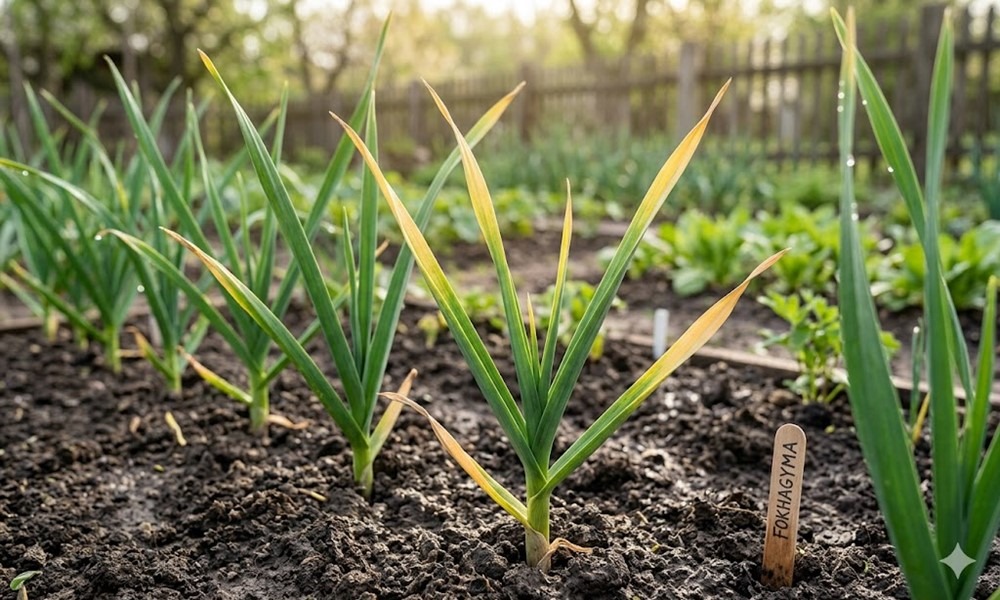

Gardeners often become concerned when garlic leaves begin to turn yellow in early spring. Instead of strong, deep green foliage, the tips of the leaves fade and yellow patches appear. In many cases, however, this is not caused by disease. Garlic (Allium sativum) reacts sensitively to environmental conditions, and several common factors can trigger yellowing. The three most frequent causes are cold stress, nutrient deficiency, and excessively wet soil.
Cold Stress
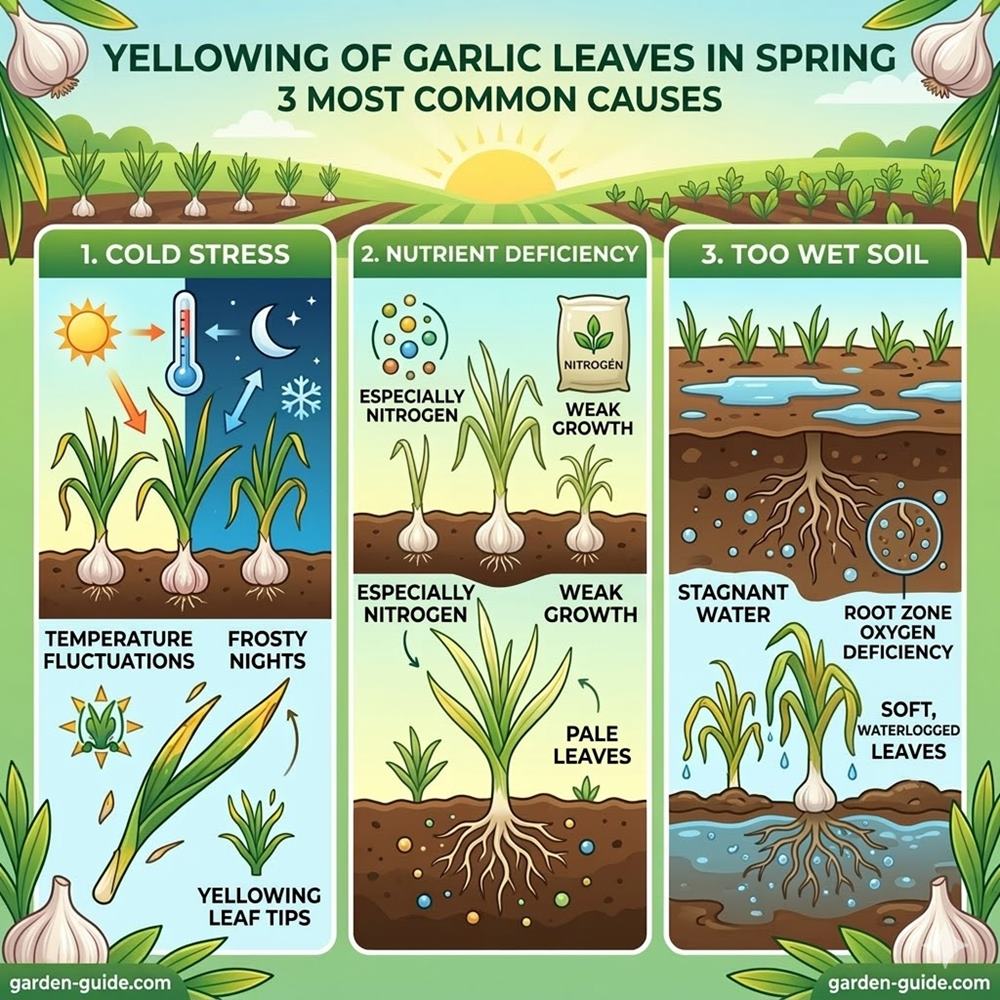
Garlic is a hardy plant and can tolerate cool temperatures. However, early spring weather often fluctuates between warm days and near-freezing nights. These temperature swings can stress the leaves and cause temporary yellowing, especially at the tips.
Typical signs include:
- pale or yellow leaf tips
- slight drying along the edges
- slower growth
Once temperatures stabilize, new healthy leaves usually appear.
Nutrient Deficiency
Garlic requires sufficient nutrients during spring growth, especially nitrogen. If the soil is poor or the roots cannot access nutrients efficiently, leaves may begin to yellow.
Nitrogen deficiency typically causes:
- pale green foliage
- uniform yellowing
weak growth
Adding compost or balanced fertilizer in moderation can help restore healthy growth.
Excessively Wet Soil
Another common cause of yellowing is waterlogged soil. Garlic roots require oxygen to function properly. When soil remains saturated, root activity slows and nutrient uptake becomes limited.
Poor drainage may lead to:
- yellowing foliage
- stunted growth
- soft leaves
Garlic performs best in well-drained, loose soil.
When Should You Worry?
Mild yellowing early in the season is often temporary. However, if the entire planting begins to decline rapidly, it may indicate a deeper soil or drainage problem.
What Can Gardeners Do?
Several simple steps can help restore healthy growth:
- loosening soil between rows
- providing moderate nutrient supplementation
- avoiding excessive watering
Garlic is a resilient plant, and in many cases it quickly recovers once conditions improve.