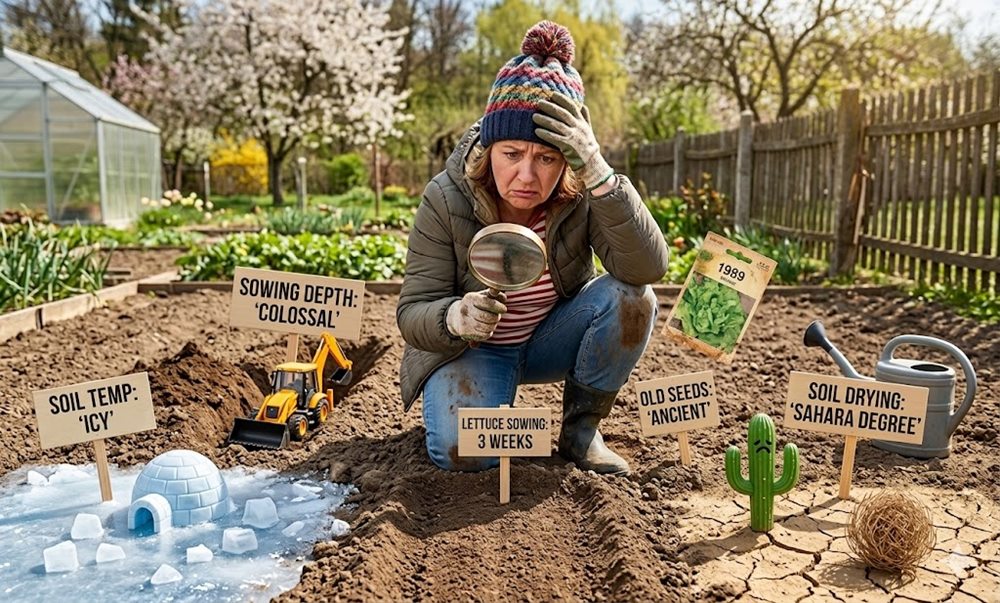

Few gardening moments are as exciting as sowing seeds in spring. The soil is prepared, the rows are marked, and within a few weeks you expect to see tiny green seedlings emerging. But sometimes nothing happens.
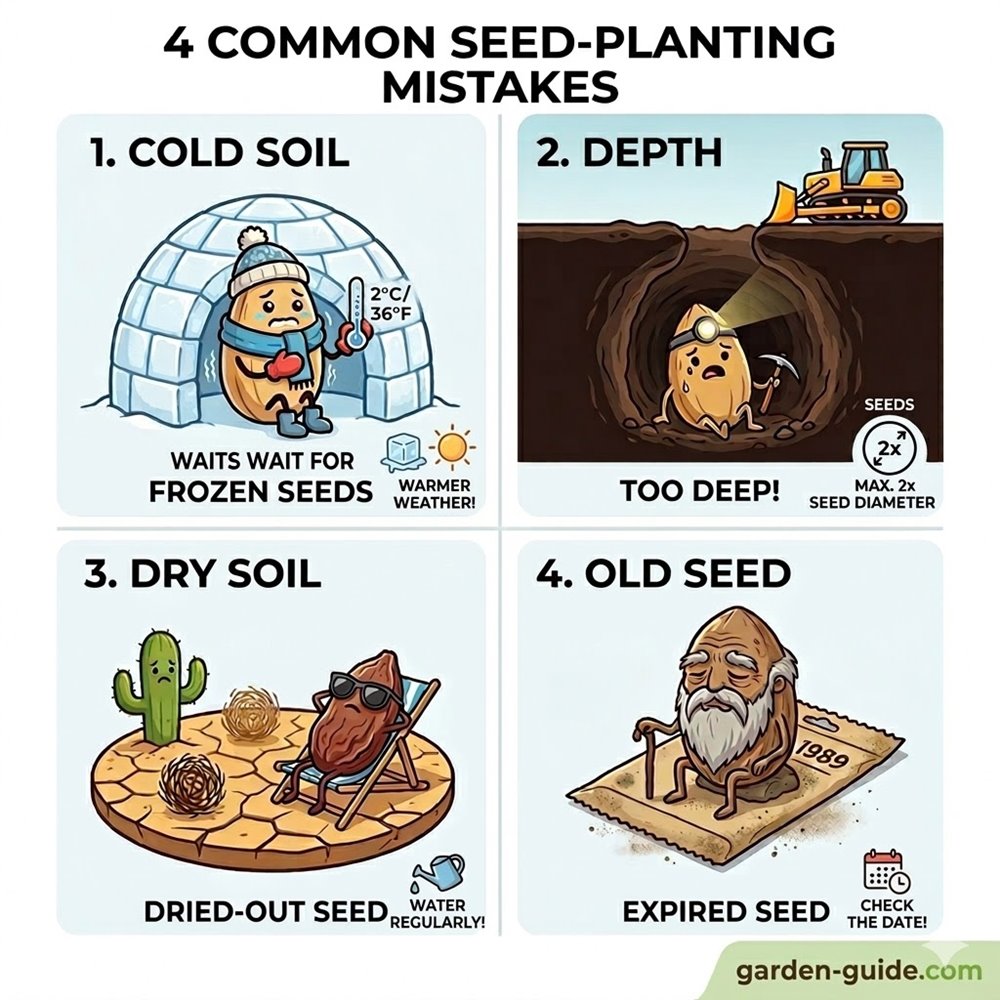
When seeds fail to germinate, many gardeners assume the seeds were poor quality. In reality, germination depends on several environmental factors working together: temperature, moisture, oxygen, and sowing depth. If even one of these factors is off, seeds may germinate slowly, unevenly, or not at all.
Cold Soil
One of the most common causes of poor germination is cold soil. Gardeners often judge conditions by air temperature, but soil warms much more slowly. A sunny afternoon may feel warm, yet the soil temperature just a few centimeters below the surface may still be far too low for many seeds.
Cold soil can cause:
- delayed germination
- uneven emergence
- seeds rotting before sprouting
Many vegetable seeds require warmer soil than gardeners expect.
Incorrect Sowing Depth
Planting depth plays a crucial role in seed emergence. Seeds planted too deeply may exhaust their stored energy before reaching the surface. A useful rule of thumb is that seeds should be planted at a depth about twice their diameter. This means:
- tiny seeds should remain almost on the surface
- medium seeds are planted about 1–2 cm deep
- large seeds may go 3–4 cm deep
Following this simple guideline dramatically improves germination success.
Drying Soil
Seeds need consistent moisture to germinate. The soil does not need to be wet, but it must remain evenly moist during the early stages of germination. Spring winds and sunlight can quickly dry the top layer of soil. When this happens, seeds may begin to absorb water but then stop developing when moisture disappears. Repeated drying can kill the embryo inside the seed. Gentle watering and monitoring soil moisture are essential during the first days after sowing.
Old Seeds
Seed viability declines over time. Some seeds remain viable for several years, while others lose their germination capacity quickly.
Old seeds often produce:
- slower germination
- lower success rates
- weaker seedlings
If seed age is uncertain, a simple germination test using a moist paper towel can reveal whether the seeds are still viable.
Creating Better Germination Conditions
Successful germination is rarely accidental. It results from providing the right balance of temperature, moisture, depth, and seed quality.
When these factors align, seeds usually germinate quickly and reliably. In many cases the seed itself is not the problem — the timing or conditions simply were not right yet.