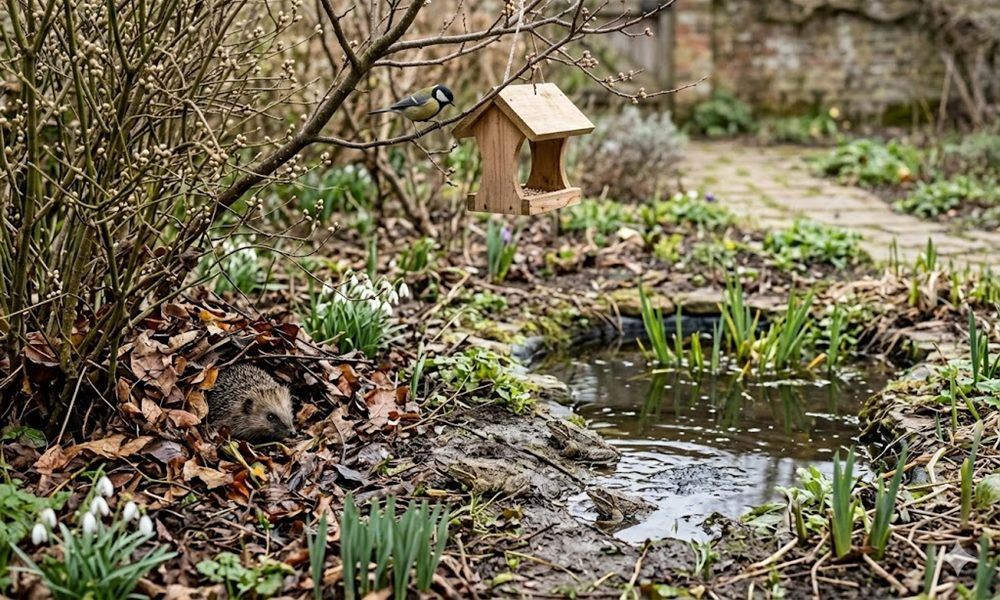

In early March, gardens begin transitioning from winter dormancy to ecological activity. Wildlife responds to temperature shifts before visible plant growth fully accelerates. Management decisions regarding feeding, habitat disturbance, and pond maintenance should reflect this transitional phase.
When to Stop Bird Feeding
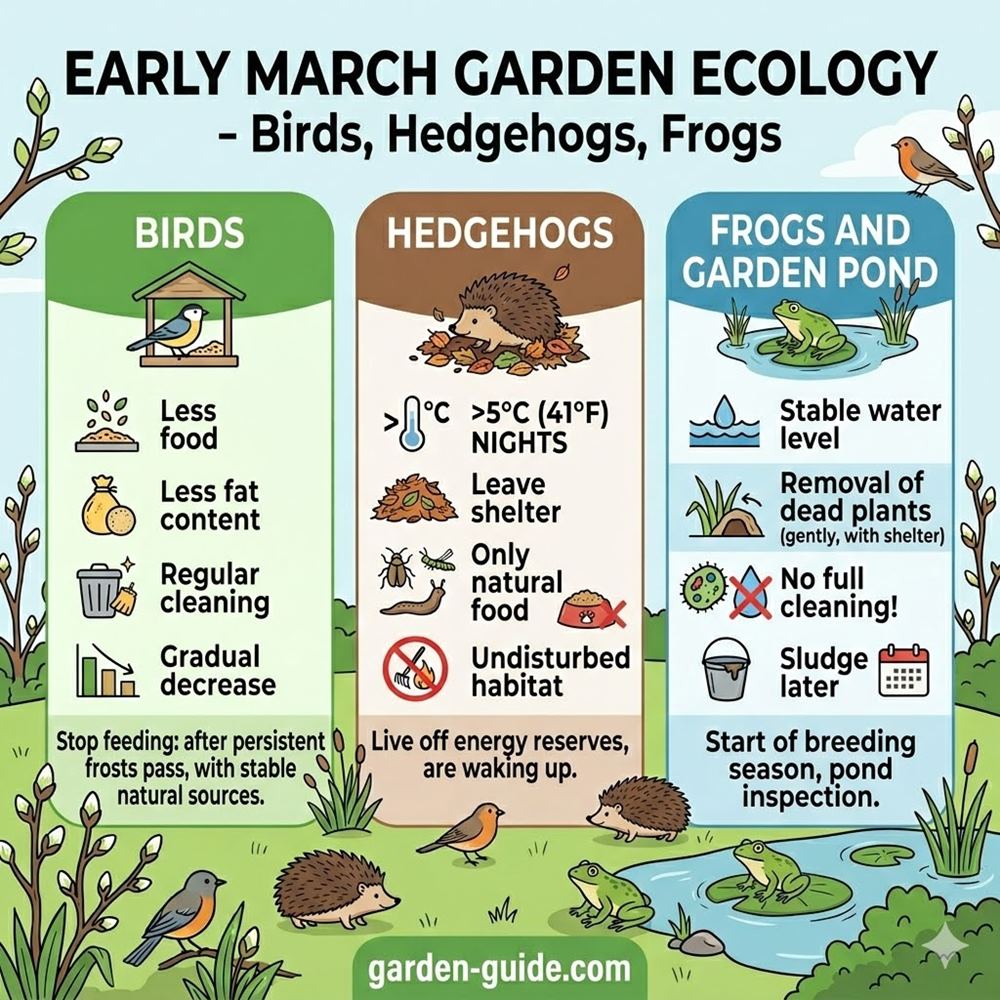
Winter feeding compensates for limited natural food availability. As temperatures rise and insect activity resumes, birds gradually shift toward natural protein-rich diets. Feeding should be reduced progressively rather than stopped abruptly. Once night frosts cease consistently and natural resources stabilize, feeding can be discontinued. Extended artificial feeding may alter natural behavior patterns.
Hedgehog Emergence
Hedgehogs typically resume activity when nighttime temperatures remain above approximately 5 °C. Early spring movements are gradual and energy-dependent. Maintaining undisturbed leaf piles and natural shelter areas supports safe emergence. Excessive ground disturbance may endanger animals still transitioning from hibernation.
Garden Pond Inspection
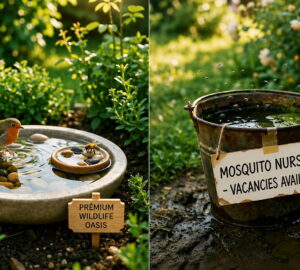
Frogs and amphibians return to breeding sites as water temperatures rise. Early March pond care should focus on minimal intervention. Key checks include water level stability, winter damage assessment, and careful removal of decaying plant material. Major cleaning or full water replacement disrupts microbial balance and should be avoided during this sensitive period.
Ecological Awareness
Gardens function as interconnected ecosystems. Early spring management benefits from observation-based decisions rather than immediate intervention.
Balancing cultivation with habitat preservation supports long-term ecological stability. In March, restraint often strengthens the resilience of both plants and wildlife.