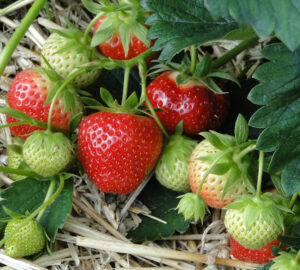


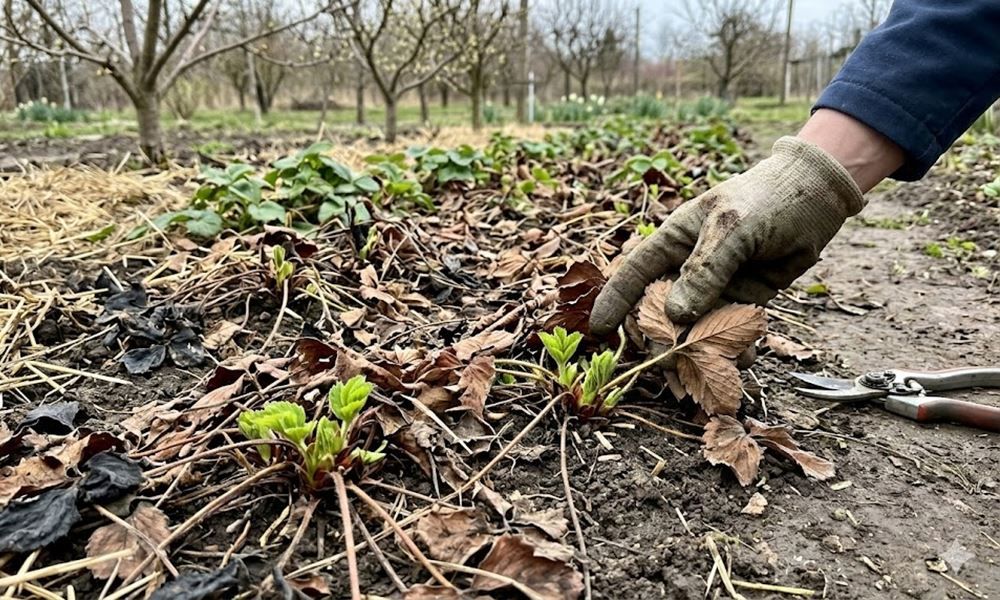

Early March often reveals strawberry beds covered with brown, flattened foliage. The urge to cut everything back immediately is strong. Yet timing is critical. Strawberries resume growth once soil temperatures consistently exceed approximately 5–7 °C. Until then, regeneration capacity remains limited.
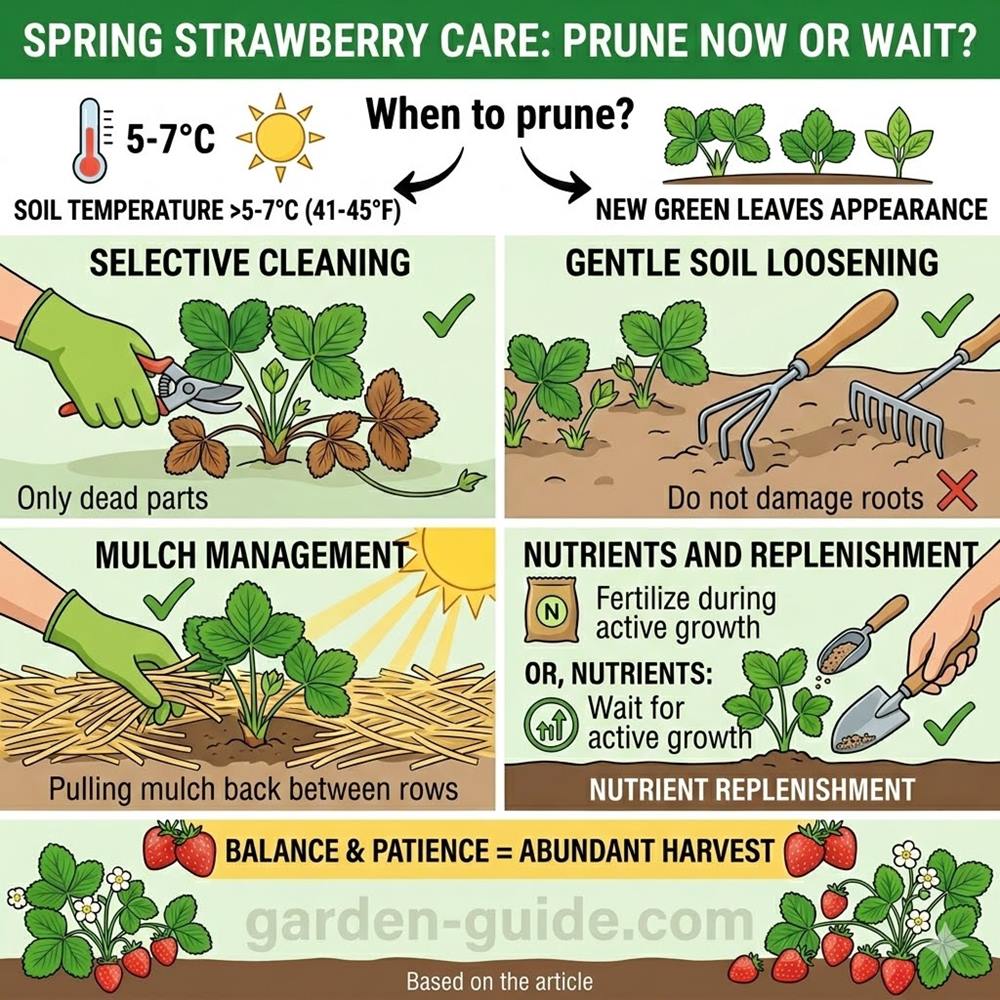
Leaf Removal – Selective, Not Aggressive
Old, diseased leaves may be removed once new green growth becomes visible at the crown. However, excessive cutting risks damaging the central growing point, directly affecting yield. Selective cleaning improves air circulation and reduces fungal risk without compromising recovery.
Soil Disturbance – Minimal Intervention
Strawberries possess shallow root systems. Heavy raking or cultivation may injure roots and young shoots. Light surface loosening is acceptable only when soil is sufficiently dry.
Fertilization Timing
Nutrient application should coincide with visible active growth. Excessive early nitrogen may promote foliage at the expense of flower development. Balanced fertilization supports both vegetative and reproductive phases.
Replanting and Gaps
Replacing missing plants is safer once soil has warmed and frost risk declines. Early planting into cold soil slows root establishment.
Mulch Management
Thick mulch layers may delay soil warming. Partial removal or repositioning can accelerate spring activation while preserving weed suppression.
Strategic Patience
Strawberry yield depends heavily on early-season balance. Premature, aggressive intervention may reduce flowering potential.
Careful timing and measured cleanup create the foundation for a productive harvest later in the season.