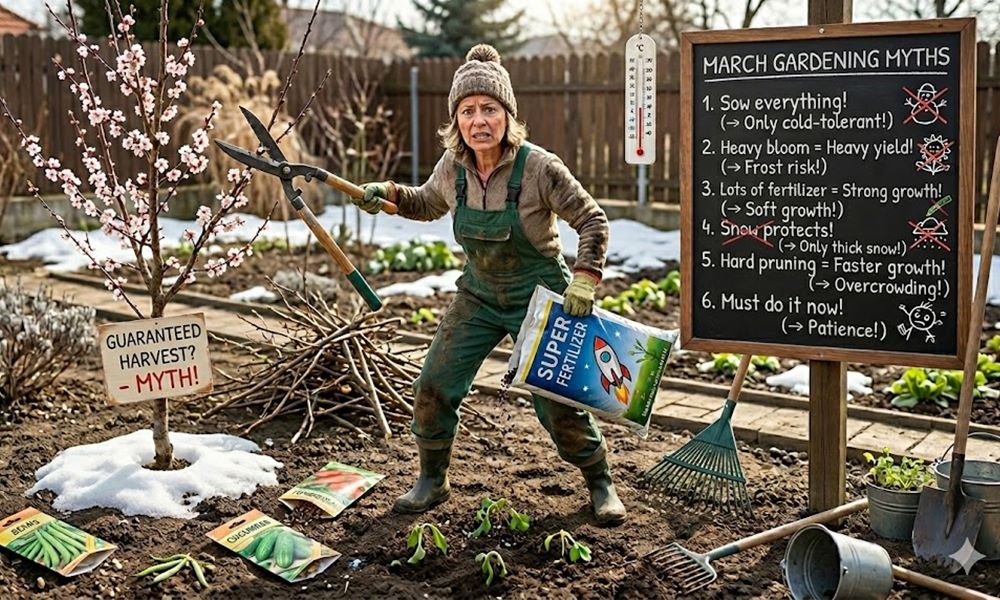

March often creates a false sense of readiness in gardens. Warmer afternoons and visible bud swelling suggest immediate action. Yet many common assumptions oversimplify complex biological processes. Gardens respond to soil temperature, moisture balance, and plant physiology — not to calendar dates alone.
“You Can Sow Everything in March”
While cold-tolerant crops may germinate in cool soil, warm-season species require higher soil temperatures. Early sowing into cold ground frequently leads to uneven emergence and disease risk.
“Heavy Bloom Guarantees Heavy Yield”
Early flowering, particularly in apricot trees, does not ensure fruit set. Frost risk and natural fruit drop significantly influence final yield.
“Early Fertilizing Boosts Growth”
Nutrient uptake depends on active root metabolism. Premature nitrogen application may encourage weak vegetative growth vulnerable to frost and pathogens.
“Snow Protects Blossoms”
Insulation from snow is effective only under specific conditions. Thin or melting snow provides minimal protection during severe frost events.
“Hard Pruning Means Strong Growth”
Aggressive pruning during active sap flow may stimulate excessive vegetative response rather than balanced fruiting.
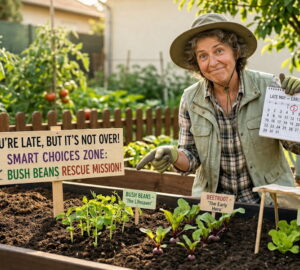
“If I Don’t Act Now, I’ll Miss the Moment”
Most spring interventions allow flexibility. Slight delays often prove less harmful than premature action.
A More Balanced Perspective
Effective March gardening relies on synchronizing actions with environmental readiness rather than reacting to temporary warmth.
Patience frequently outperforms urgency. In early spring, measured decisions create more stable seasonal outcomes than impulsive interventions.