

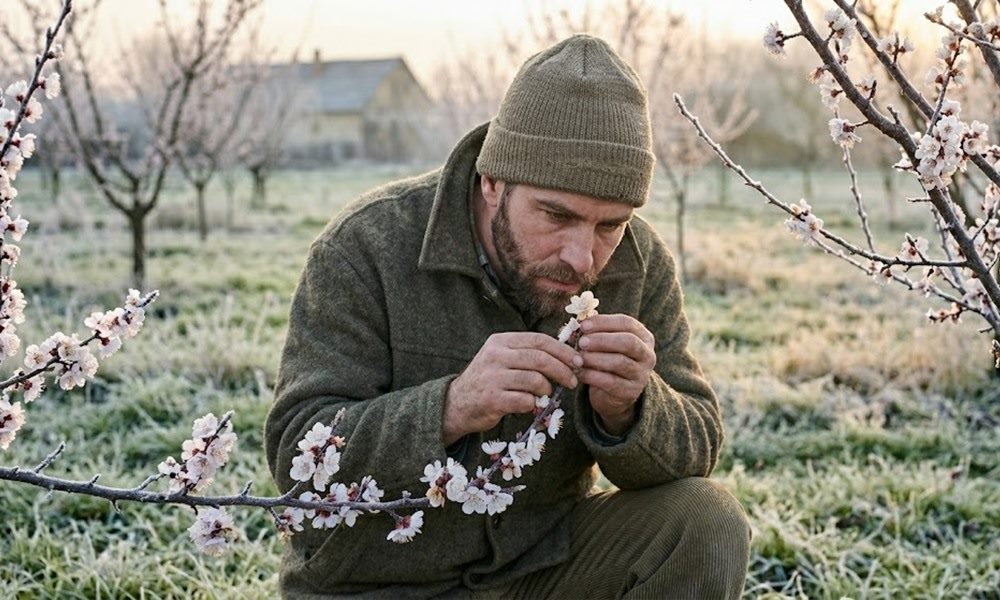

When apricot trees bloom in early March, they symbolize both promise and vulnerability. Flowering marks the transition into reproductive development — a stage highly sensitive to temperature fluctuations. A single night of sub-zero temperatures may significantly reduce yield potential.
Apricot as a High-Risk Species
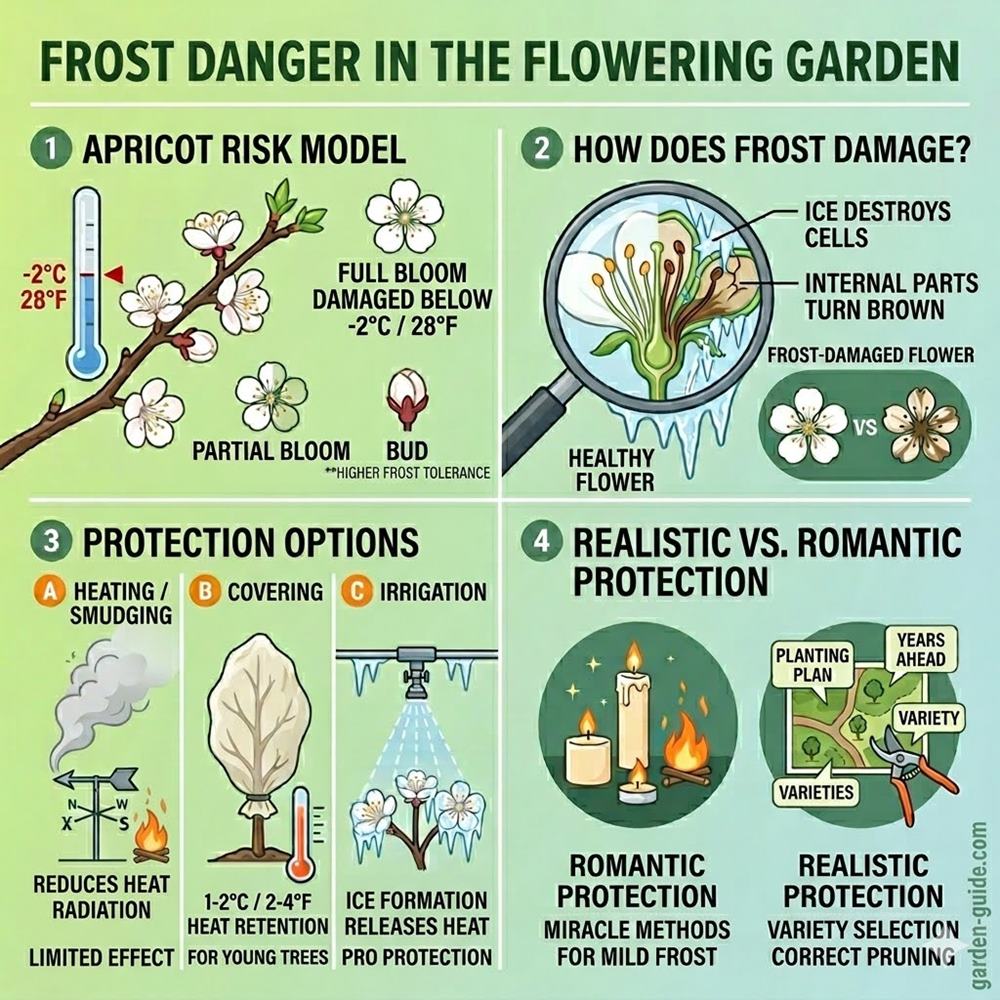
Apricot trees are among the earliest to flower in temperate climates. Once in full bloom, damage may occur at temperatures as mild as -1 to -2 °C. Developing fruitlets are similarly vulnerable. Tolerance decreases as phenological development advances.
Mechanism of Frost Damage
Frost causes intracellular ice formation, disrupting cellular integrity. Externally intact flowers may conceal internal browning of reproductive tissues. Inspection of cut flowers often reveals the true extent of injury.
Smoke Protection – Limited Effect
Smoke reduces radiative heat loss under calm, clear conditions but provides minimal temperature increase. It is ineffective during advective frost events accompanied by wind.
Covering and Insulation
Fleece or temporary covering may provide 1–2 °C protection for small trees. Practical application becomes difficult for mature specimens.
Irrigation-Based Frost Protection
Commercial orchards use continuous overhead irrigation during freezing conditions. The latent heat released during ice formation stabilizes tissue temperature near 0 °C. In home gardens, consistent water supply and technical precision are required. Improper execution may worsen damage.
Realistic Versus Romantic Measures
Candles and small fires may influence microclimate slightly, but large-scale temperature drops cannot be fully mitigated in small gardens.
Long-term strategies include cultivar selection, site positioning, and canopy management.
Managing Risk Rather Than Eliminating It
Fruit growing inherently involves weather-related uncertainty. Even partial frost damage does not always eliminate yield entirely.
Successful management emphasizes resilience and informed preparation over emergency reaction. Early bloom is both beauty and risk — and the outcome depends as much on preparation as on temperature.