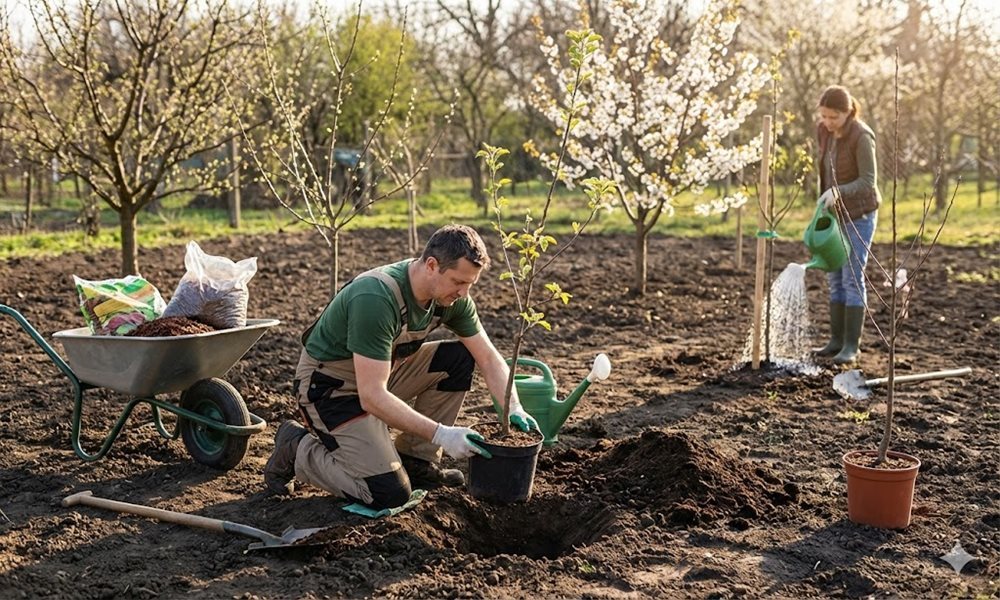

In March, the garden suddenly shifts into a more serious mood. The soil loosens, the days grow longer, and planting a tree becomes a realistic plan rather than a distant idea. For container-grown fruit trees, early spring offers an especially favorable starting point—if we know what to plant and how to do it properly.
Why Is March Ideal for Planting?
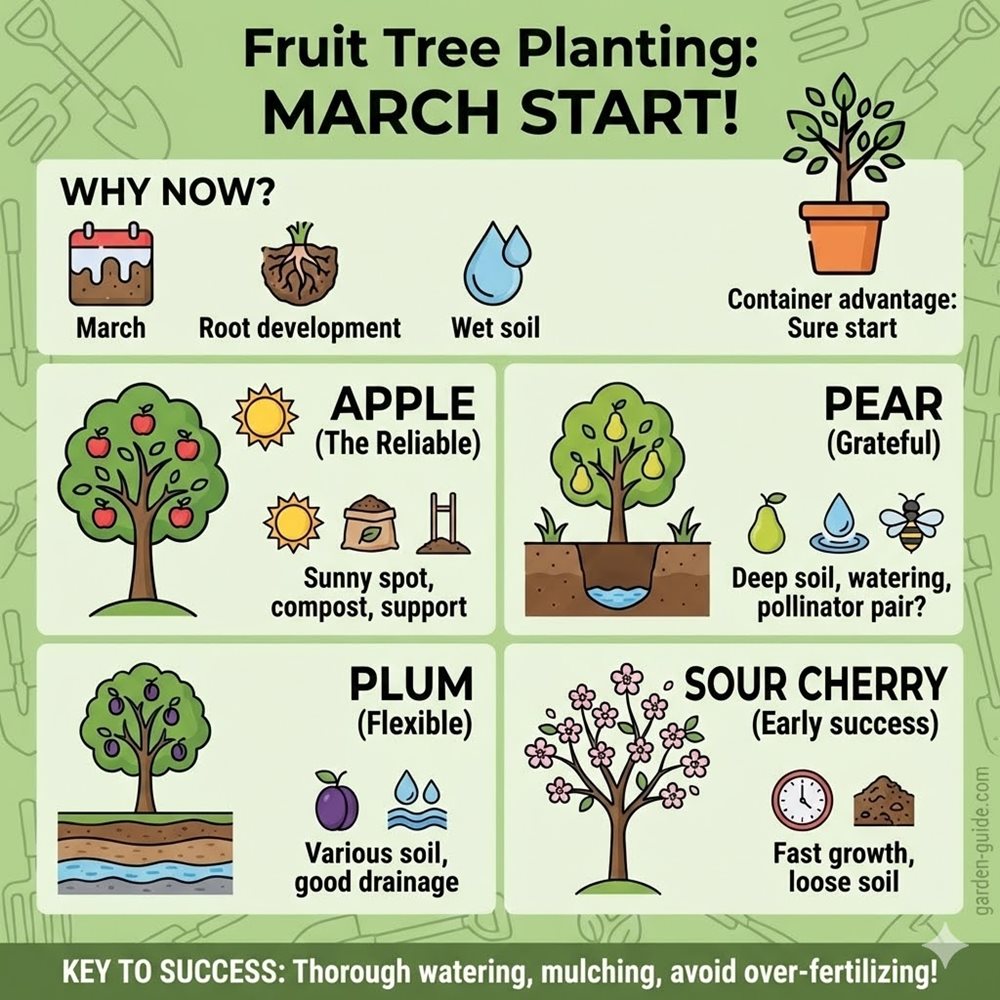
By March, the soil is usually no longer frozen, yet it still retains moisture from winter precipitation. Trees planted before leaf emergence can focus most of their energy on root development rather than foliage growth. This is crucial: the stronger the root system established in spring, the more balanced the summer growth will be. Container-grown trees have the advantage of an intact root ball, making transplant shock significantly less severe compared to bare-root specimens.
Apple – The Reliable Choice
Apple trees are classics in many Central European gardens and can be safely planted in March when grown in containers. They require a sunny position and well-draining soil. Loosen the bottom of the planting hole and mix in mature compost to improve soil structure.
In the first year, the goal is establishment, not fruit production. Stake the newly planted tree to protect the developing roots from strong spring winds.
Pear – Slightly More Demanding but Rewarding
Pears prefer deeper, nutrient-rich soils. After March planting, consistent watering during the first weeks is essential, as young roots are sensitive to drying out.
Choose a sunny site and consider pollination requirements. Some varieties need a compatible partner nearby, while self-fertile cultivars simplify planning.
Plum – Adaptable and Resilient
Plum trees tolerate a wider range of soil conditions, making them a versatile option. In March, they establish quickly, particularly in warm, sunny locations.
Ensure good drainage, as standing water can lead to root problems. The planting hole should be at least twice as wide as the root ball to allow roots to expand easily.
Sour Cherry – Early Success
Sour cherry trees respond very well to early spring planting. They grow vigorously and are generally less sensitive than sweet cherries. A sunny position and loose soil provide the best conditions.
During the first year, prioritize root establishment. Removing part of the initial blossoms can help prevent premature exhaustion of the young tree.
What Makes the Start Truly Successful?
After planting, water thoroughly—even if the soil appears moist. Proper settling eliminates air pockets and improves root-to-soil contact. Applying mulch helps retain soil moisture and stabilize root-zone temperature. Avoid excessive fertilization; newly planted trees benefit more from a calm, steady start than from nutrient overload.
March is not only a time for planning but also for action. A well-chosen and properly planted fruit tree laid down now forms the foundation for harvests in the years to come.