

Peas are among the earliest vegetables gardeners itch to sow, which is why late February and early March always bring the same question: can I plant them yet, or am I pushing my luck? The calendar won’t give you a straight answer. Peas are among the earliest vegetables gardeners itch to sow, which is why late winter and early spring always bring the same question: can I plant them yet, or am I pushing my luck? The calendar won’t give you a straight answer. The soil will.
The good news is that you don’t need a soil thermometer or any fancy tools. With a few simple, hands-on checks, you can tell whether your garden bed is actually ready for peas.
Where this question becomes relevant depends on climate. In cool–temperate regions (roughly USDA 5–6, including much of Central and Eastern Europe or the UK), it typically comes up from late February into early April. In milder temperate climates (USDA 7–8, parts of Western Europe), it often appears a few weeks earlier, while in colder regions and higher elevations it may not make sense until March or even April.
The exact dates matter far less than one thing: whether the soil itself is ready to cooperate.
Why peas tempt us so early
Peas thrive in cool conditions. Their seeds can germinate at relatively low temperatures, and young plants tolerate spring chills far better than most vegetables. But that doesn’t mean they enjoy cold, waterlogged soil.
In soil that’s too cold and wet, pea seeds often sit for weeks without sprouting. Some rot, others fall victim to soil pests. Early sowing only works if germination can start smoothly.
The first test: use your hands
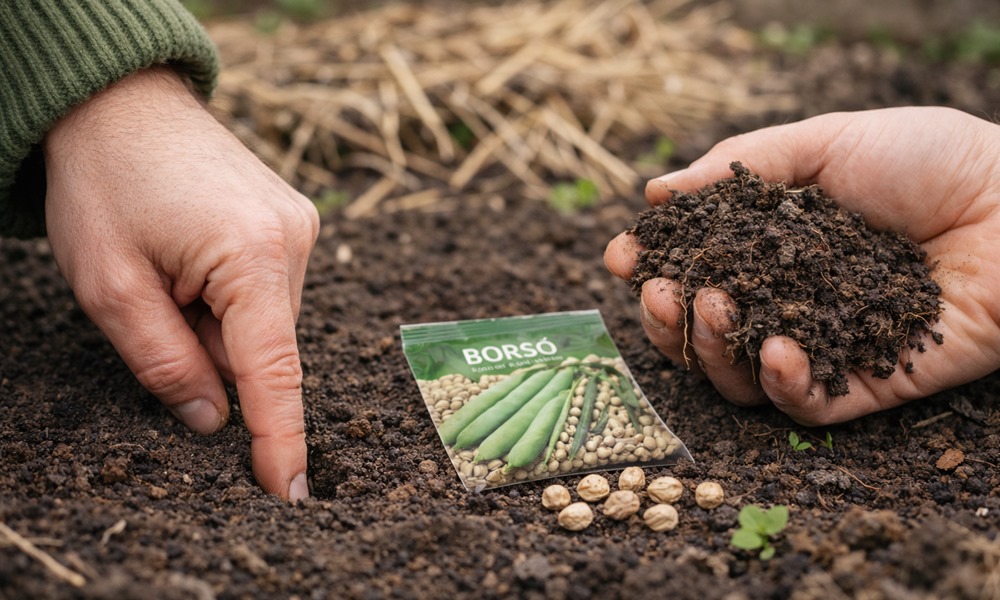
Dig down about 10 cm where you plan to sow and grab a handful of soil.
If it feels icy cold, sticky, and clumps into a heavy mass, it’s still too early. If it’s cool but crumbly and breaks apart easily, conditions are promising. Peas don’t need warmth as much as they need air in the soil.
The second clue: what happens after rain?
Pay attention after a wet day or two. If the surface stays muddy and compacted for days, the soil isn’t ready. If it dries within a day or so and becomes loose again, that’s a good sign. This tells you the soil is draining and breathing — both essential for germination.
The third hint: weeds tell the truth
It sounds odd, but the first tiny weeds are actually helpful messengers. Their appearance means the top layer of soil can already support germination. If the bed still looks completely lifeless, with nothing stirring at all, peas are likely better off waiting.
So when is it safe to sow?
You’re good to go if:
- the soil isn’t waterlogged,
- it’s no longer frozen,
- it crumbles easily in your hand,
- and the forecast doesn’t show prolonged hard frosts.
Peas can handle light cold snaps, but freshly sown seeds are at their most vulnerable stage.
A common early-sowing mistake
Many gardeners are fooled by a dry surface while deeper layers remain cold and compacted. Seeds placed into that zone simply stall. If you’re unsure, waiting a few more days is rarely a mistake. Peas are patient — and they reward patience with a stronger, more even start.
The takeaway
When sowing peas at the tail end of winter, the date matters far less than whether the soil is ready to work with you. If it is, sow with confidence. If not, a little restraint now will pay off later.