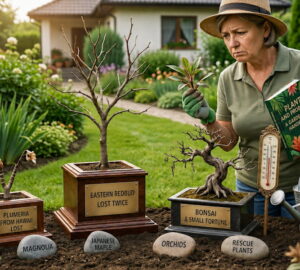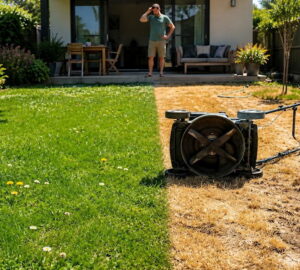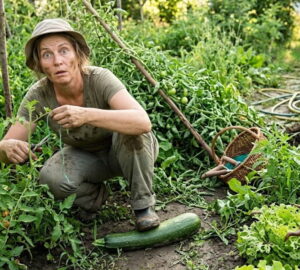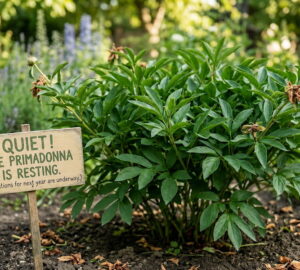


“Just add this to the soil and everything will be solved.” “This makes plants grow three times faster.” “Gardeners don’t want you to know this trick.” If you’ve ever scrolled through gardening content, you’ve seen lines like these. And chances are, at least once, you believed one of them. Not because you’re naïve — but because you’re human, and gardeners in particular.
The real question isn’t why we sometimes fall for them. It’s why these promises are so tempting, even when experience tells us that gardens don’t work this way.
The Garden Is Slow — the Internet Is Fast
Gardening operates on time scales measured in months, seasons, and years. Plants don’t react instantly, they don’t give feedback within an hour, and they rarely produce dramatic overnight results.
The internet, on the other hand, is fast. It wants immediate outcomes, preferably achieved in a single step. These two worlds naturally collide.
Quick gardening tricks are born where this conflict is disguised — as if the garden worked like an app.
The Illusion of Control
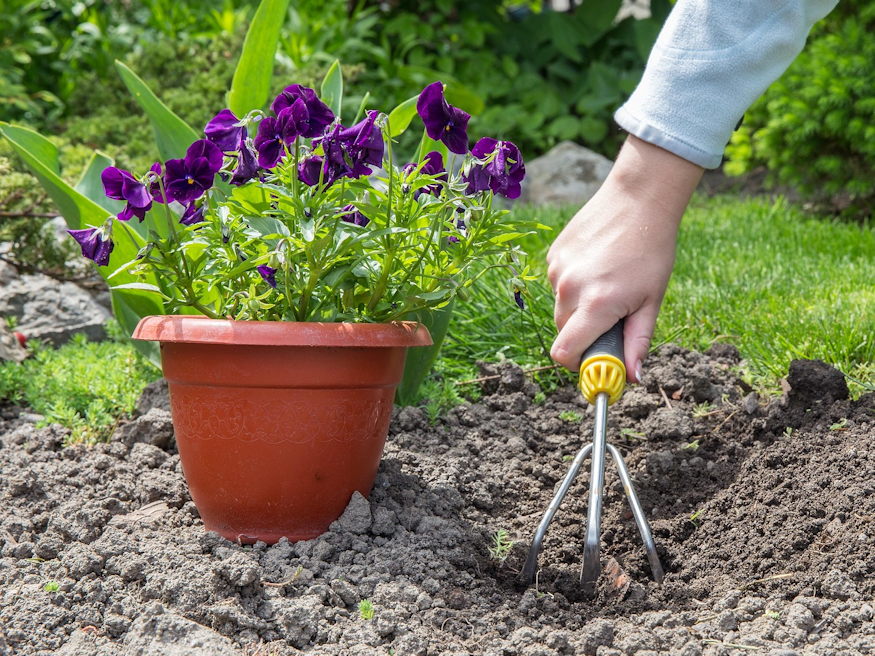
Typical examples are everywhere: banana peels buried under roses, coffee grounds added to every plant, crushed eggshells as universal calcium, or Epsom salt promised to make everything greener. Their shared promise is simple — one small action that puts the plant fully under control.
The biggest promise of quick tricks isn’t higher yields, but control. They suggest that with the right move, everything can be kept under command.
But a garden resists total control. It’s a living system shaped by weather, soil, microclimate, and the plant’s own biology.
When a trick claims “you can’t go wrong anymore,” it’s not speaking to the plant — it’s speaking to our uncertainty.
Why Do They Sometimes Work Anyway?
This is the key question. If these tricks never worked at all, no one would believe them.
The answer is simple: sometimes they really do seem to work.
Typical situations include moments when growth suddenly improves after the “trick,” simply because:
- warmer weather arrived,
- rainfall finally came,
- the plant was already in a strong growth phase,
- the effect of an earlier action just became visible.
In these cases, timing and cause easily get mixed up.
A plant receives an extra intervention at a good moment. The soil was already suitable. The weather cooperated. Success is then easily credited to the “trick,” rather than to the interaction of conditions.
This is where the human brain eagerly builds a story.
Classic TikTok Gardening Tricks
These are the methods designed to look impressive, work in short videos, and rely on a single dramatic action:
- burying raw eggs under tomatoes,
- cinnamon sprinkled on anything that looks fungal,
- spraying leaves with milk,
- sugar water for “faster growth”,
- baking soda as a universal soil fix.
What they share is simplicity and visual appeal. The problem is not that they always cause harm, but that they suggest a complex living system can be overridden with one easy move.
The Gardening Placebo
Many quick methods don’t actually harm plants — they just don’t do what they promise. Meanwhile, the gardener becomes more attentive, visits the plant more often, and notices changes sooner.
Improvement comes not from the secret ingredient, but from care itself.
That isn’t foolishness. It’s human nature.
The “My Grandmother Did It This Way” Trap
Quick tricks often blend modern miracle claims with traditional wisdom. A touch of nostalgia, a hint of secrecy — and the method suddenly feels credible.
The problem begins when tradition is removed from its original context. What worked in one soil, one climate, at one time does not automatically work everywhere.
A garden is not a universal recipe book.
Why Do We Still Like Them?
Because they offer hope. Because they reduce uncertainty. Because they say: it wasn’t your fault — you just didn’t know this one trick.
That is far more comforting than accepting that gardening involves learning, trial and error, setbacks, and patience.
When Should We Be Skeptical?
If a method:
- works for every plant,
- works in every soil,
- promises instant results,
- blames the gardener when it fails
then it’s probably not speaking to the garden, but to our expectations.
What’s Worth Taking Away
Quick gardening tricks don’t exist because people are foolish. They exist because gardens are slow — and we are impatient.
Real knowledge is rarely spectacular, but it works over time. And when a plant finally thrives on its own, that experience is far more rewarding than any “secret ingredient.”
The garden doesn’t ask for tricks. It asks for attention, time, and acceptance.