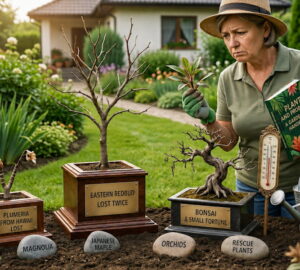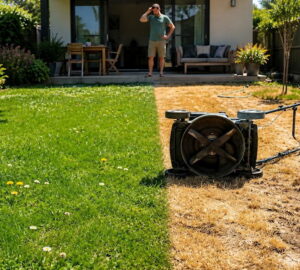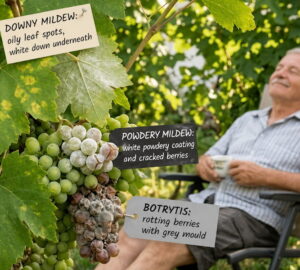

There comes a moment in every gardener’s life when everything suddenly feels clear. We know when to prune, how much to water, which plant likes what. Or at least, that’s how it feels. Then a new season arrives. A late frost, an unexpected pest, a stubborn plant that refuses to fruit – and it turns out we may have been a little too confident.
This isn’t laziness, ignorance, or personal failure. It’s a well-documented psychological phenomenon known as the Dunning–Kruger effect.
The concept was described in 1999 by American psychologists David Dunning and Justin Kruger, who studied why people with limited knowledge in a field often greatly overestimate their own competence. Their conclusion was striking: beginners don’t just lack experience – they often lack the ability to recognize how much there is still left to learn.
The Dunning–Kruger Effect, Explained the Gardening Way
In simple terms, the Dunning–Kruger effect means that the less we know, the more confident we tend to feel. Early successes trick the brain into thinking the system has been mastered. Reality, however, usually arrives later.
Gardening is a perfect environment for this illusion. The first seedling grows, the leaves look healthy, the plant survives its first weeks. It feels like skill. In truth, the plant is often still running on stored energy. The real test comes later – in heat waves, heavy rain, drought, disease, and stress.
That’s why early success in the garden is often genuine, while failure is delayed.
The Familiar Gardening Curve
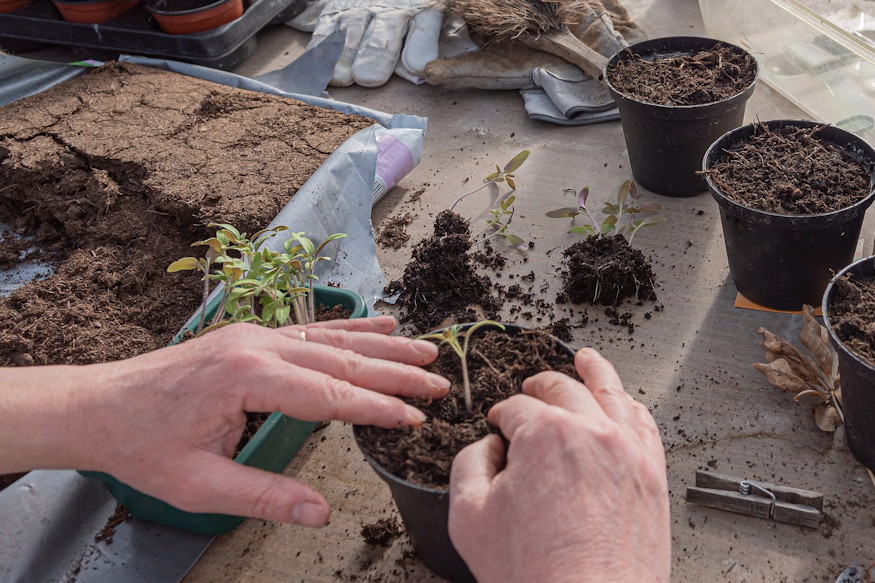
Most gardeners travel the same path. We plant something, it grows. We water it, it stays green. It produces a harvest, and suddenly we feel we’ve “figured it out.” That’s when statements like “this plant isn’t fussy at all” or “I always do it this way and it works” appear.
It’s similar to pruning a young fruit tree after one good year and believing the technique is mastered – before the tree has even carried real fruit.
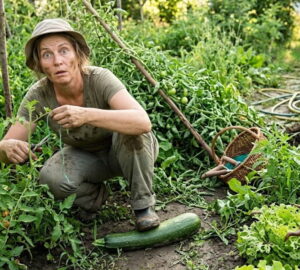
Then the next season changes everything. Different weather, different soil moisture, different pest pressure. The same method no longer works. Like tomatoes that thrived last year in the same spot but now produce nothing but leaves. The rule didn’t change – the conditions did.
This is where confidence meets reality. And where real learning begins.
Social Media: A Fast-Forward Button for Overconfidence
Social media amplifies the Dunning–Kruger effect beautifully. Short videos, dramatic before-and-after photos, confident voices offering universal solutions. It creates the illusion that there is one correct method.
But gardening doesn’t fit algorithms. Lavender doesn’t fail because someone “did it wrong,” but because the soil held too much water, the winter was unusually wet, or the roots stayed damp for too long. These details don’t fit into thirty seconds of content.
Failures are rarely shared. Doubt even less so.
As a result, the loudest advice often comes from the least experience, while truly skilled gardeners tend to speak carefully, with conditions and exceptions.
“I Know Everything” vs. “I’m Still Learning”
In the garden, confidence isn’t the best sign – caution is. The sentence “this worked for me, but it may not for you” isn’t weakness. It’s experience.
Recognizing the Dunning–Kruger effect isn’t about mocking beginners. It’s about understanding that overconfidence is often the first stage of learning, not the final one.
The Quiet Insight at the End
If you’ve ever had a season where you thought you understood everything, only for the garden to gently correct you, that’s good news. You’re exactly where most good gardeners have been before.
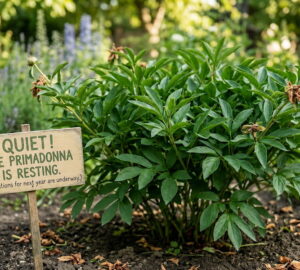
The garden doesn’t grade us. It doesn’t hurry us. It simply responds. And the more we learn, the clearer it becomes that the real question isn’t whether we’re doing it “right,” but whether we notice when it’s time to learn again.
That isn’t failure. It’s the natural order of gardening.