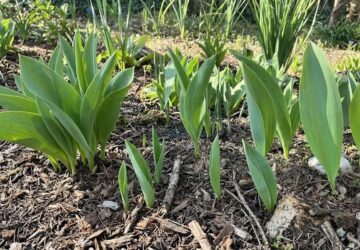

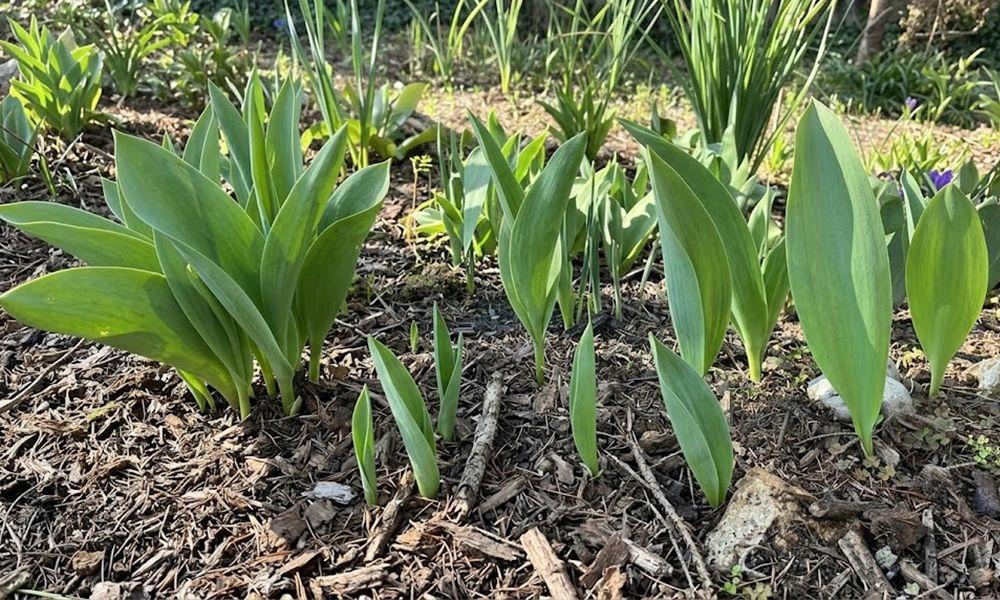

One of the most frustrating spring garden moments comes when tulips emerge with strong, healthy leaves — but no flower buds appear. The foliage looks promising, the plants seem alive and vigorous, yet blooming simply never happens.
This is a very common issue, and in most cases it does not have a single simple cause. Tulips produce only leaves when the bulb was unable to store enough energy for flowering, or when growing conditions interfered with bud development.
Tulips Prepare Next Year’s Flower in Advance
Tulips, especially Tulipa gesneriana and many garden hybrids, do not decide in spring whether to bloom. The flower for the coming season is largely prepared inside the bulb during the previous growing cycle. That means when tulips produce leaves only, the real problem often began last year.
Leaves Are Not Optional
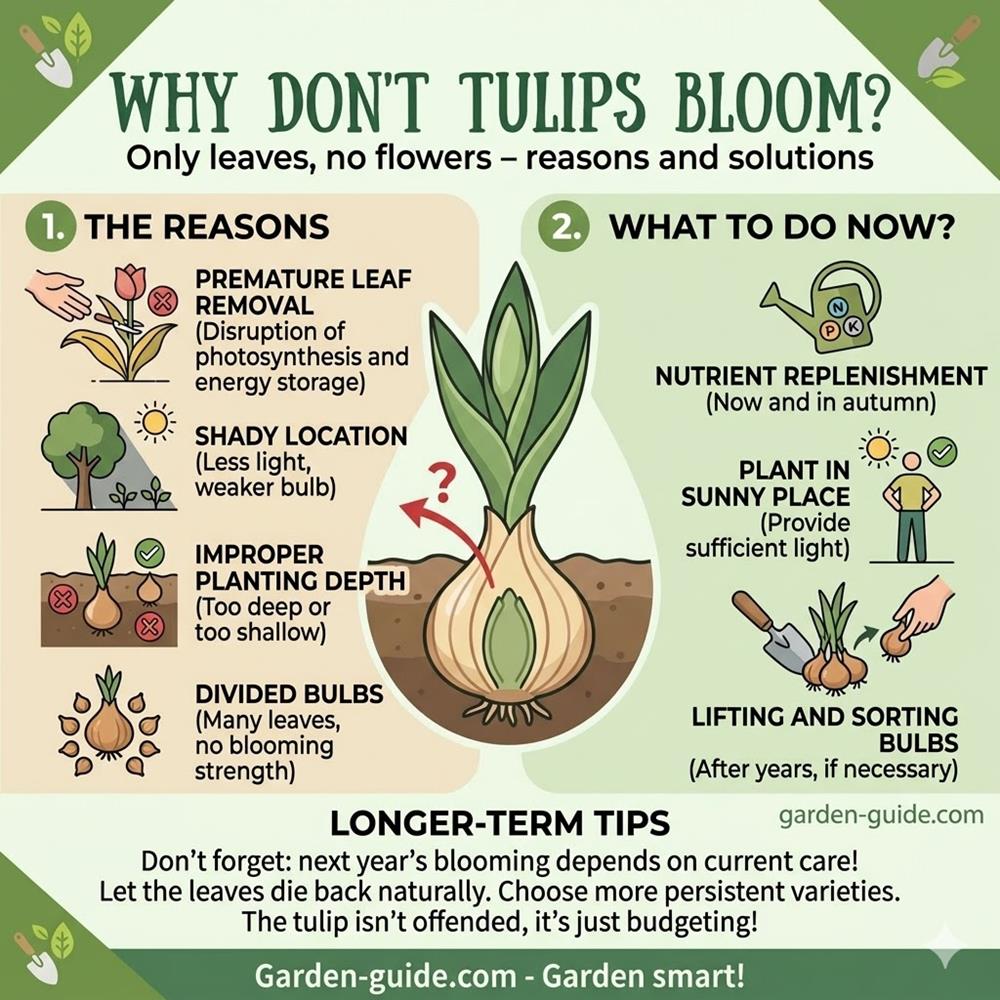
After flowering, tulip leaves continue to photosynthesize and refill the bulb. If foliage is removed too early, tied up, or cleared away for tidiness, the bulb may not rebuild enough reserves. The following spring, the plant may still manage to produce leaves, but not flowers.
Shade Reduces Energy Storage
Tulips prefer sunny spring positions. If trees, shrubs, or perennials shade the area too early, the leaves receive less light and cannot recharge the bulb efficiently. Flowering often weakens over several seasons under these conditions.
Planting Depth Matters
Bulbs planted too shallowly are more vulnerable to drying, temperature fluctuation, and rapid division into smaller offsets. Bulbs planted too deeply may use too much energy just reaching the surface. A depth of roughly two to three times the bulb’s height is usually considered appropriate.
Bulbs May Have Divided Into Smaller Offsets
Over time many tulips form clusters of smaller daughter bulbs. These are often not yet strong enough to flower. Gardeners then see plenty of leaves but fewer and fewer blooms. Older, undivided tulip patches often show this pattern.
Mild Winters and Reduced Cold Exposure
Tulips require a sufficiently cool winter period for reliable flowering. In unusually mild winters or warmer urban microclimates, cold exposure may be reduced, weakening bloom performance.
Nutrient Competition and Overcrowding
Where bulbs remain crowded for years, competition for light, nutrients, and moisture increases. Flowering declines while foliage may still appear.
What To Do If Only Leaves Appear
Do not cut the leaves in frustration. Let them die back naturally so the bulbs can store as much energy as possible. Later in the season, bulbs can be lifted, sorted, and replanted in a sunnier, better-drained place. If the bulbs have divided heavily, it may take several seasons before strong flowering returns.
Not All Tulips Are Equally Persistent
Some highly ornamental tulip hybrids are naturally short-lived in the garden. They may perform spectacularly for one or two years, then weaken. Others, especially some botanical types, are much better repeat bloomers. So sometimes the problem is not entirely the gardener’s fault. Some tulips are simply bred more for immediate display than for long-term resilience.
Tulips Are Not Being Stubborn – They Are Budgeting Energy
When tulips send up leaves but no flowers, the bulb is not protesting. It is making an energy decision. The good news is that the problem is often reversible. The bad news is that the solution usually takes time, because tulip flowering is built one season ahead.