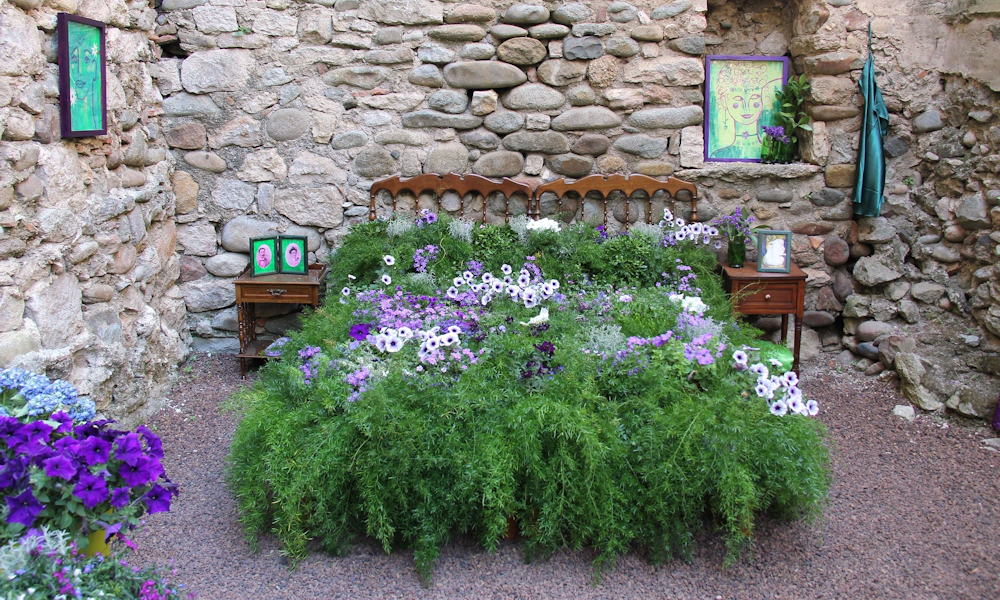

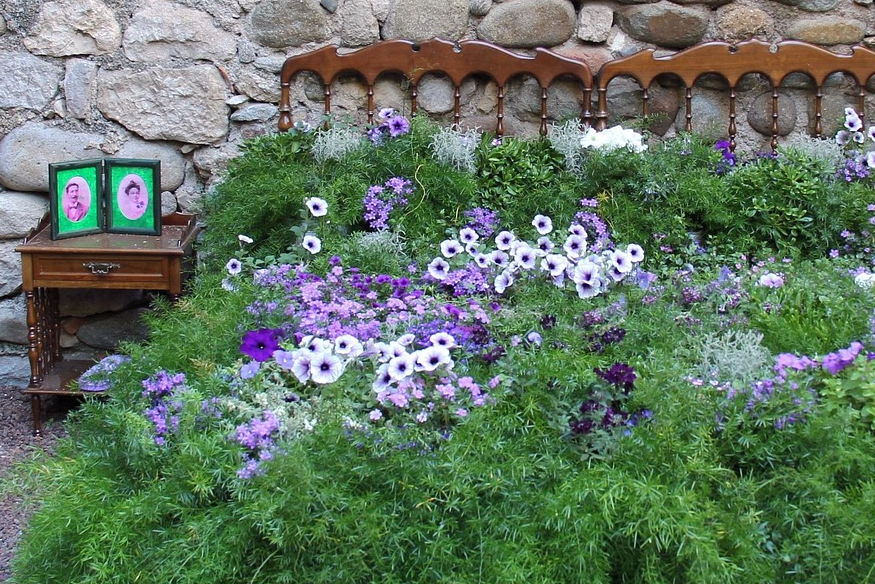
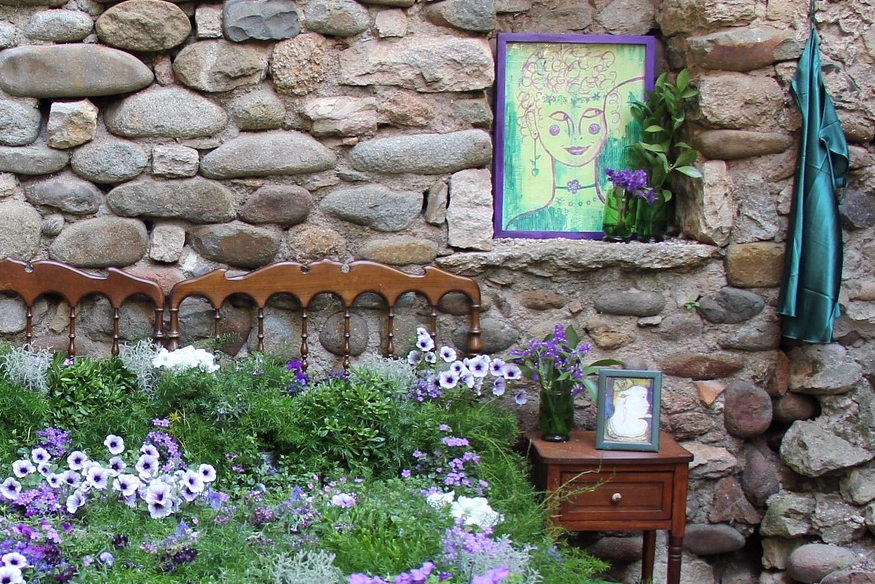
Creating a lush, visually rich flower bed is one of the most rewarding garden projects. The image shown here takes the idea literally: a bed filled entirely with living plants. While playful in appearance, it offers valuable lessons for anyone interested in flower bed design, dense planting, and sustainable garden landscaping.
Where a Successful Flower Bed Really Begins: Soil and Structure
Every healthy flower bed starts below ground. Dense, layered planting requires excellent drainage, stable structure, and a loose, breathable growing medium. A gravel base combined with a separating layer and high-quality garden soil helps prevent waterlogging while supporting strong root development. Without this foundation, even the best ornamental plants will struggle.
Designing a Flower Bed with Layers, Not Rows
Modern flower bed design relies on layering rather than rigid rows. Plants must tolerate close spacing, share water and nutrients efficiently, and visually blend into a continuous surface. This approach creates a natural, full appearance while reducing visible gaps and exposed soil.
Groundcover and Base Plants for Dense Flower Beds
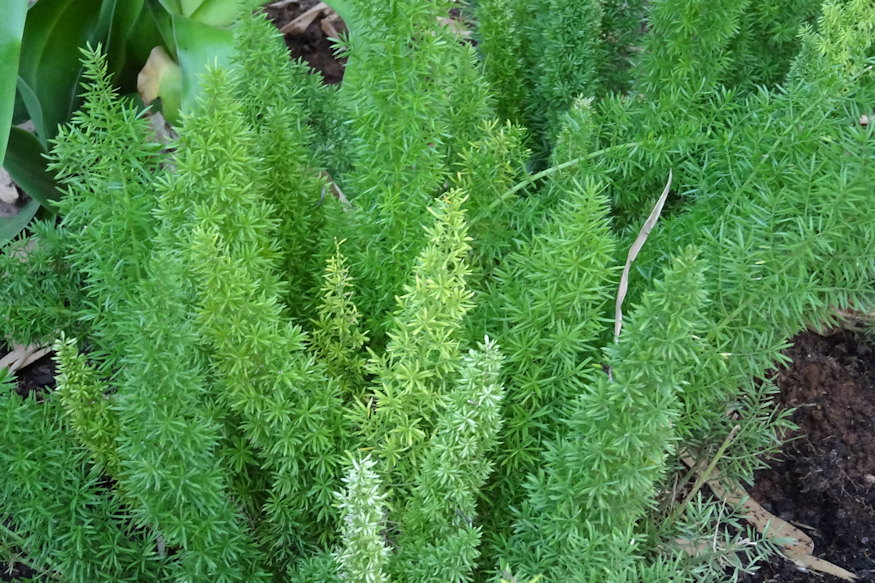
The lowest layer acts as the visual and structural base. Soft, cascading plants are ideal here. Ornamental asparagus fern (Asparagus densiflorus) provides fine texture and a flowing form, making it an excellent base plant. Low-growing pinks (Dianthus deltoides) and creeping thyme (Thymus serpyllum) also work well, offering resilience, fragrance, and pollinator-friendly flowers.
Flowering Plants That Thrive in Compact Plantings
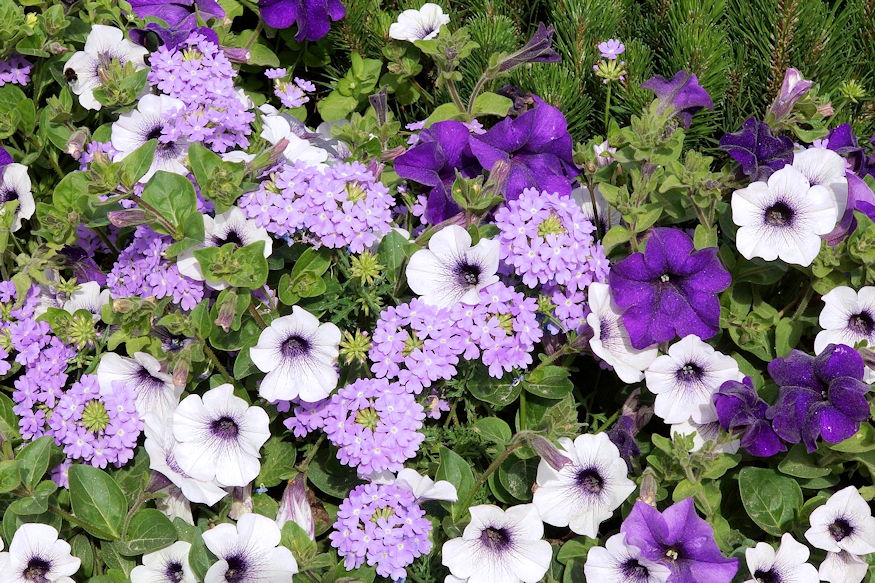
For colour and seasonal interest, choose flowering plants known for continuous blooming and adaptability. Garden petunias (Petunia × atkinsiana) are widely used in flower bed planting thanks to their long flowering period and wide colour range. They pair effectively with verbena (Verbena hybrida) and bacopa (Sutera cordata), which fill gaps and soften transitions between larger blooms.
Using Foliage Contrast to Improve Flower Bed Design
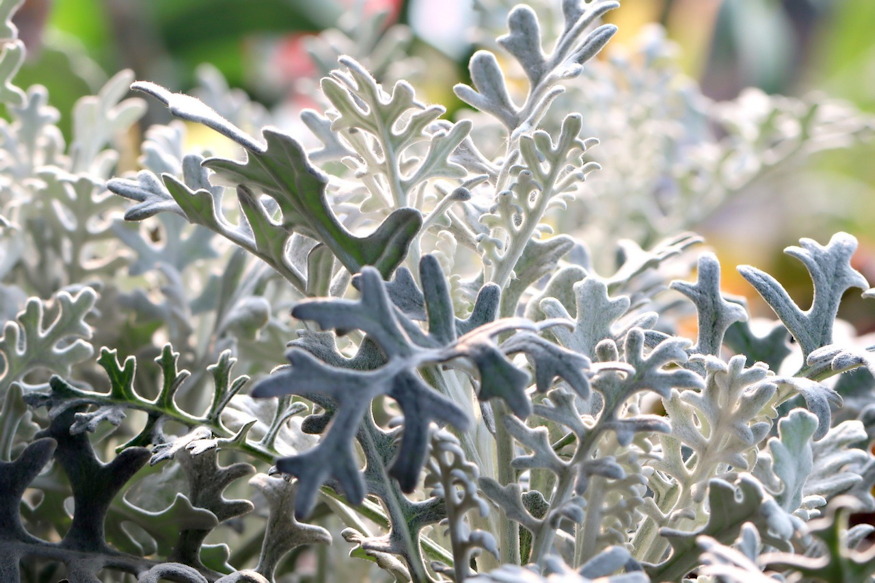
In dense garden beds, foliage contrast is just as important as flowers. Silver- or grey-leaved plants such as dusty miller (Jacobaea maritima) add visual balance, reflect light, and prevent the planting from appearing overly heavy or chaotic.
Light, Water, and Maintenance Considerations
Most plants suited for compact flower beds prefer full sun to light shade. Consistent watering is essential, especially during summer, as dense plantings dry out faster than traditional borders. However, good drainage ensures roots remain healthy even with regular irrigation.
Can You Sleep in a Flower Bed?
While the concept shown in the image suggests it, a flower bed is best enjoyed visually rather than functionally. Still, the idea serves as a reminder that garden design benefits from creativity. A flower bed does not need to follow strict conventions to be successful.
Key Takeaways for Creating a Lush Flower Bed
Whether you are designing a decorative garden bed, a pollinator-friendly planting, or a low-maintenance landscape feature, the principles remain the same: strong soil preparation, compatible plant selection, and layered composition. When these elements come together, a flower bed becomes more than a collection of plants – it becomes a living, evolving surface that defines the character of your garden.