

Late winter is when gardeners rediscover forgotten seed packets tucked into drawers. Some are carefully labeled; others look like survivors of a small domestic storm. The question is inevitable: will they germinate, or will they disappoint? Seeds are living organisms in suspended animation. Their longevity depends on species genetics, storage temperature, and humidity. Cool, dry storage dramatically extends viability, while fluctuating warmth and moisture accelerate decline.
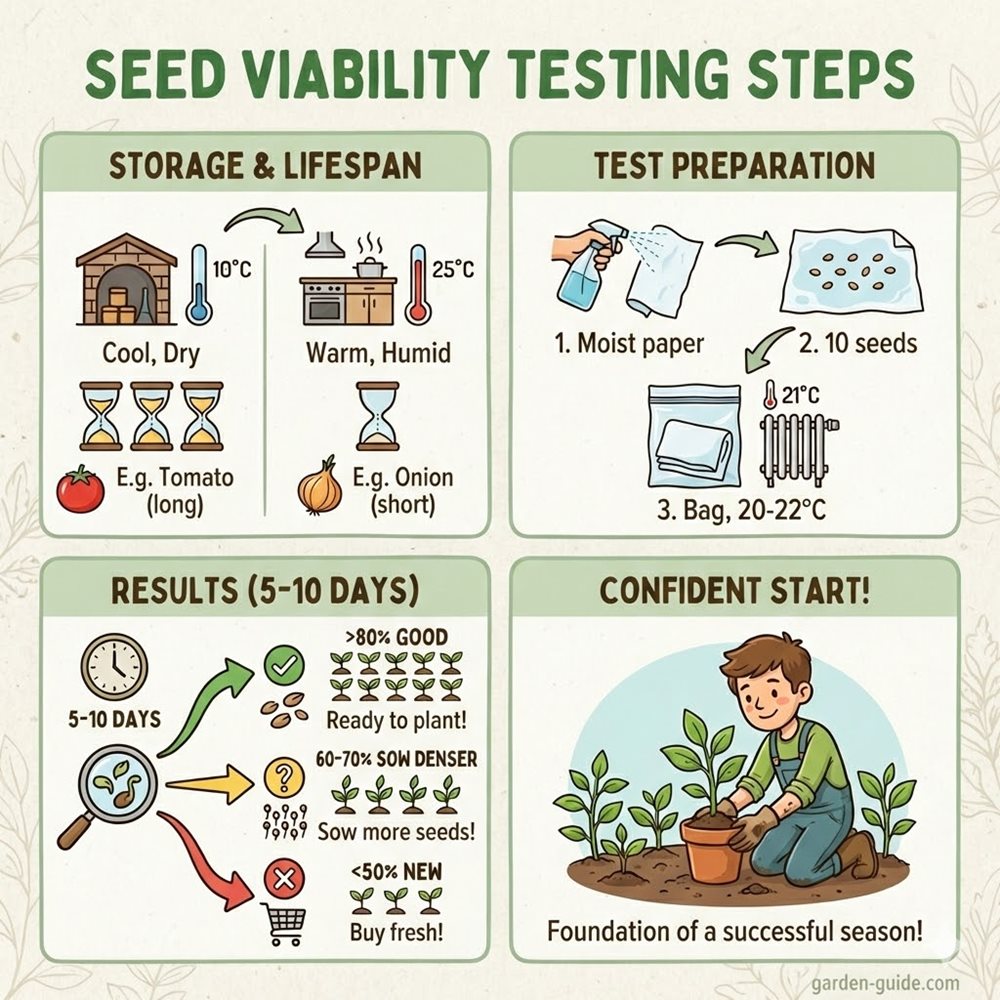
Species Matter – Not All Seeds Age Equally
Tomato seeds may remain viable for four to five years under proper storage. Peppers generally perform well for two to three seasons. Onion family seeds decline faster, often losing vigor after one or two years. Parsnip is notoriously short-lived. Understanding these differences prevents unrealistic expectations.
The Paper Towel Germination Test – Simple and Reliable
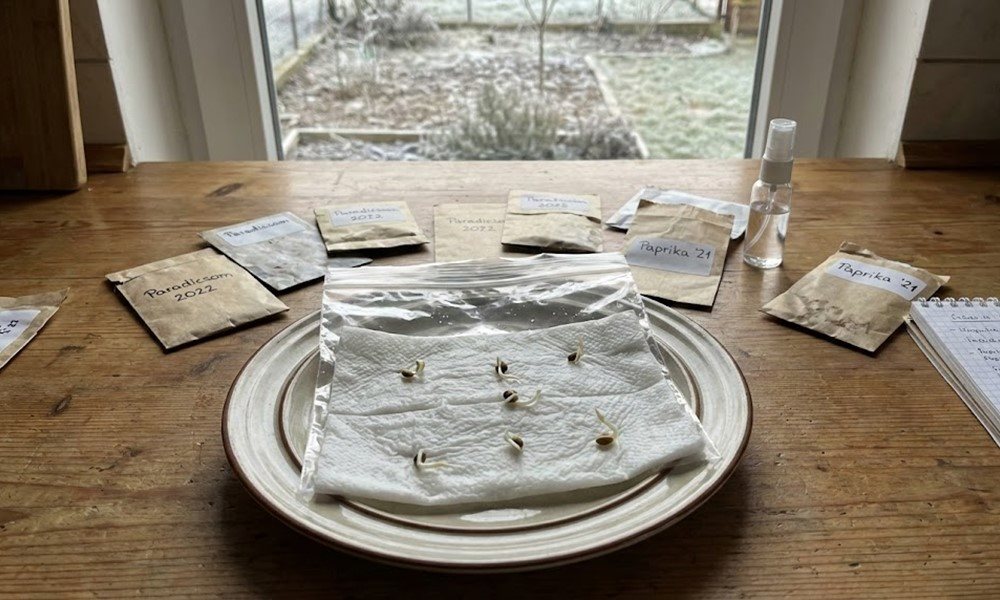
Place ten seeds on a moist (not dripping) paper towel. Fold it, seal in a plastic bag to retain moisture, and keep at 20–22 °C. After five to ten days, count germinated seeds.
80–90% germination indicates excellent viability. Around 60–70% remains usable, though slightly denser sowing may compensate. Below 50%, replacement becomes practical.
Economic and Biological Considerations
Low germination rates waste time, soil, and growing space. Overcrowding to compensate can weaken seedlings and complicate thinning. Investing in fresh seed may ultimately save effort.
The Psychological Benefit of Testing
Beyond practical value, germination testing offers reassurance. Seeing life emerge indoors in late winter marks the true beginning of the gardening season. It transforms planning into action.
Testing seeds is not distrust of past purchases. It is informed preparation — a quiet, confident step toward a productive spring.