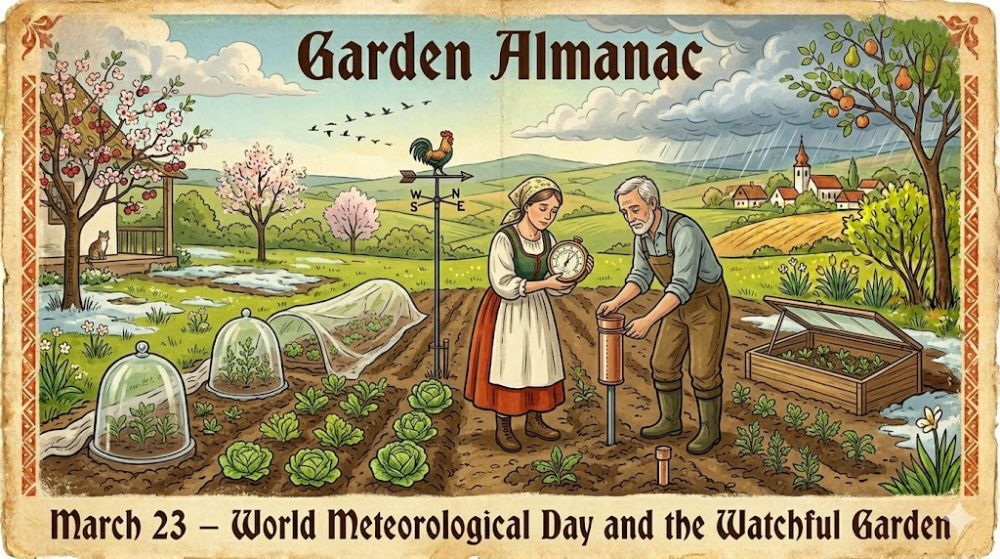

March 23 is not one of those spring dates loaded with a single famous folk belief. Instead, it opens onto something quieter and perhaps more essential: the old human habit of reading the sky. For gardeners, weather has never been background. It governs sowing, pruning, covering, waiting, and all the small decisions that make the difference between damage and flourishing.
Before any forecast became digital, people watched cloud shapes, wind shifts, damp air, late frost, and the behaviour of birds and animals. Modern meteorology may use satellites, radar, observation networks, and models, but the deeper instinct is the same. Good gardening still begins in attention.
Why This Day Matters
World Meteorological Day is observed on 23 March each year to mark the entry into force of the Convention establishing the World Meteorological Organization on 23 March 1950. In 2026, the theme is “Observing today, protecting tomorrow,” a line that feels especially apt in the garden.
Observation is never passive here. To notice frost risk, wind exposure, waterlogging, or a sudden drop in temperature is already to begin protecting blossom, seedlings, fresh growth, and the season to come.
The Garden as a Weather Instrument
Late March is one of the most deceptive moments in the gardening year. Light is stronger, buds are moving, and the soil may look ready, yet a single cold night can still undo tender progress. This is why weather awareness matters so much now.
Every garden has its own microclimate. One corner traps cold air, another warms early against a wall, one bed dries quickly in wind, while another stays damp and slow. Learning a garden means learning how weather settles into place.
Frost, Wind, and the Discipline of Waiting
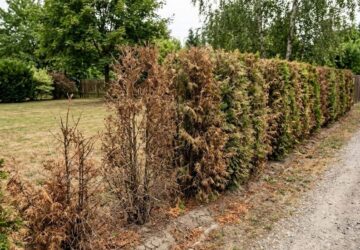
Spring frost remains one of the greatest risks at this stage of the year, especially for tender growth and blossom. Watching the forecast is part of the answer, but so is noticing the garden’s own behaviour. Where does frost linger? Which plants are most exposed? What should still be covered, delayed, or moved?
This is one of the least glamorous but most valuable forms of seasonal wisdom: knowing when not to hurry.
What the Day Teaches
In the Garden Almanac, March 23 becomes a day of watchfulness rather than spectacle. It reminds us that weather is not merely something that happens above the garden. It enters the soil, touches the buds, shapes the moisture, and decides the rhythm of work.
To observe well is to garden more gently, more intelligently, and often more successfully. Spring may be opening, but it still expects respect.