


In traditional calendars, January 16 was never a day of celebration. Instead, it marked something far more important to those who lived close to the land: a moment of trust. Across cultures, this was the day when nature was believed to be doing its quiet, necessary work — and humans were expected not to interfere.
From frozen fields to sleeping seeds and motionless trees, January 16 carried a shared message: what appears harsh or inactive may, in fact, be essential.
When Frost Was a Blessing
In Central and Eastern Europe, farmers once spoke of the “good frost.” A deep, dry cold around mid-January was welcomed rather than feared. It was believed to cleanse the land, weaken pests, and prepare the soil for a healthier growing season.
This belief was grounded in experience. Prolonged freezing reduces overwintering insect populations, limits fungal survival, and helps break down compacted soil. Even today, gardeners notice fewer problems after winters that include real, penetrating cold.
January 16 often fell into this decisive period — late enough for frost to do its work, early enough not to threaten spring growth.
The Day Seeds Were Left to Rest
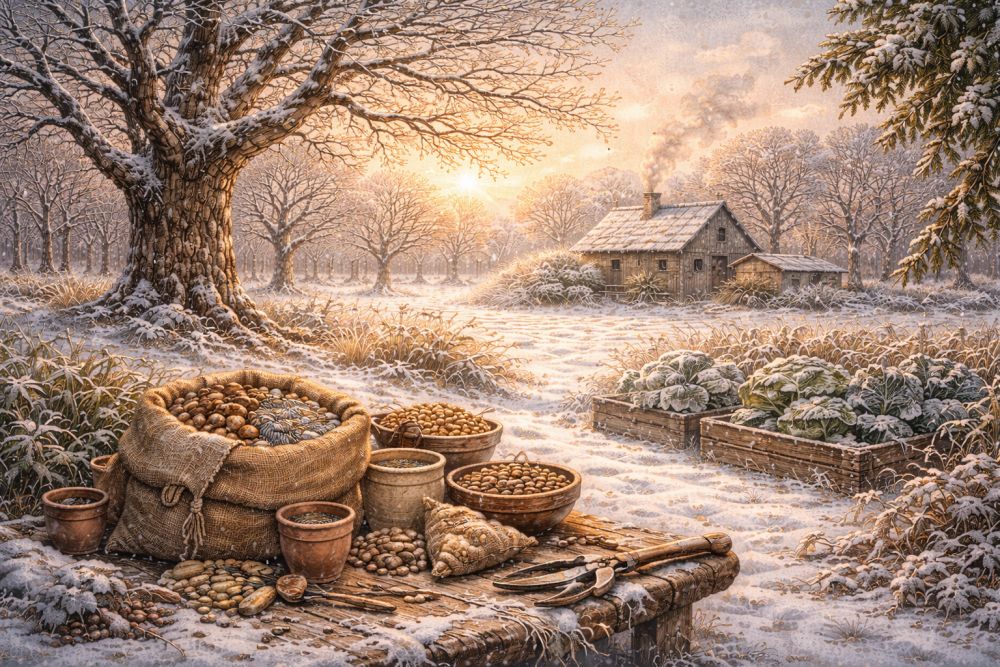
Across rural Europe, seed handling traditionally ended around mid-January. After sorting and counting, seeds were stored away and deliberately left untouched.
The reasoning was simple and symbolic: seeds needed rest. Disturbing them too often was thought to weaken their strength.
Modern plant science offers a parallel explanation. Many seeds require a stable period of dormancy before they can respond properly to warmth and moisture. Repeated temperature changes and handling can reduce viability — a reality farmers learned long before it was measured in laboratories.
January 16 thus became a line not to cross. Planning was welcome. Action was not.
When Trees Were Said to Breathe
In Alpine and Balkan traditions, trees were believed to “breathe” during the heart of winter. This was not breathing in the human sense, but a poetic way of describing an inner shift — a moment when trees gathered strength rather than expressed it.
Pruning or cutting during this time was avoided. People believed it caused sap to retreat unevenly, leaving trees weak or vulnerable.
Today, we understand that trees in deep dormancy rely on carefully balanced internal reserves. Disturbance followed by sudden temperature changes can indeed increase stress, making old warnings sound surprisingly modern.
Beyond Europe: Winter’s Deepest Breath
Similar ideas appear in East Asian seasonal philosophy. Mid-January aligns with the peak of yin — the inward, conserving force of winter. From this point onward, the balance slowly begins to shift, though no outward change is visible.
Plants, in this view, are already reorganizing below ground. Roots remain active, energy is stored, and future growth is quietly prepared.
The garden looks still, but it is not idle.
A Day of Restraint
What unites these traditions is not fear of winter, but respect for it. January 16 was understood as a day when intervention could do more harm than good.
Frost needed time to cleanse. Seeds needed silence. Trees needed to remain whole.
This wisdom runs counter to modern urgency, yet it aligns closely with ecological thinking today.
Why January 16 Still Matters
In gardening, not every improvement comes from action. Some come from knowing when to step back.
January 16 reminds us that resilience is often built during periods of apparent inactivity. Beneath frozen ground and bare branches, processes are unfolding that cannot be rushed.
The garden does not ask for effort on this day. It asks for patience — and trust that nature, left alone for a moment, knows exactly what it is doing.
That quiet understanding is what earns January 16 its place in The Garden Almanac.