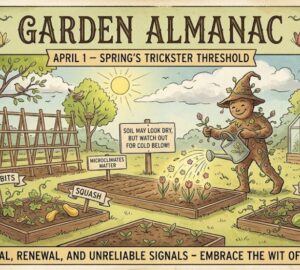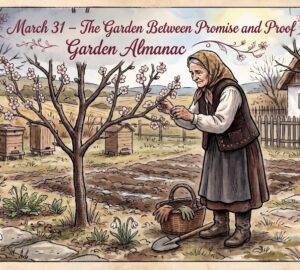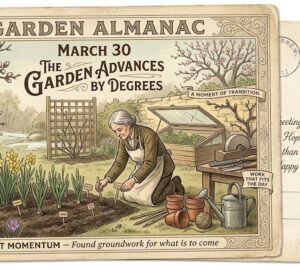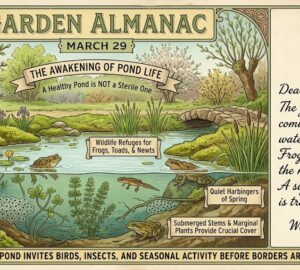
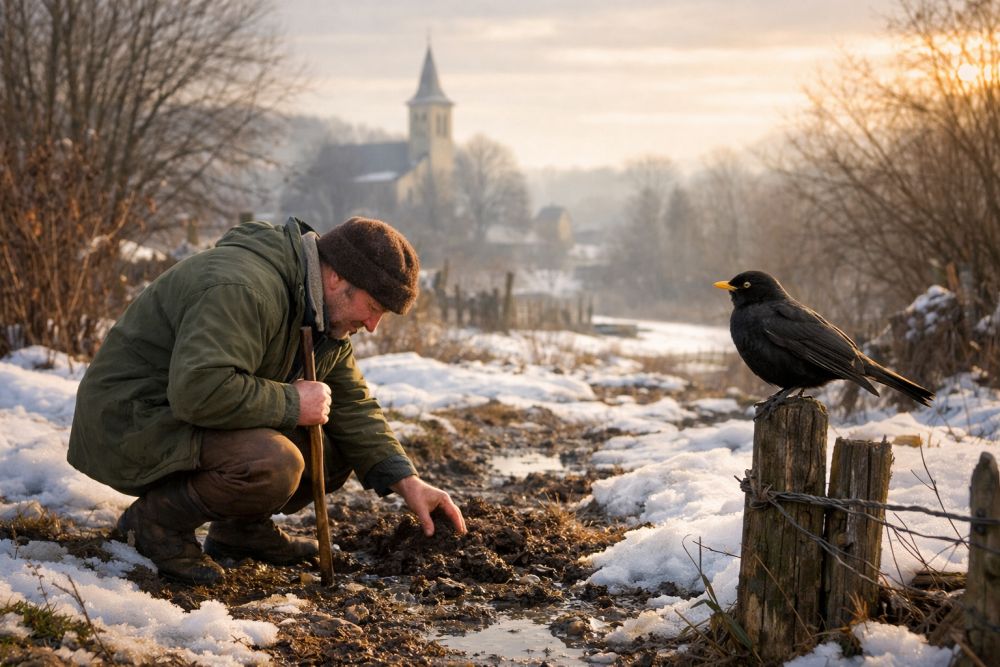

Late February often feels suspended between certainty and change. Across much of the Northern Hemisphere, gardeners stand at a seasonal threshold — aware that winter may still return, yet sensing that its strength is waning.
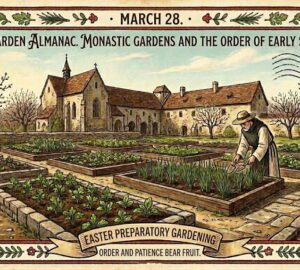
February 21 is also associated with Saint Peter Damian (1007–1072), a Benedictine reformer and later Cardinal-Bishop of Ostia. Monastic communities of his era depended heavily on orchards, herb gardens, and carefully managed plots for sustenance. The image of “keys” linked to Saint Peter in Christian symbolism resonates seasonally here: late winter feels like a locked gate slowly beginning to turn.
Reading the Soil
In many traditional farming cultures, late February was a time to test the ground by hand. Does the soil crumble, or does it remain sealed by frost? Freeze–thaw cycles now reshape structure below the surface.
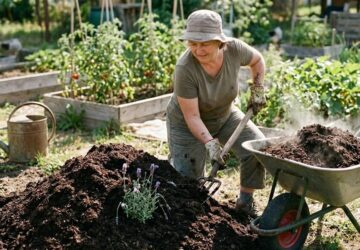
Modern gardeners still read these signals: avoid compacting saturated beds, observe drainage patterns, and prepare tools for early work.
The Language of Birds
Birdsong intensifies during this period. Blackbirds extend their morning calls; tits begin territorial displays. Across Europe and North America alike, sound often precedes visible growth.
Seasonal change is first heard, then seen.
Waiting for the Ice to Break
In Central Europe, late February carries folk memories of “ice-breaking” days — moments when thaw either advances decisively or winter briefly reasserts itself. This tension between retreat and return defines the closing chapter of the cold season.
February 21 reminds us that transition is rarely dramatic. It unfolds through observation: a softening field, a rising note in the air, a day that lingers a little longer in the light.