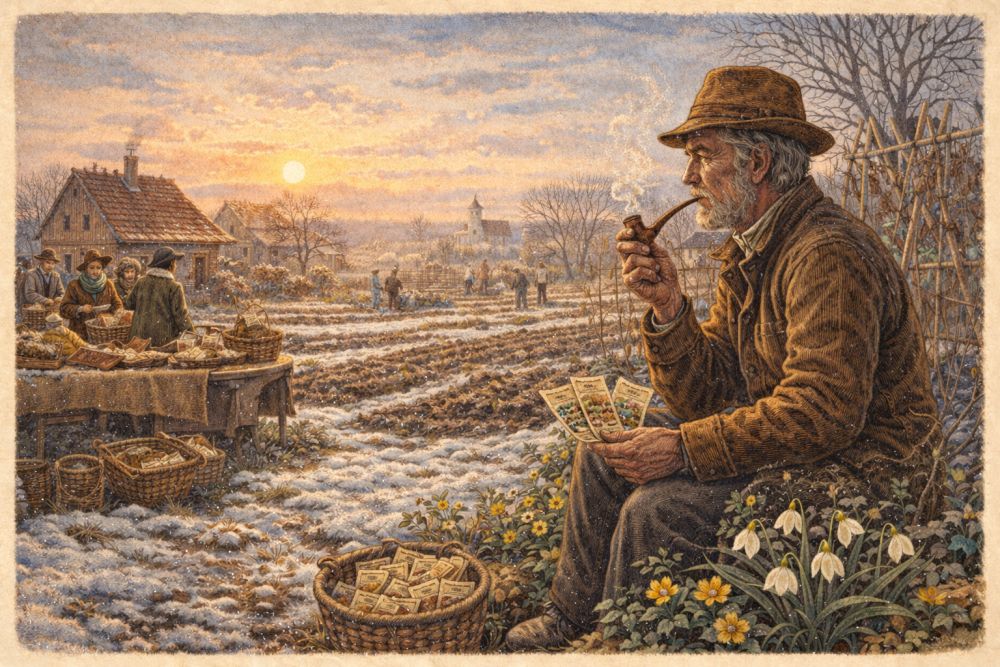

Mid-February rarely offers stability. Days soften; nights reclaim the cold. This oscillation shapes more than comfort — it reshapes the soil itself.
Lengthening Light
Across the Northern Hemisphere, daylight has increased significantly since the winter solstice. Early bloomers such as snowdrops (Galanthus nivalis) and winter aconite (Eranthis hyemalis) respond primarily to light, not warmth. Hazel (Corylus avellana) often continues releasing pollen during this period.
Light is now a stronger force than cold.
Freeze–Thaw Cycles
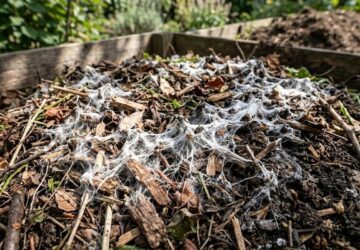
Repeated freezing and thawing naturally breaks down soil clods, improving tilth. Yet it can also heave shallow-rooted plants. Gardeners observing these cycles understand that structural change often happens invisibly.
Checking drainage, avoiding heavy foot traffic on saturated soil, and planning early sowings become part of this transitional rhythm.
Seasonal Soundscape
Blackbirds sing earlier and longer. Great tits mark territory. Sound frequently signals seasonal transition before foliage does.
Tobacco – A Traveling Plant
February 20 is also marked in some circles as International Pipe Smokers’ Day. Beyond the custom itself stands the plant: tobacco (Nicotiana tabacum), native to the Americas and introduced to Europe in the 16th century.
Botanically related to tomatoes and peppers, tobacco later became a significant crop in parts of Central and Eastern Europe. Ornamental species such as flowering tobacco (Nicotiana alata) are still grown in gardens for their evening fragrance and ability to attract night pollinators.
Its journey across continents reflects how climate, trade, and cultivation reshape landscapes. Even the plants we consider traditional often began as newcomers.
Monastic and Community Gardens
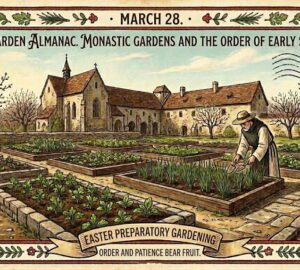
February 20 is also observed as the World Day of Social Justice, a reminder that access to land, food, and resources has always been a shared concern. Late winter was traditionally the moment when monastic gardens were inspected and orchard rows checked for winter damage. The harvest to come would support an entire community.
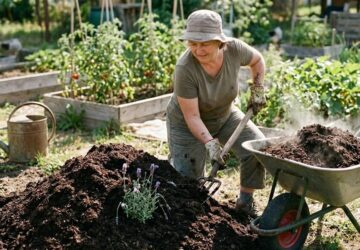
Modern community gardens echo this heritage. In many cities, late February is when seed swaps, planning meetings, and soil preparation begin. Gardeners exchange heirloom seeds, share cultivation advice, and map out shared beds for the coming season.
Seed exchange is more than a practical gesture — it is a way of preserving biodiversity and passing horticultural knowledge from one generation to the next. Land stewardship remains collective work — a seasonal act of cooperation as much as cultivation.
February 20 reminds us that seasonal change is incremental. Growth begins in pulses — advance, retreat, advance again — until one day the balance no longer tips back.