
February 1 marks one of the clearest symbolic turning points of the natural year. Across Christian tradition, Celtic seasonal thinking, and folk calendars of the North, this day is consistently linked to light, renewal, and the careful reopening of the world after winter’s deepest hold.
Saint Brigid and the Return of Care
In the Christian calendar, February 1 is the feast day of Brigid of Ireland, one of the most enduring and layered figures of European tradition. Associated with compassion, healing, and protection, Saint Brigid became closely tied to the rhythms of land and household. Wells, fires, and thresholds were placed under her care — all symbols of continuity rather than conquest.
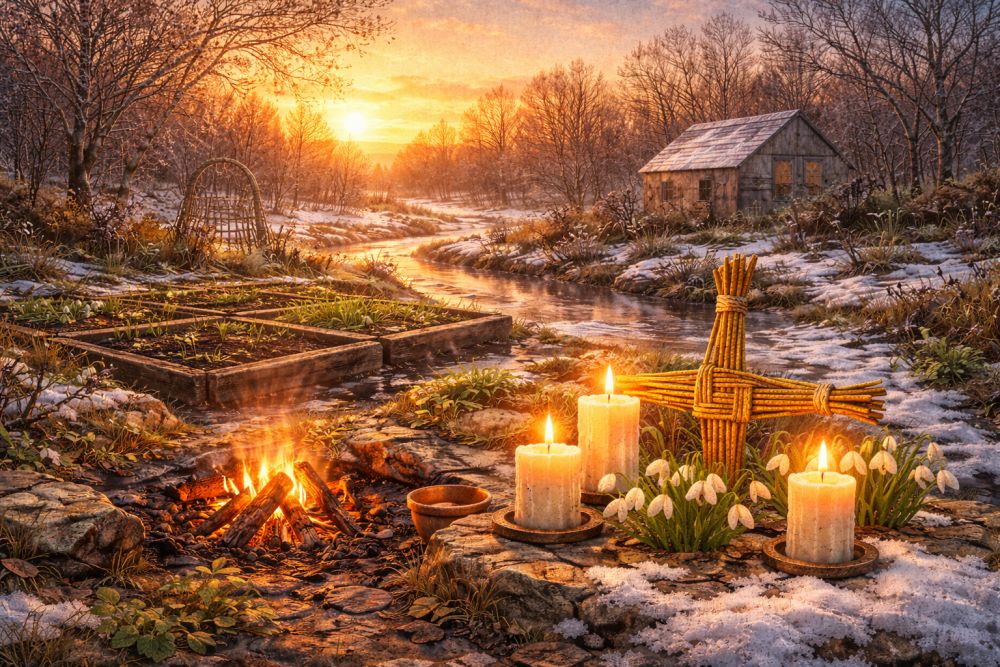
In garden and rural thinking, these symbols translate easily. Wells mirror the importance of water held in reserve beneath frozen ground. Hearth fires echo the careful conservation of energy in winter soils. Thresholds reflect the garden’s own state at this time of year: not dormant, but paused, waiting for the right conditions.
Other saints remembered on this day, such as Blessed Candelaria of San José and Verdiana, reinforce similar themes: devotion expressed through service, restraint, and attention to everyday life rather than public spectacle. Together, they give February 1 a tone of quiet guardianship — the same watchful care gardeners apply to beds, trees, and tools before the season truly begins.
Eastern Orthodox liturgical calendars also mark this date, emphasizing continuity across Christian traditions rather than a single dominant narrative.
Imbolc: The Season Opens
Beyond the Christian calendar, February 1 is widely known as Imbolc, one of the four major seasonal festivals of the Celtic year. Traditionally observed from sundown on January 31 through February 1, Imbolc marks the moment when winter loosens its grip — not through warmth, but through light.
Imbolc was never a celebration of visible growth. Fields remained cold, and snow was still expected. Instead, the festival focused on internal change: the stirring of life beneath frozen soil, the lengthening of days, and the return of milk to ewes.
From a gardening perspective, this is the moment when perennial roots begin subtle internal shifts, when sap slowly starts to respond to longer days, and when soil biology awakens without any surface sign. It acknowledged that the natural cycle had shifted direction, even if conditions remained harsh.
Fire, Light, and Thresholds
Fire plays a central role in February 1 traditions. Candles, hearth flames, and ritual fires symbolized protection and readiness rather than abundance. Thresholds were cleaned, tools inspected, and homes quietly prepared for the season ahead.
This was not a time for planting or action, but for alignment — ensuring that people and places were ready to receive what the year would eventually offer. In garden terms, this meant checking boundaries, repairing structures, observing drainage, and learning where light now falls longer than it did just weeks before.
A Patient Kind of Beginning
What makes February 1 distinctive is its restraint. Unlike later spring festivals, it carries no urgency. The land is not asked to perform, only to awaken. Buds remain sealed, soil stays cold, and growth remains invisible.
For gardeners and observers of nature, this restraint is familiar. It is the discipline of not sowing too early, of trusting the calendar of light rather than the temptation of a mild day. Yet the promise is no longer abstract.
Light has returned enough to be trusted.
What February 1 Reminds Us
Across calendars and centuries, February 1 teaches the same lesson: beginnings do not announce themselves loudly. They arrive through small, repeatable signs — longer afternoons, steadier light, and the confidence to prepare without rushing.
In the garden and in nature, this means paying attention to direction rather than results. The year does not turn overnight. But on February 1, it is unmistakably facing forward.