
There is a particular kind of spring energy that makes gardeners do rash things. A few warm days arrive, the light changes, and suddenly the whole garden looks like a to-do list. Old stems seem untidy, fallen leaves look lazy, flattened perennials feel like a reproach, and the rake starts calling from the shed like it has urgent moral authority. It becomes very tempting to clear everything in one grand sweep and start the season with a garden that looks crisp, exposed and freshly disciplined.
I understand the temptation because I have absolutely done it. More than once, I have finished a spring cleanup feeling efficient and rather pleased with myself, only to realise a day later that the garden felt strangely hollow. It was cleaner, yes. But it had lost its softness. Fewer insects lifting from the borders, less movement near the base of shrubs, less sense that the place was waking up as a living system rather than posing for a photograph.
That is the real point behind a more biodiversity-friendly approach to spring gardening. It is not about abandoning standards. It is about recognising that some of the most useful parts of an early-season garden are the ones that still look a little unfinished.
Why tidying too early can backfire
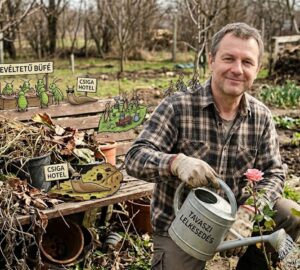
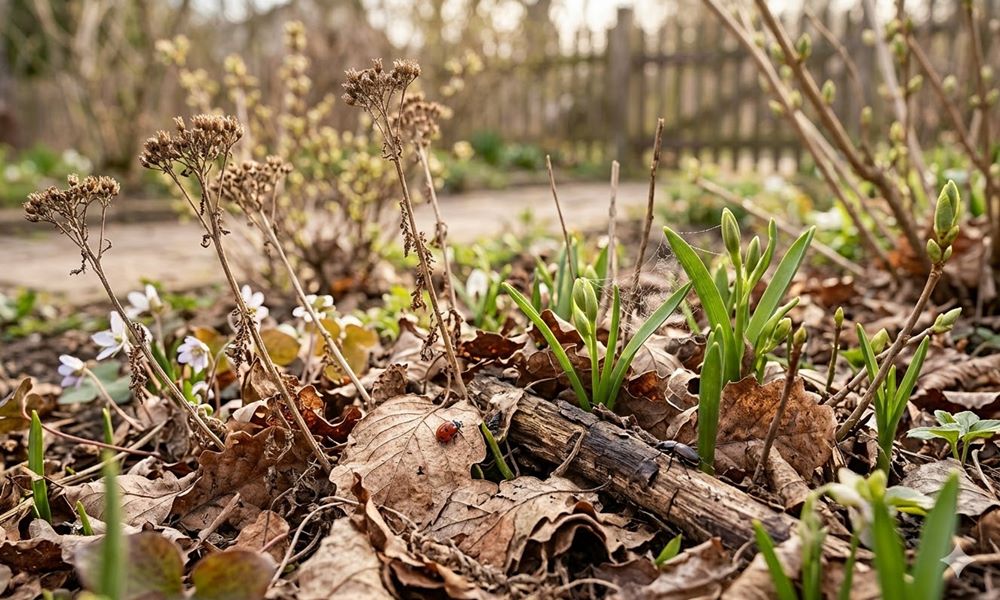
A garden in late winter or early spring is full of hidden occupants. Solitary bees may still be tucked into hollow stems. Beetles, spiders and other invertebrates may be sheltering under leaf litter or in rough corners near the soil surface. Chrysalis cases, cocoons and eggs can be attached to stems, bark or dry debris in ways most of us will never notice unless we go looking very closely.
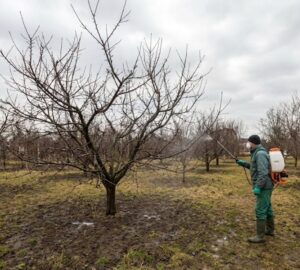
When everything is cut, stripped, raked and bagged too early, the garden does not just lose visual clutter. It can lose cover, insulation and shelter for exactly the creatures that help make it ecologically stable once the season gets going.
That does not mean every collapsed stem is sacred or every leaf must remain exactly where it fell. It means the fastest route to a tidy-looking garden is not always the smartest route to a functioning one.
What is often worth leaving a little longer
The best rule is not “leave everything” but “leave some things on purpose.”
Some leaf litter
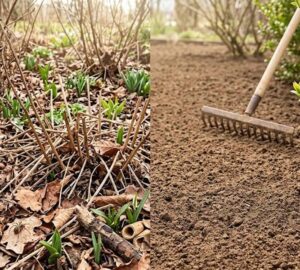
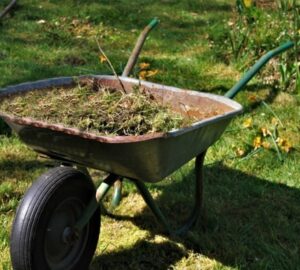
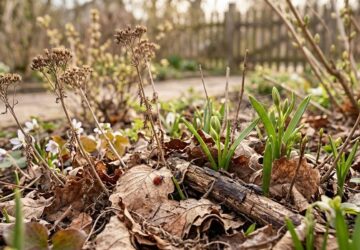
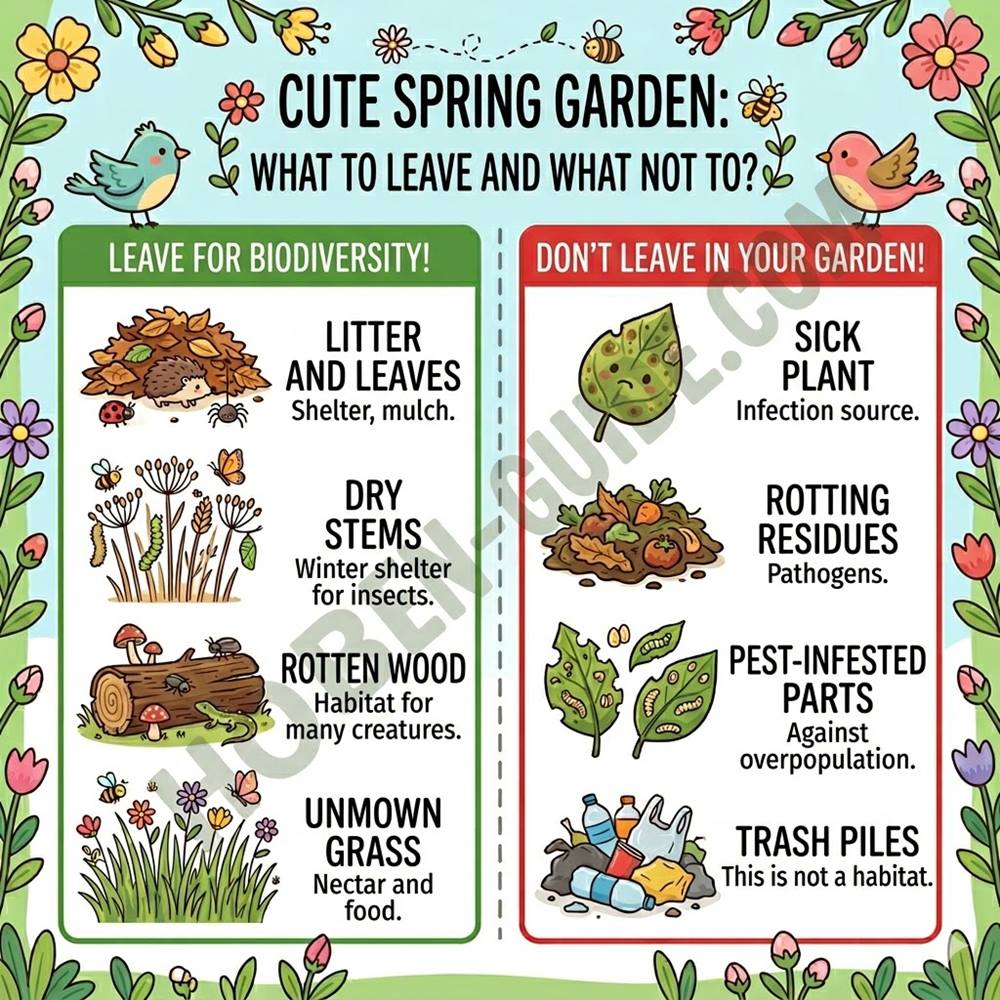
Fallen leaves are one of the easiest materials to use well. They do not have to stay all over paths and patios, and they do not need to smother emerging shoots in every border. But gathered under shrubs, around trees, along hedge lines or in quieter corners, they create valuable shelter while also helping protect soil structure and moisture.
This has been one of the most useful compromises in my own garden. Once I stopped treating leaves as a mess to be erased and started treating them as a material to be relocated, everything worked better. The garden still looked cared for, but it no longer felt stripped bare.
Hollow and dry perennial stems
Old stems from plants like echinacea, sedum, fennel, grasses, yarrow and verbena often still have work to do even after they stop looking ornamental. Some provide temporary shelter, some hold eggs or overwintering insects, and some simply help slow the transition from winter bareness to full spring growth.
There is no prize for cutting them all down at the first mild weekend of the year. In many gardens, a staggered cleanup is much more useful than a total reset.
Small amounts of dead wood
A log at the back of a border, a rough branch pile behind a shed, a length of decaying wood tucked beside a hedge: these are not glamorous design features, but they are surprisingly valuable. Dead wood creates niches, holds moisture, moderates temperature and supports a much wider range of life than its appearance suggests.
The mistake is not keeping some dead wood. The mistake is assuming a garden must look polished in every corner to be well managed.
Areas that are allowed to stay slightly rough
Not every patch of lawn, edge or underplanting needs the same level of grooming. A less closely mown strip near a hedge, a looser patch around fruit trees, or a corner that is cut later than the rest can all increase structural diversity in a way that matters.
This is one of those ideas that sounds untidy in theory and looks completely normal in practice if done with intent. A garden with one or two softer edges often feels richer, not messier.
What should not be romanticised
This is where restraint matters. A wildlife-friendly spring garden is not a reason to hang on to obviously diseased material, rotting mush, mildew-heavy stems or anything that clearly caused trouble the previous season. If a rose was heavily infected, if fallen fruit is decaying into a problem, or if a perennial collapsed into something slimy and dubious months ago, that is not habitat worth defending out of principle. There is a difference between ecological roughness and neglect with good public relations.
How to make it look intentional
Most gardeners are not actually afraid of biodiversity. They are afraid of the garden looking forgotten.
The easiest way to avoid that is to edit rather than erase. Move leaves into chosen areas. Leave stems in groups rather than random tangles. Keep paths clear while allowing borders to wake up more gradually. Let one section remain rough while another is cleaned earlier. Think in zones instead of blanket rules.
That shift makes a huge difference. The garden stops looking like it got away from you and starts looking like you understand how it works.
A better question than “When do I clear everything?”
The more useful question is: what can wait?
Spring does not arrive all at once, and cleanup does not need to happen all at once either. As temperatures rise and growth becomes more active, you can cut back, thin, rake and refine in stages. That alone makes the whole process gentler on the garden and usually much more observant.
This is another lesson I only learned after getting it wrong. When I used to do one big spring blitz, I missed things. When I slowed down and worked in passes, I noticed more: emerging shoots I would have trampled, insects I would have binned, self-seeded plants I would have mistaken for debris, and corners that were doing more ecological work than I had realised.
What a living garden starts to teach you
A garden changes the way you tidy once you pay attention to where life gathers.
It is often not in the centre of the neatly mulched bed. It is under the shrub where the leaf litter stayed softer. It is in last year’s stems that still catch the morning light. It is in the rough margin near the fence, the log edging into decay, the patch of ground that did not get treated like a showroom floor.
Once you notice that, spring cleanup becomes less about perfection and more about editing with care. You stop asking how quickly the garden can be made tidy and start asking how much life it can keep while becoming orderly again.
What to carry into the season
Not every dry leaf is useful. But not every dry leaf is rubbish either.
A better spring garden is rarely the one that was stripped fastest. It is usually the one that was observed more closely. Leave some leaf litter where it can shelter life and protect soil. Delay the cutback of some stems. Keep a little dead wood where it can do good. Allow a few edges to remain softer and less controlled. Remove what is genuinely diseased or problematic, and be selective rather than absolute.
A garden does not become wilder by accident in this approach. It becomes wiser. And in spring, that usually matters more than looking finished too early.