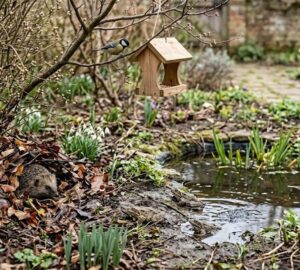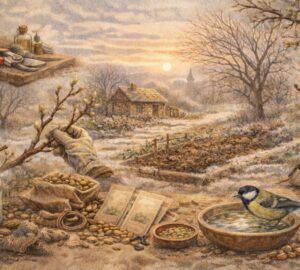
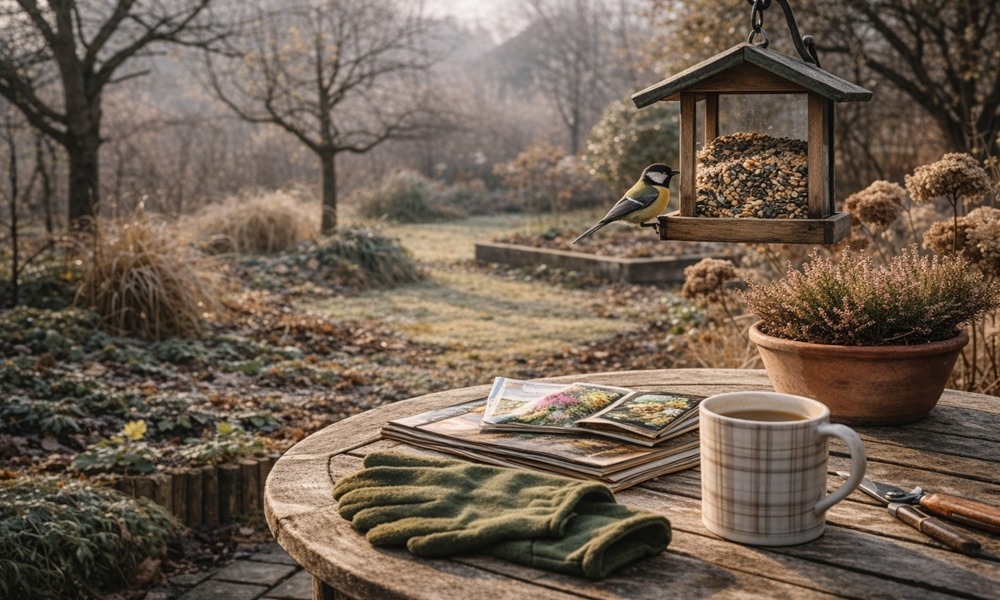

Late-winter bird feeding is a transitional phase. It’s still cold, tits and sparrows still visit regularly, yet the days are lengthening and nature is beginning to stir. At this point, the most important question isn’t what else to put out — but what it’s time to take away. By late February, certain foods can do more harm than good.
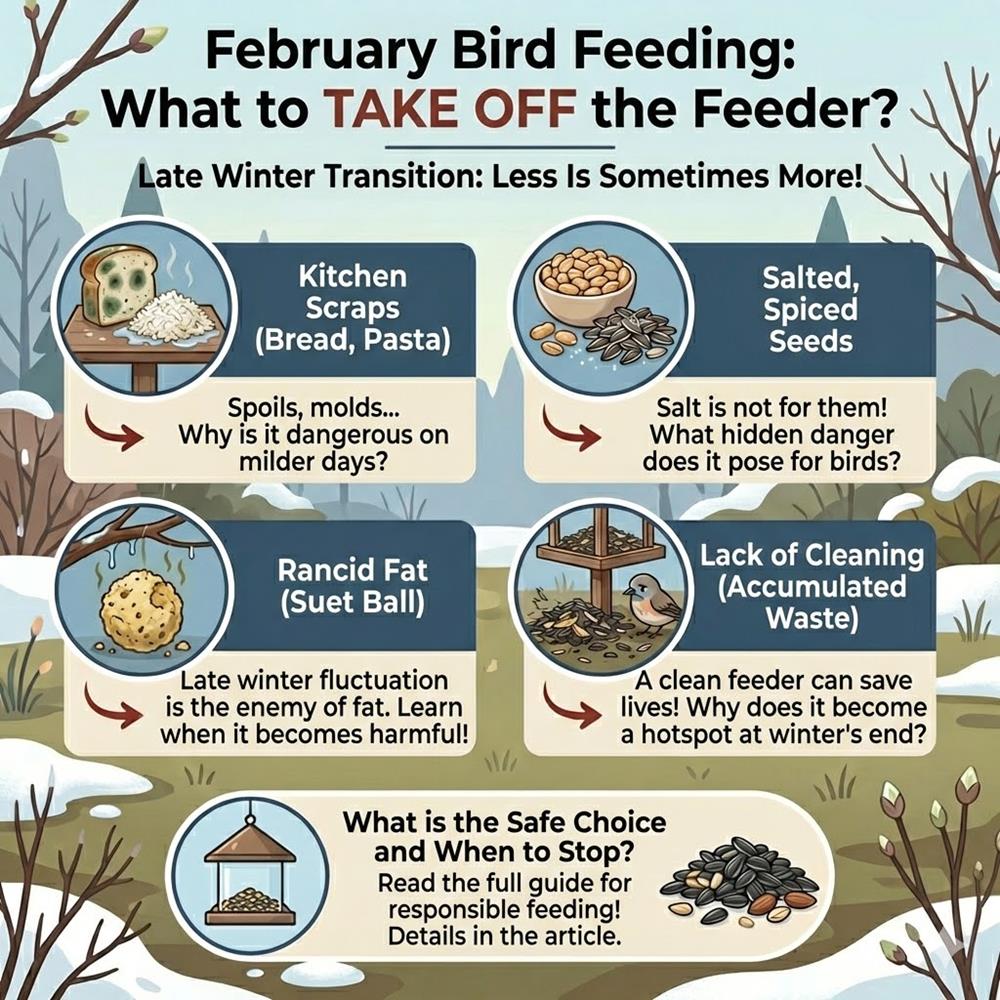
Kitchen Scraps Have Had Their Time
Bread, pastries, cooked pasta, or rice are still considered “well‑intentioned” bird food in many gardens. Even in deep winter they were only marginally suitable — by late February they become genuinely problematic.
With milder daytime temperatures, these foods spoil and mold much faster. Mold spores can damage birds’ respiratory systems, while spoiled food may cause digestive issues. If any of this remains in or beneath the feeder, now is the time to remove it.
Salted And Seasoned Seeds Were Never A Good Idea
Salted sunflower seeds, roasted peanuts, or any seasoned nuts from the human kitchen are not appropriate bird feed. Salt can cause dehydration and kidney stress, especially when natural water sources are still limited. As energy demands slowly begin to shift toward the breeding season, overly concentrated, unnatural foods create further imbalance.
Rancid Fat And Suet
Fat balls and suet blocks are valuable winter energy sources — but only when fresh. With fluctuating temperatures, fats can turn rancid easily, especially if exposed to rain or moisture. Rancid fat offers little nutritional value and may cause digestive distress. If a fat ball has hardened unevenly, darkened, or developed an unpleasant smell, it’s best to replace or remove it.
What Can Stay?
Still safe and appropriate options include:
- black sunflower seeds,
- plain, unsalted walnuts and peanuts,
- high‑quality, fresh birdseed mixes.
Regular cleaning is essential. In damp late‑winter conditions, husks and leftovers accumulating beneath feeders can quickly become sources of infection.
When Should Feeding Stop?
Not in February. Abruptly stopping isn’t ideal, as birds may already rely on this consistent source. Feeding is best reduced gradually as natural spring food becomes more available. By late winter, the focus shifts from quantity to quality.
The Meaning Of Responsible Feeding
Bird feeding isn’t just about refilling feeders. Cleaning, monitoring, and adjusting to the season are equally important.
Winter’s end isn’t about stopping — it’s about transitioning. And in the garden, we’re not the only ones preparing for spring.
Depending on climate, this transitional period may arrive at slightly different times. In cool–temperate regions it often falls in late February, while in milder areas it may begin earlier and in colder climates somewhat later. The guiding principle remains universal: adapt feeding practices to changing conditions rather than to fixed calendar dates.