

Late February is the garden’s “quiet switch.” Not spring yet, but no longer fully winter either. Days stretch a little, buds begin to swell, and gardeners everywhere have the same internal debate: Do I start now—or do I wait one more week and save myself from regret?
A seasonal hook: National Pistachio Day
February 26 is recognized in some places as National Pistachio Day—a fun food holiday, but also a tidy gardening reminder: plants are, at heart, climate decisions. Pistachios thrive where summers are long and hot; your own garden thrives when you respect its timing and limits.
Forest-edge patience: Isabelle of France and monastic garden logic
Isabelle of France is commemorated on February 26 in the Catholic tradition; she founded the Abbey of Longchamp near Paris. Monastic gardens are a masterclass in restraint: structure, rhythm, and doing the right thing at the right time—not everything at once.
Learning by growing: Paula Montal Fornés
Paula Montal Fornés (feast day February 26) is remembered for her work in education and founding schools. It’s a perfect cue to treat the garden as a classroom right now: quick germination tests, bud-stage notes, and a simple one-week weather log tied to what you see outdoors.
First steps done well: Florence Li Tim-Oi
In the Anglican Church of Canada, February 26 commemorates Florence Li Tim-Oi, known as the first woman ordained priest in the Anglican Communion. In garden terms: start with small, solid steps—two seed trays you can truly support, one bed prepared beautifully, one tool cleaned and sharpened properly.
A Mediterranean note: Porphyry of Gaza
Some calendars mark February 26 as the feast of Porphyry of Gaza. Think of it as a reminder that “winter gardening” looks different across climates. In many Mediterranean regions, late winter is prime time for green growth—while in colder zones, your greenhouse, windowsill, or sheltered patio becomes your tiny Mediterranean.
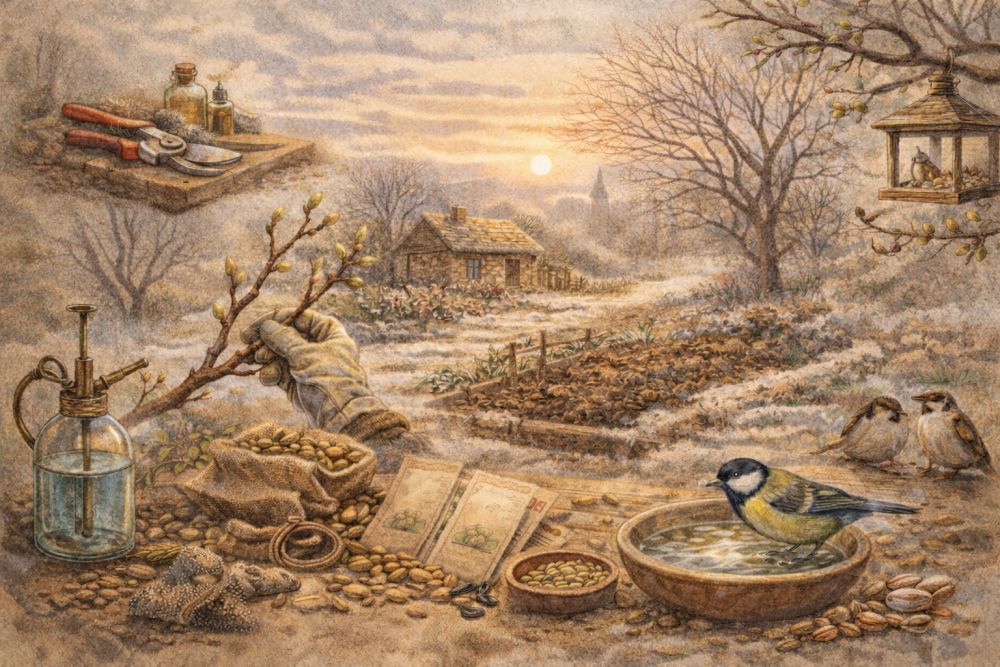
Practical checklist for today
- Sharpen and sanitize tools.
- Prune only when conditions make sense for your region and plant type.
- If you use dormant-season sprays, timing and label directions matter.
- Test older seeds; plan what to replace.
- Protect soil: mulch/compost where workable, avoid working wet ground.
- Refresh bird water and feeders.