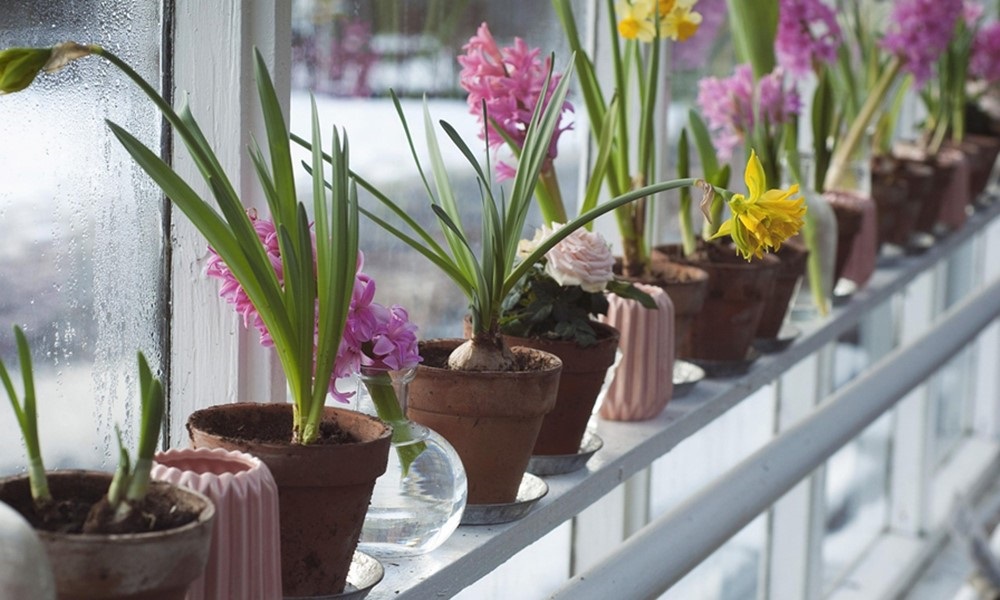

In February, it is almost impossible to resist the scent of hyacinths, the nodding heads of daffodils, the bright crocuses, and the delicate grape hyacinths lining the shelves of garden centers. These potted bulbs burst into our field of vision at the end of winter, bringing color, fragrance, and a promise of spring into otherwise gray days. But what should you actually do with them after bringing them home? Should they stay indoors? Can they go outside? And what happens once they finish flowering?
Indoors or Outdoors?
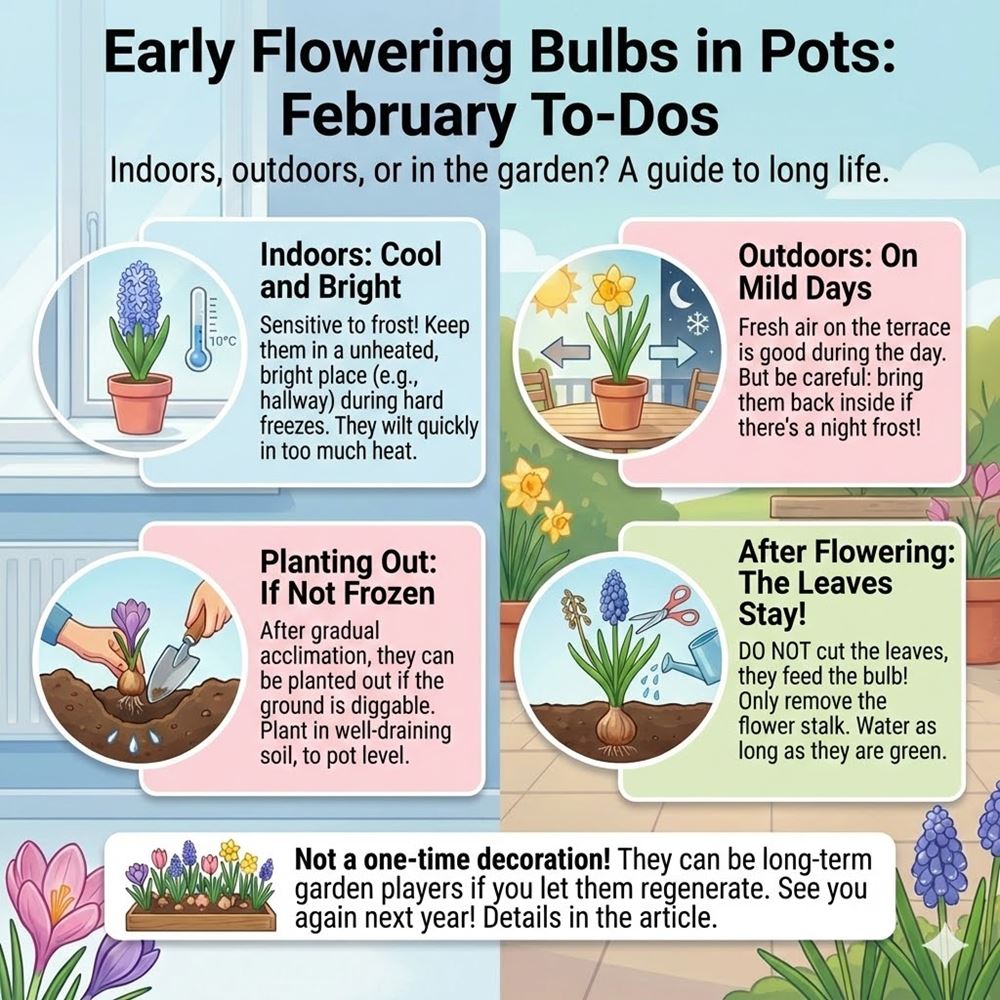
Most potted bulbs sold in February are forced plants. This means they were grown under controlled conditions to “fast-forward” spring and make them bloom in mid-winter. Because of this, they are more sensitive to sudden cold. During hard frosts, keep them in a bright but cool indoor spot, such as an unheated hallway or a well-lit stairwell. A warm living room is not ideal, as higher temperatures will shorten their flowering period.
On milder days, however, they can spend time outdoors on a balcony or terrace. Fresh air and natural light benefit them, but if temperatures drop below freezing at night, bring them back inside.
Can They Be Planted in the Garden in February?
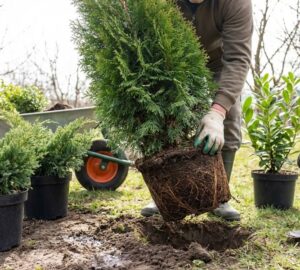
If the soil is workable and not frozen solid, potted bulbs can be planted outdoors. Gradual acclimatization is important. Sudden temperature changes may shock the plant, especially hyacinths and daffodils.
When planting, place the bulb so that the soil level matches roughly the level it had in the pot. Later, once the foliage dies back, you can add a bit more soil if needed. Well-draining soil is essential, as standing water is the main enemy of bulbs.
What to Do After Flowering?
This is where many people go wrong: faded flowers do not mean the plant’s life is over. Remove the spent flower stalk, but keep the leaves. The foliage continues photosynthesis, replenishing the bulb’s energy reserves for the following year.
Water moderately while the leaves remain green. Once they turn yellow and dry out, the bulb enters dormancy. Garden-planted bulbs can simply remain in place. Bulbs that stayed in pots may be lifted and stored in a cool, dry place until autumn planting.
Be prepared for more modest flowering next year. Forced bulbs often need a season or two to recover from early blooming. With proper care, they can gradually regain strength.
A February Reality Check
Potted bulbs are not disposable decorations but long-term garden companions, provided we allow them to return to their natural rhythm. In February, the real question is not how long they will survive indoors, but how we can help them transition back to seasonal growth. If we manage that well, this year’s hyacinth or daffodil may greet us again next spring in the garden.