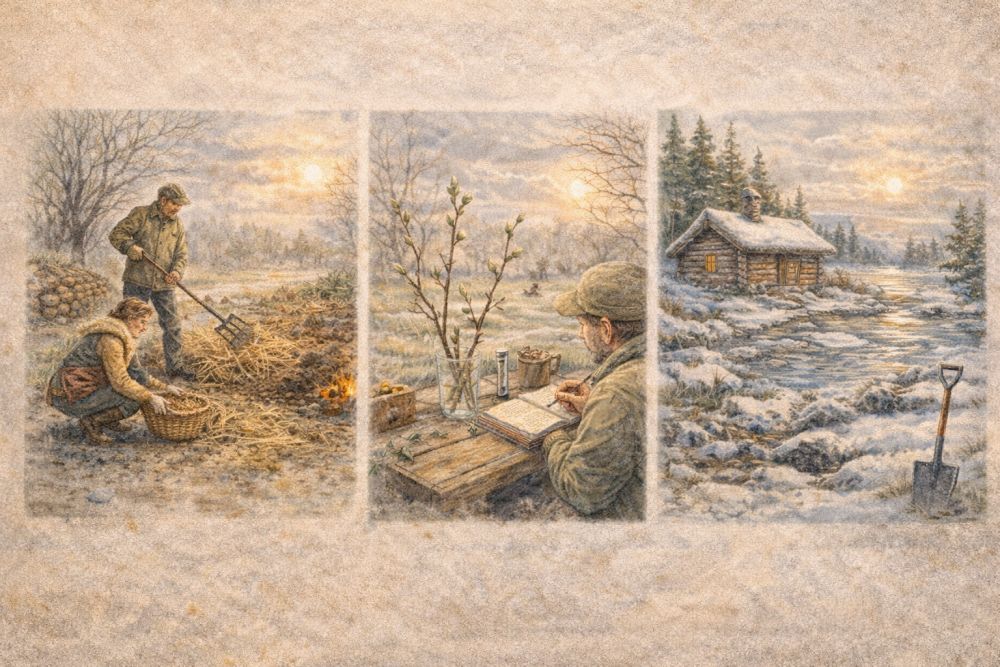

Late February is a strange threshold: the cold can still bite, but the light is clearly changing. The garden starts sending mixed messages—wait and prepare—often in the same breath.
This date gathers traditions that make that tension feel human: a symbolic fire to invite spring, weather-watching to predict the year ahead, and a cultural celebration rooted in northern landscapes.
Fire as a spring invitation
In parts of Eastern Europe, February 28 is associated with customs where people lit a fire and jumped over it—an act of cleansing, protection, and a bold step toward the new season.
In a modern garden, the same idea translates beautifully without flames: reset your tools, clear and sort plant debris wisely, and bring a little “early spring” indoors by forcing a few branches (willow, hazel, cornelian cherry, forsythia) in a vase.
Weather omens and the gardener’s real superpower
Traditional farming communities treated this day as a moment for harvest omens: bright skies suggested abundance; gloom suggested caution. The deeper point still holds: the best growers are observant.
Try the contemporary version:
- jot down wind, soil wetness, and temperatures,
- notice how one corner of your garden warms faster than another,
- watch bud stages week to week.
This is local knowledge no general forecast can replace.
Kalevala Day: a landscape made of forests and patience
February 28 is celebrated as Kalevala Day in Finland, honoring Elias Lönnrot and the publication moment tied to the epic’s early edition. The Kalevala carries a deep sense of place—forests, lakes, the discipline of long winters, the intensity of short summers.
For gardeners, it’s a timely reminder:
- winter isn’t empty time—it’s preparation time,
- nature doesn’t rush, and you don’t have to either.
Practical late-February moves
- Sharpen, clean, and sanitize tools.
- Prune only when conditions match your plants and region.
- If you use dormant-season sprays, let bud stage and local weather guide timing.
- Test older seeds and adjust your sowing plans.
- Protect soil; avoid working it when it’s sticky or saturated.
- Refresh bird water and feeders.