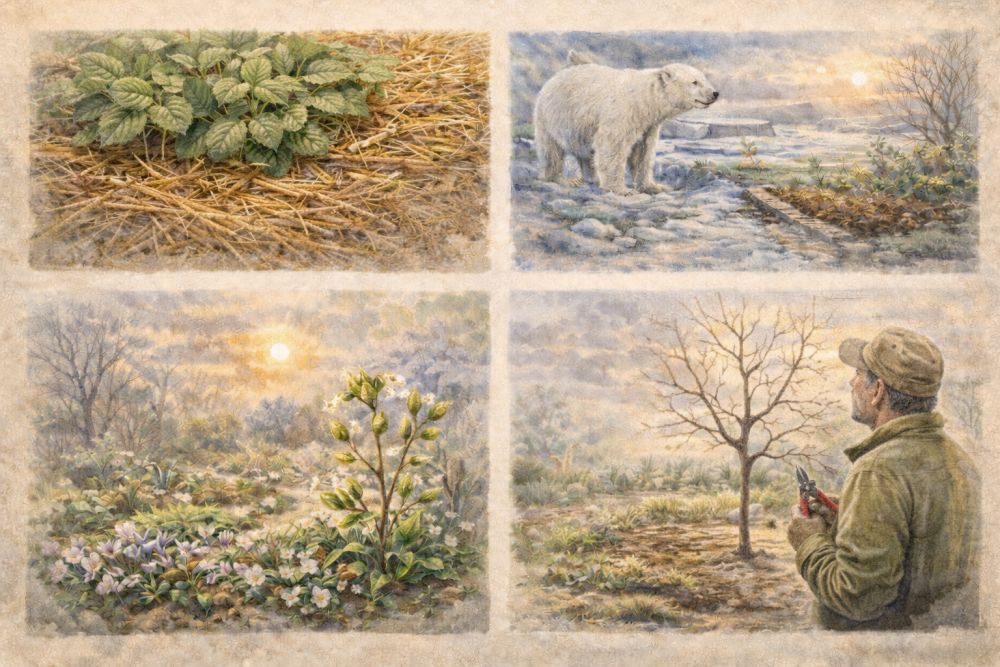

Late February is a hinge: not quite spring, no longer fully winter. Light stretches, buds swell by millimeters, and gardeners feel that familiar itch to do everything at once. This day is a gentle reminder that the best early-season progress often looks… modest.
Strawberry Day: planning the first bite of summer
In parts of the world, February 27 is tied to strawberries—more fun than official, but perfectly on-theme for gardeners. Strawberries reward preparation: a sunny spot, good airflow, and a bed that won’t turn into a weed convention by May.
If you already grow them, this is an ideal “inspection moment”: tidy old leaves, check crowns that may have lifted during freeze-thaw, and plan how you’ll keep the soil protected once growth takes off.
International Polar Bear Day: climate shows up in the garden first
Also on February 27: a day that points straight at climate and ice. You don’t need headlines to feel it—your garden will tell you. Early warm spells, sudden freezes, erratic winters: they all show up as bud timing and plant stress.
Your most effective responses are the boring ones that work:
- keep soil covered (mulch, compost, leaves),
- support water retention,
- choose resilient plants,
- avoid working wet soil.
A poetic lens: George Herbert and the flower that returns
In the Anglican calendar, George Herbert is commemorated on this date. His writing hits a late-winter truth gardeners know well: life retreats, then returns—sometimes after a setback you didn’t see coming.
If you want a simple ritual today, pick one shrub or tree and look closely. Bud scales, swelling tips, a hint of green—tiny evidence that the season is already in motion.
Practical moves for right now
- Sharpen, clean, and sanitize tools.
- Prune only when conditions match your plants and region.
- If you use dormant-season sprays, let bud stage and local weather guide timing.
- Test older seeds and adjust your sowing plans.
- Protect soil; avoid working it when it’s sticky or saturated.
- Refresh bird water and feeders.