

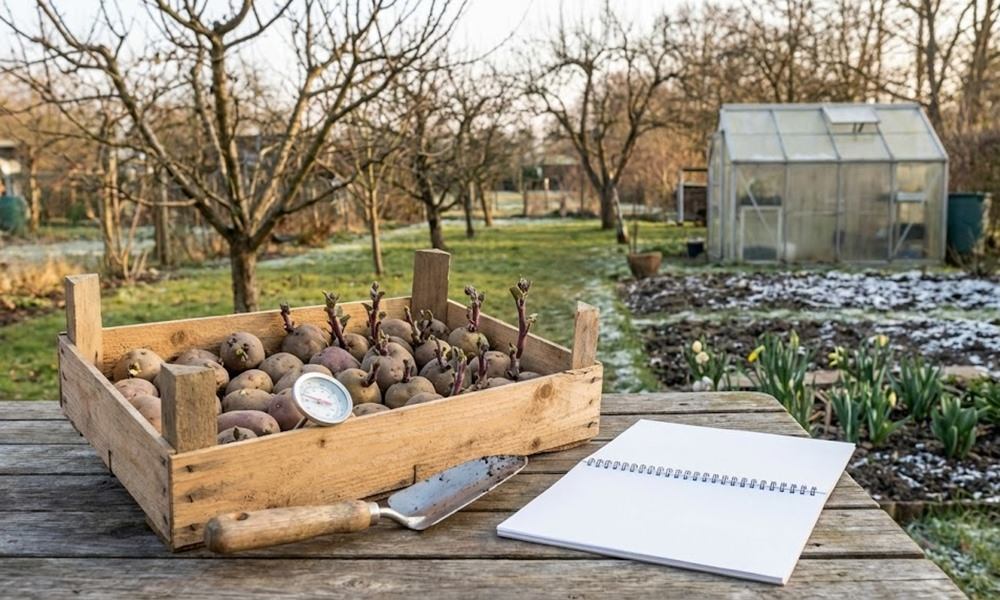

Few vegetables inspire as much anticipation as potatoes. Their tangible, earthy presence makes them difficult to ignore once seed tubers arrive. The temptation to begin immediately is strong — yet timing remains crucial.
What Is Chitting?
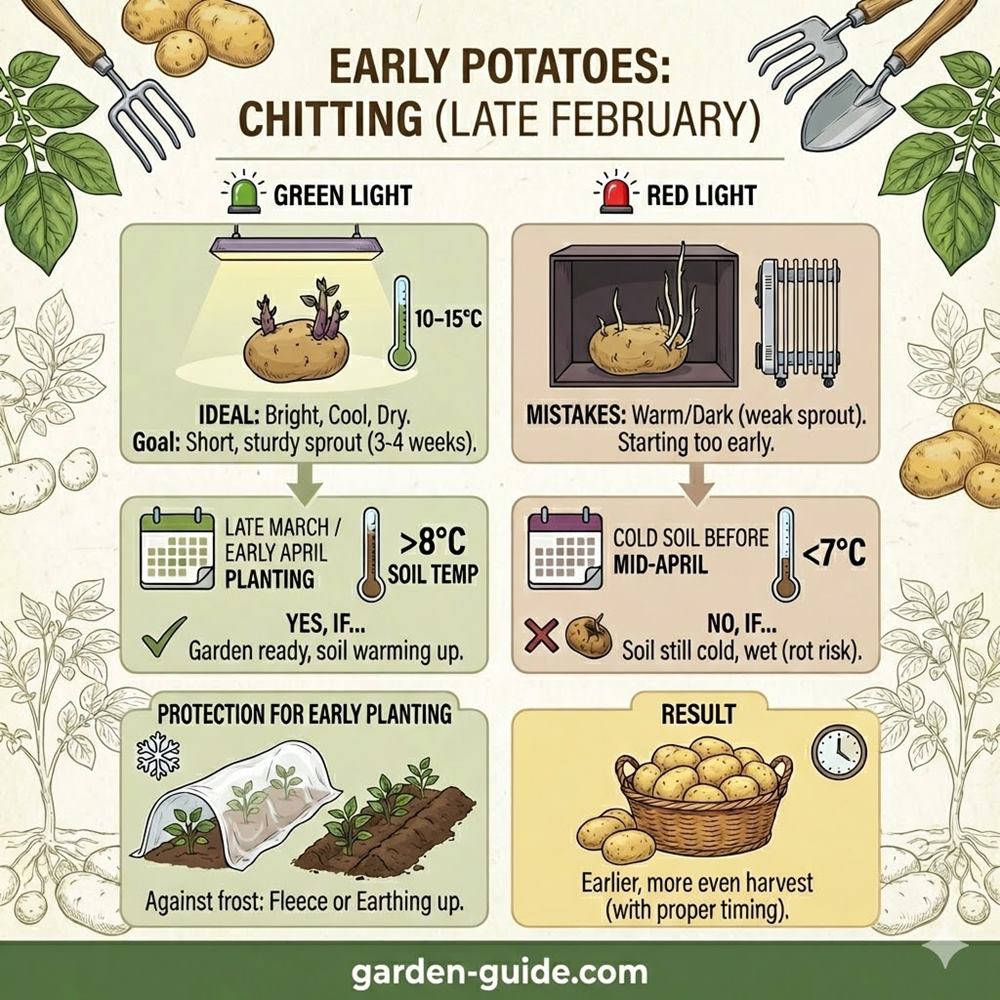
Chitting refers to pre-sprouting seed potatoes in cool, bright conditions before planting. The objective is to produce short, sturdy shoots rather than elongated, fragile ones.
Optimal conditions include:
- 10–15 °C temperature
- Bright but indirect light
- Dry, well-ventilated space
Within three to four weeks, compact, pigmented sprouts develop.
When Is Late-February Chitting Appropriate?
If planting is expected by late March or early April, initiating chitting in late February aligns well with growth cycles. Early cultivars particularly benefit through quicker establishment and earlier harvest.
However, if soil temperatures remain below 8–10 °C until mid-April, starting too early risks overextended sprouts and handling damage.
Soil Temperature Governs Success
Potatoes respond primarily to soil warmth rather than air temperature. Below 7–8 °C, growth remains slow and vulnerability to rot increases in cold, wet conditions. Chitting accelerates emergence only when soil conditions are suitable.
Cutting Large Tubers – Necessary or Not?
Dividing large seed tubers can increase planting material but requires disease-free stock and adequate curing time. In late winter, focus should remain on healthy sprout development rather than cutting.
Early Harvest Expectations
Earlier planting may yield earlier harvest, yet premature exposure to frost necessitates protective measures such as earthing up or fleece covering.
Common Mistakes
- Warm, dark storage producing elongated sprouts
- Planting into cold soil
- Breaking sprouts during handling
Controlled preparation ensures stronger establishment and more reliable yields.
Late winter potato preparation is less about urgency and more about synchronization — aligning gardener enthusiasm with biological readiness.