

February 9 is a day that brings attention inward. While little seems to change on the surface of the garden, this date has long been associated with what lies beneath appearances: structure, endurance, and the points where pressure is felt most strongly.
Saint Apollonia and the Idea of Structure
In the Christian calendar, February 9 is linked to Saint Apollonia, traditionally associated with teeth and bones — the hardest, most internal elements of the human body. In seasonal thinking, this symbolism translates naturally to the garden at this time of year.
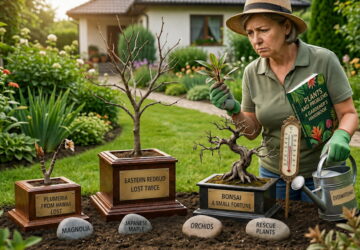
Late winter strips plants down to their framework. Leaves are gone, growth is paused, and what remains visible is the plant’s inner architecture: trunks, branches, joints, and the hidden anchoring system below ground. February 9 is not about surface beauty, but about what holds everything together.
The Garden’s Skeleton
For gardeners, this is one of the clearest moments to read structure.
Trees reveal how their branches distribute weight. Shrubs show whether their centers are too dense or poorly balanced. Climbers expose weak attachments. Even perennial beds hint at where crowns are crowded or vulnerable.
These observations matter. Structural weaknesses that go unnoticed now often become breakage later — under spring growth, summer storms, or the weight of fruit.
Stress Without Movement
Winter stress is subtle. Snow load, repeated freezing and thawing, and cold winds all apply pressure without obvious motion. February 9 highlights this quiet tension.
In soil, stress appears as compaction, cracking, or uneven moisture retention. In woody plants, it shows as split bark, damaged buds, or branches that flex unnaturally under weight. Nothing has failed yet — but the limits are being tested.
Seeing Before Cutting
Although it may be tempting to intervene, February 9 remains a day for assessment rather than action. Pruning too early can expose tissues to renewed cold, while waiting allows the gardener to understand where strength and weakness truly lie.
This is the day to note, not to fix.
Pizza, Herbs, and Edible Structure
February 9 is also widely known as World Pizza Day — a modern observance, but one that fits this date better than it first appears. Pizza is built on structure: a base, layers, balance. And its most characteristic flavours come from plants that are themselves models of resilience.
Classic pizza herbs — oregano, basil, thyme, rosemary — all share a common trait: strong internal structure. Woody stems, concentrated essential oils, and slow, deliberate growth make them survivors rather than sprinters.
In the garden, these Mediterranean herbs reveal their framework clearly in winter. Stems harden, growth pauses, and energy is held close. February 9 is an excellent day to observe these plants: where woody growth begins, where last year’s soft stems ended, and how structure supports future flavour.
This is not the time to cut basil or prune rosemary hard. It is the time to understand how these plants are built — because good pruning later depends on reading that structure correctly.
A Skill for the Coming Season
Understanding structure is a skill that pays dividends later. When pruning season arrives, the gardener who has already read the garden’s skeleton works with confidence and restraint.
February 9 reminds us that good timing begins with good observation.
What February 9 Reminds Us
This day teaches a simple principle: stress reveals structure.
In the garden, as in nature, what survives winter is not what grows fastest, but what is best built.