
Every spring gardeners expect the lawn to wake up quickly. The sun feels warmer, the days are longer, yet the grass seems slow and uneven.
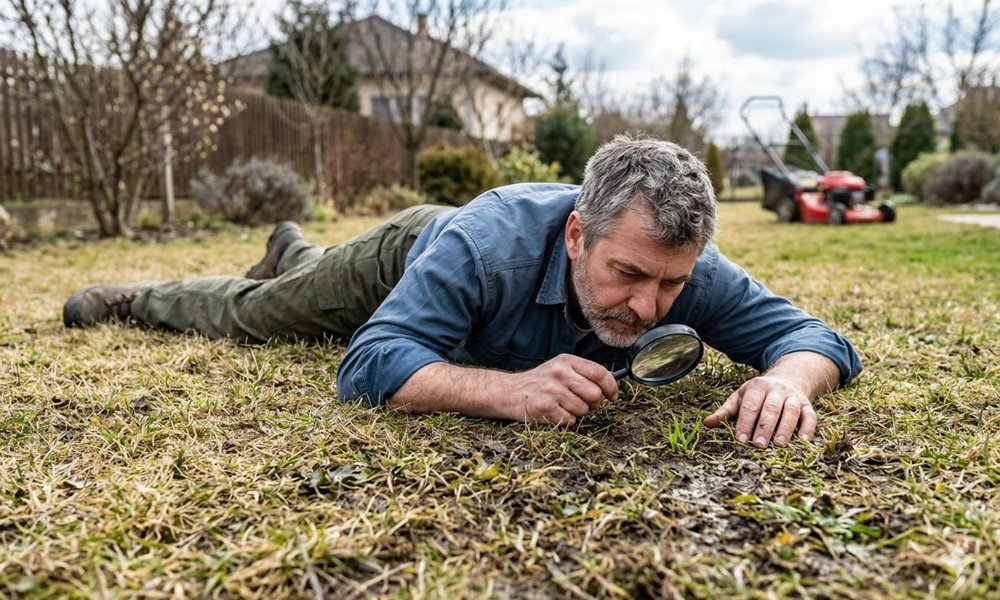
A few years ago I had exactly the same experience in my own garden. Early March looked promising: sunshine, birds, and the feeling that spring had finally arrived. The lawn, however, stayed stubbornly brown and inactive. For nearly two weeks I suspected everything from bad soil to poor seed. Then the soil finally warmed up – and almost overnight the grass began to green and grow.
In most cases nothing is actually wrong. Lawn growth depends less on the calendar and more on soil temperature, moisture balance, and light.
Cold Soil Slows Growth
Common lawn grasses such as perennial ryegrass (Lolium perenne) and Kentucky bluegrass (Poa pratensis) begin active growth when soil temperatures consistently rise above 8–10 °C.
Early spring air may feel warm, but the soil often remains cold. As a result, root activity stays slow and visible growth is limited.
Post‑Winter Recovery
Winter stresses lawns through frost, snow cover, and waterlogged soil. When temperatures rise, grass first focuses on rebuilding its root system before producing vigorous leaf growth. This recovery phase can make the lawn appear inactive for several weeks.
Excess Moisture
Spring soils frequently remain saturated after winter. Waterlogged conditions reduce oxygen availability in the root zone and slow plant metabolism. Light raking and improving drainage often help restore balance.
Fertilizer Isn’t Always the Answer
Applying fertilizer too early rarely solves slow spring growth. If soil temperatures remain low, roots cannot absorb nutrients efficiently. Fertilizing becomes more effective once visible growth has already begun.
Patience Helps
Lawn growth often accelerates suddenly once soil temperatures rise and sunlight increases. What appears to be a dormant lawn in early spring is usually just waiting for the right conditions.
Grass rarely fails to grow entirely – it simply grows when the soil is ready.