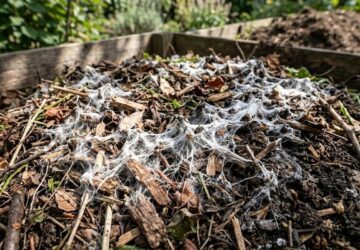
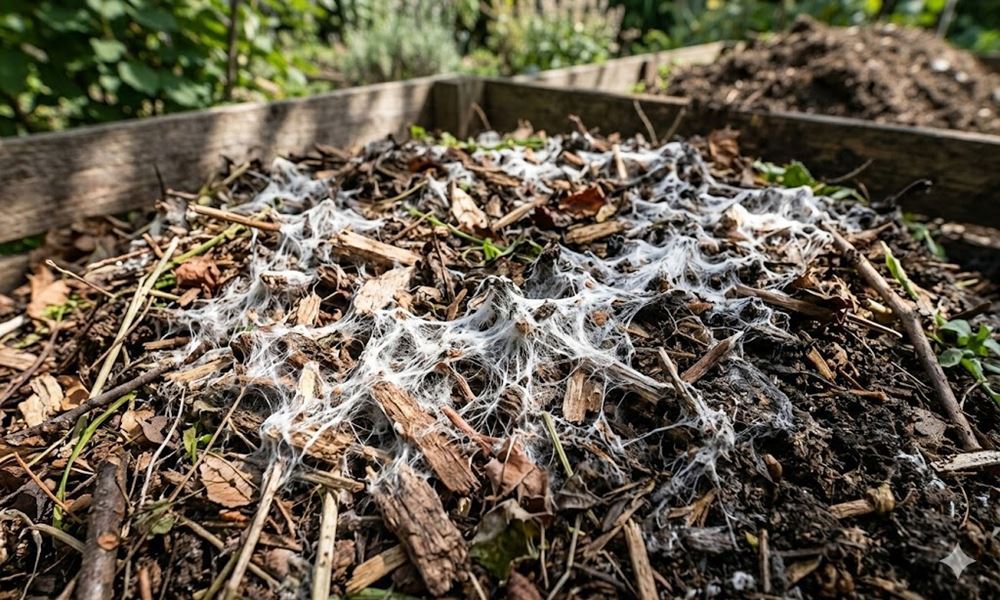

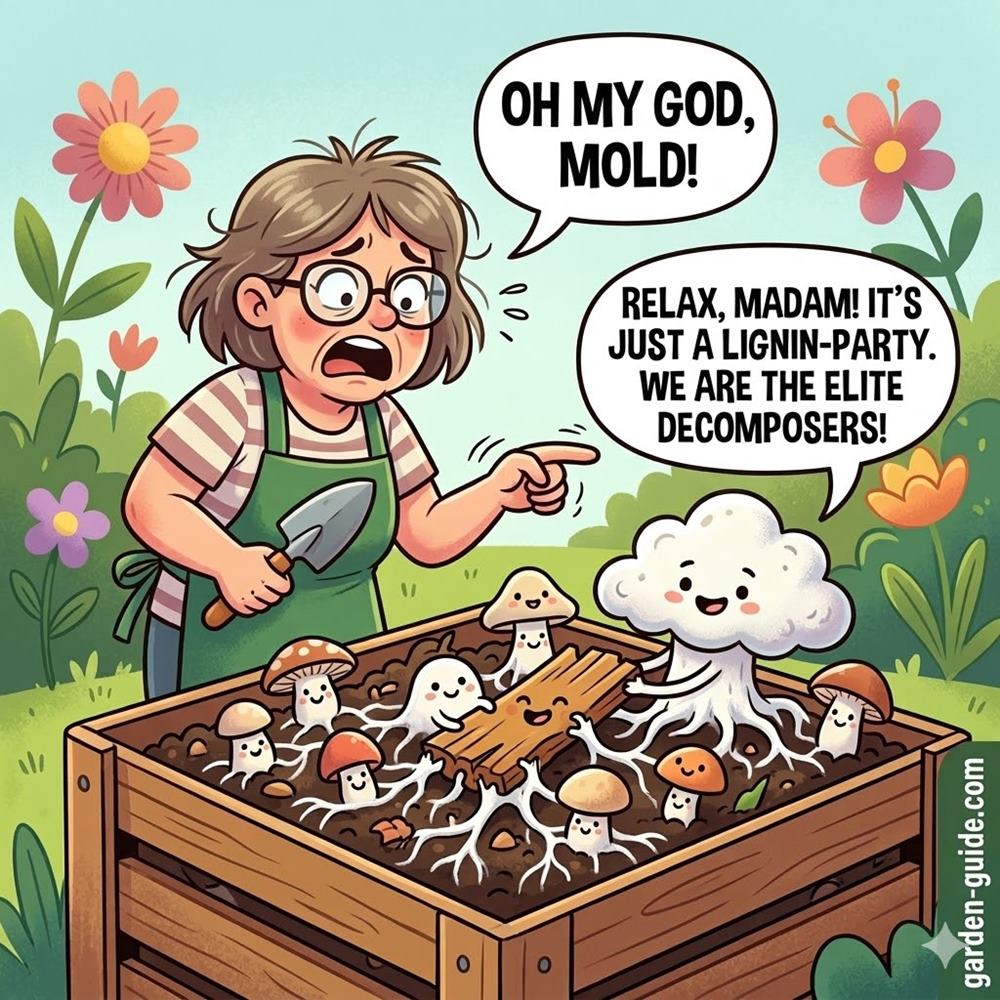
Many gardeners become alarmed when they notice white, fuzzy growth on top of their compost pile. At first glance it looks like mold spreading across the material, suggesting something has gone wrong. In most cases, however, the opposite is true. That white layer is often a network of fungal threads called mycelium, and it is an important part of the decomposition process.
What Are the White Threads?
The white strands seen in compost are usually fungal hyphae forming a mycelial network. These fungi help break down complex organic materials that bacteria alone cannot easily process.
Fungi are especially effective at decomposing materials such as:
- woody fragments
- dry leaves
- stems and plant fibers
- straw
When these materials are present, fungal growth often becomes visible.
The Role of Fungi in Compost
Composting happens in stages. Early in the process bacteria dominate and rapidly consume easily degradable material. As decomposition continues, fungi become more important. They specialize in breaking down complex compounds like lignin and cellulose found in woody plant material.
The appearance of white fungal threads is therefore often a sign that the compost is progressing through its natural stages of decomposition.
When White Fungal Growth Is Normal
Mycelium commonly appears in piles rich in dry carbon materials, such as leaf litter or shredded branches.
Typical situations include:
- leaf-heavy compost piles
- wood chip compost
- partially decomposed organic matter
In these cases the white threads form thin, web-like patterns across the material. A mild mushroom-like smell may also be noticeable. These are usually healthy signs of active decomposition.
When It Might Indicate a Problem
Although fungal growth itself is not harmful, compost conditions can sometimes become unbalanced.
Warning signs include:
- strong unpleasant odors
- extremely wet and compacted compost
- slimy or grey mold growth
These symptoms usually mean the pile lacks oxygen. Turning the compost and mixing in dry material can restore balance.
A Living Ecosystem
Compost is not meant to be sterile. It is a living ecosystem filled with microorganisms, fungi, insects and worms working together. The white fungal network is simply one part of that community. Its presence often means that organic matter is actively being transformed into nutrient-rich compost.
In other words, a compost pile that shows signs of life is usually doing exactly what it should.