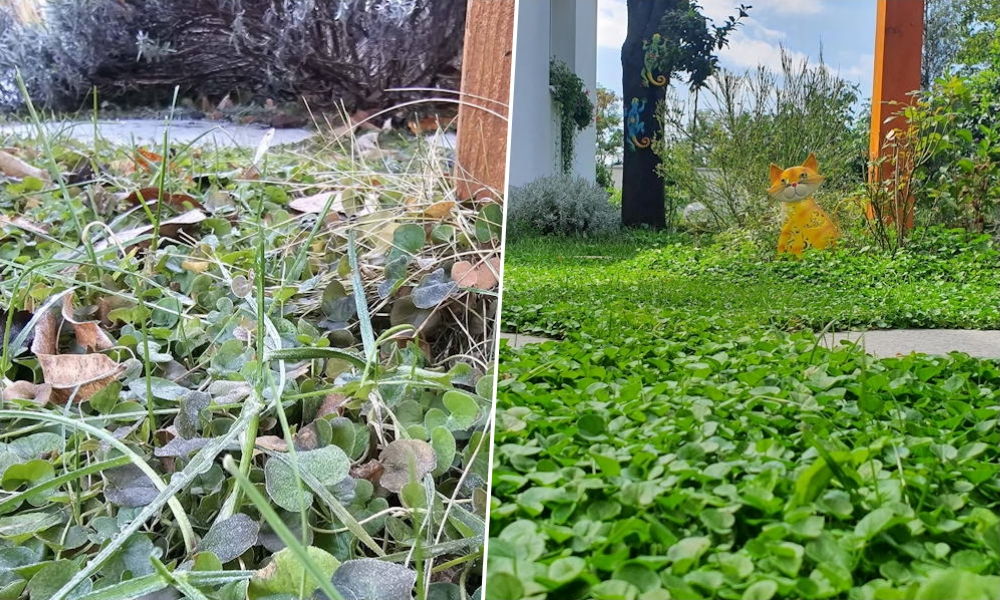

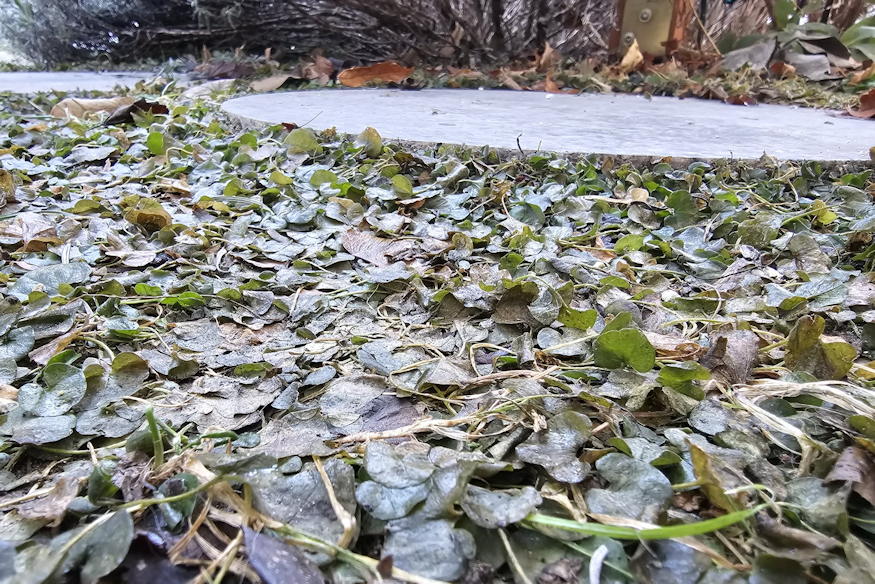
When the first real cold arrives, dichondra is often one of the first plants to disappear from the garden. The fresh green carpet collapses into a flattened, darkened layer of leaves that looks waterlogged and lifeless. Snow may have covered it, then melted away—and suddenly the plant seems gone for good. But winter is not always the end of the story for dichondra.
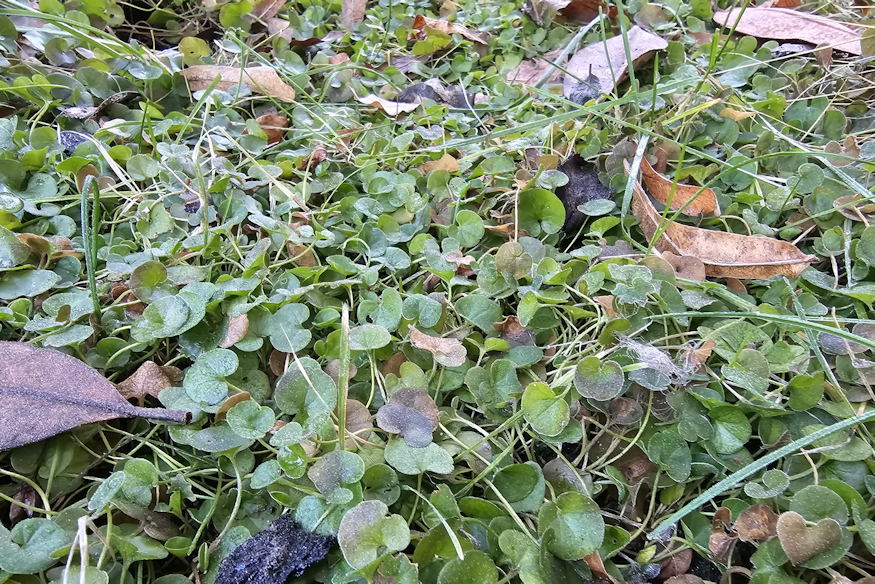
What We See in Winter – and What We Don’t
Dichondra (Dichondra repens) is not frost-hardy in the traditional sense. Its creeping stems and leaves are easily damaged by cold, often collapsing completely at the surface. This looks dramatic, but surface damage alone does not automatically mean the plant has died.
The real question lies closer to the soil. Survival depends on how severe the winter was, how protected the site is, and how long the soil remained frozen.
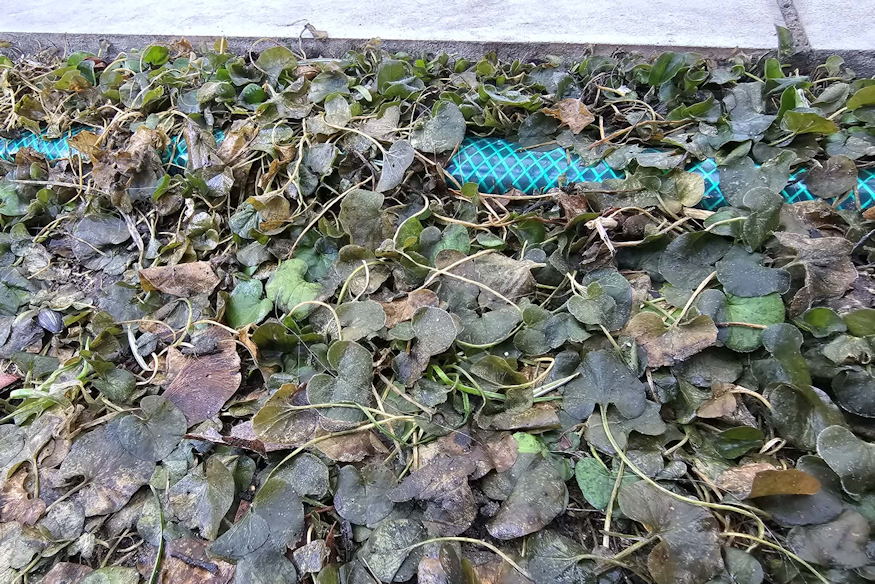
Snow, Thaw, Refreeze – The Most Difficult Combination
Snow itself is not necessarily harmful. In fact, it can act as insulation. Trouble begins when snow melts quickly and is followed by renewed freezing. Meltwater saturates the soil, and when temperatures drop again, the surface freezes while the roots sit in cold, oxygen-poor conditions.
For dichondra, prolonged wetness is often more dangerous than cold itself.
Will It Come Back in Spring?
Often, yes—but not always. Based on our own experience over the past three to four years, dichondra has reliably recovered each spring, even when winter damage initially looked severe. The surface appearance at the end of winter has consistently been worse than the plant’s actual condition.
This winter, however, was different. The amount of snow was unlike anything our dichondra has experienced before, so this spring we are watching the outcome with genuine curiosity. If the root zone avoided prolonged deep freezing, regrowth is still very possible—but this year offers no guarantees.
Repeated deep frost or long-standing water can be fatal. In such cases, the result only becomes clear in spring, when surrounding plants resume growth and dichondra does not.

What This Winter May Still Reveal
Dichondra is not at its best in winter, and it does not reward impatience. A flattened, brownish surface in February is not a final verdict. What matters is how the plant reaches spring.
With dichondra, winter is a test of conditions—and patience.