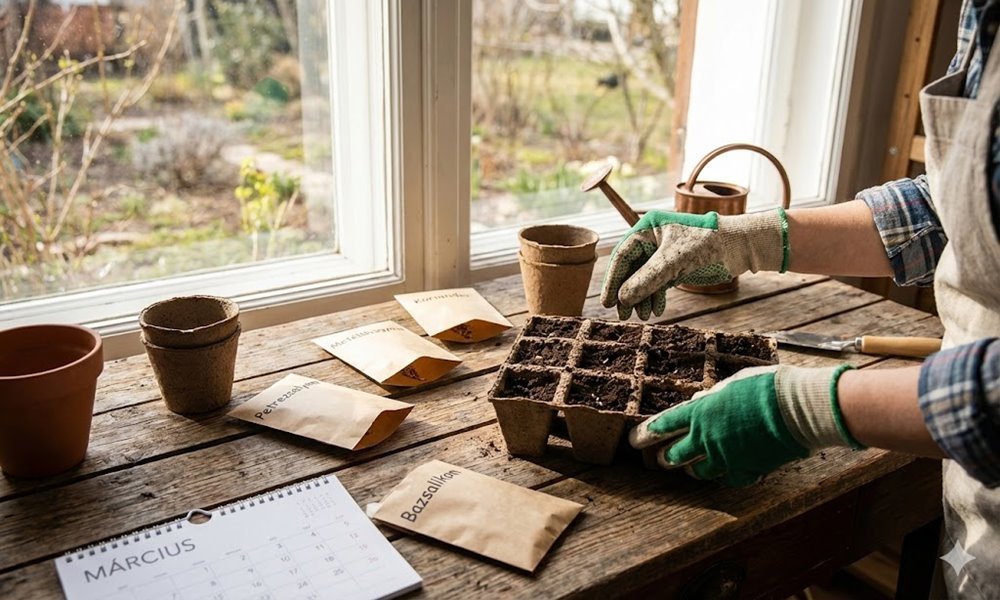

Every year, early spring brings the same enthusiasm: seed packets appear, and suddenly everything seems ready to be sown at once. However, herbs respond differently to an early start. Some benefit from cool-season sowing, while others struggle if pushed too soon. Successful cultivation depends on realistic timing and an understanding of each species’ requirements.
Parsley – Patience Required (Petroselinum crispum)
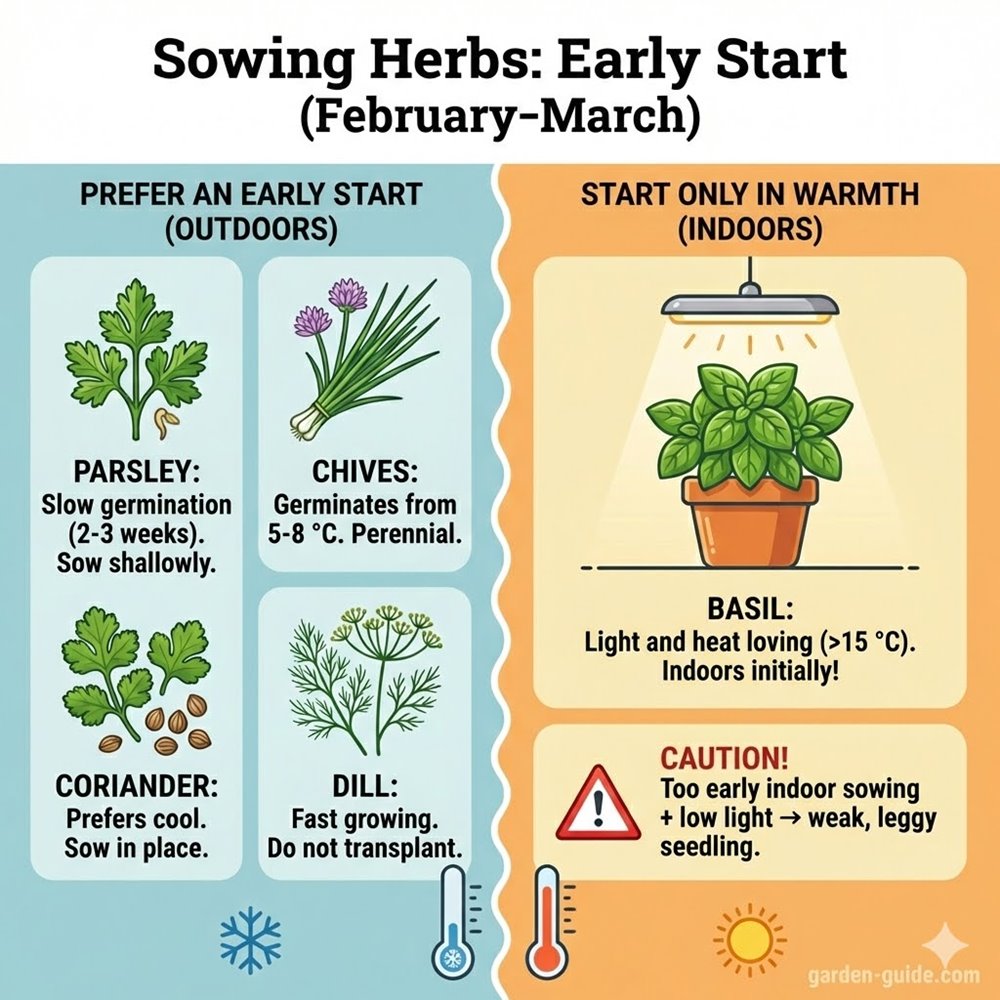
Parsley is one of the safest choices for late February or early March sowing. Its seeds germinate slowly, often requiring two to three weeks, which justifies early sowing. It can be sown outdoors as soon as the soil is workable, as it tolerates cool soil conditions. Maintain consistent moisture during germination and avoid sowing too deeply; 1–1.5 cm is sufficient.
Chives – Hardy and Reliable (Allium schoenoprasum)
Chives tolerate early sowing well and begin germinating at soil temperatures as low as 5–8 °C. They can be safely sown outdoors in March and, as a perennial herb, provide long-term structure in the herb bed. They prefer loose, well-drained soil and steady moisture during establishment.
Coriander – Fast but Sensitive to Heat (Coriandrum sativum)
Coriander is a classic cool-season herb. In warm conditions, it bolts quickly, reducing leaf production. March sowing outdoors is ideal, and successive sowings every two to three weeks extend the harvest. As it dislikes transplanting, direct sowing in its final position is recommended.
Dill – A Traditional Early Sowing Herb (Anethum graveolens)
Dill is another cool-season herb that germinates reliably in March. It grows quickly and requires no special soil, though poorly drained areas should be avoided. Because of its taproot, dill does not transplant well and should be sown directly where it will grow.
Basil – Start Indoors Only (Ocimum basilicum)
Basil belongs to a different category. As a warmth-loving herb, it slows below 15 °C and may suffer damage under 10 °C. In February–March, it should be started indoors in bright conditions or under grow lights. Sowing too early in low light results in weak, elongated seedlings. Mid-March is often a more reliable starting point for strong transplants ready for outdoor planting in May.
The Pitfalls of Sowing Too Early
The most common mistake is underestimating light conditions. February sunlight is still limited, and indoor seedlings may become leggy. Overcrowding, overwatering, and poorly aerated growing media further increase the risk of failure.
With herbs, earliness is not a competition. Success depends on aligning sowing time with each plant’s natural preferences.