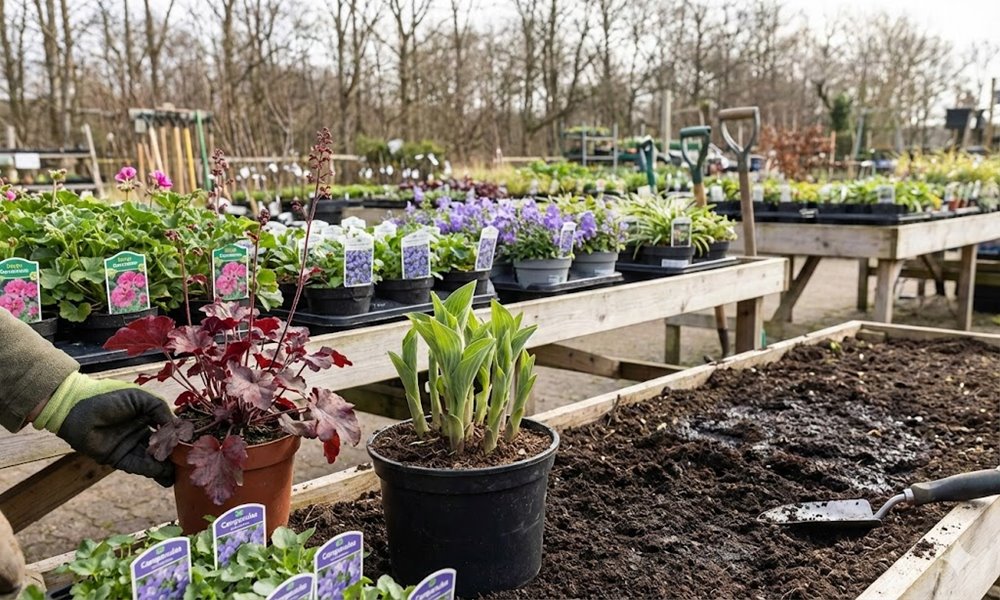

By March, garden centers begin to display the first substantial perennials of the season. These are not flashy annuals or short-lived decorations but long-term structural plants capable of defining a garden for many years. Early spring offers an excellent window for planting, as the soil is workable and plants are not yet in full foliage, reducing transplant stress.
Choosing perennials at this stage is also a strategic design decision. With borders still open and clearly structured, it is easier to consider height layers, color transitions, and which plants will serve as focal points versus background fillers.
Hosta – A Reliable Background Plant (Hosta)
Hostas are among the most dependable perennials for semi-shaded or shaded gardens. Their foliage often surpasses their summer flowers in ornamental value. Leaves may be heart-shaped, elongated, heavily textured, and range from blue-green to chartreuse or variegated forms.
In March, visible growth is modest, yet root systems establish quickly in suitable soil. Plant them in humus-rich, well-draining soil and avoid intense sun exposure, particularly for large-leaved cultivars prone to scorching. Consistent watering during the first season supports proper establishment.
Coral Bells – Season-Long Foliage Interest (Heuchera)
Coral bells are prized for their foliage colors, which may include burgundy, bronze, lime green, amber, or silver tones. Their delicate flower stems are secondary to the strong visual structure provided by the leaves.
They perform best in semi-shade and moderately moist, well-drained soil. When planting in March, ensure the crown remains at soil level; burying it too deeply may cause rot. Good drainage is essential for long-term success.
Cranesbill – Naturalistic Structure and Groundcover (Geranium)
Hardy geraniums are versatile perennials suitable for naturalistic plantings. Both low-growing groundcover types and taller varieties are available, with flower colors ranging from white and pink to deep violet.
They thrive in sun to partial shade and suppress weeds effectively due to their dense foliage. When planted in March, they establish rapidly and can flower impressively even in their first year. Light pruning after the initial bloom may encourage a second flowering.
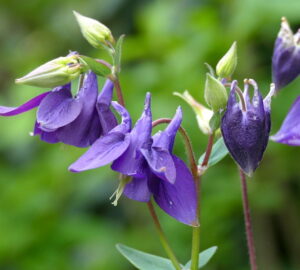
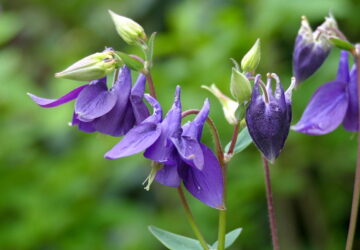
Bellflower – A Classic Summer Accent (Campanula)
Bellflowers are traditional components of borders, rock gardens, and cottage-style plantings. Their blue, violet, or white blooms appear from early summer onward, and some varieties offer extended flowering periods.
They prefer sunny or lightly shaded positions and well-draining soil. Moderate watering after planting is sufficient. Vigorous types may spread over time, which should be considered during planning.
Why Make the Decision Now?
Planting perennials in March allows them to develop stable root systems before summer heat arrives. Spring rainfall supports establishment, leading to more balanced and resilient growth.
Perennials are not about instant spectacle but about durable structure. Thoughtful selection and placement now will shape the garden’s character for years, reducing maintenance while increasing visual coherence.