
By late January, winter no longer tests endurance — it tests understanding.
January 26 is a day about belonging: to land, to community, to a shared order that holds even when growth is paused. Across calendars and continents, this date has long carried meanings tied not to action, but to foundations — the quiet structures that allow life to persist and return
The Garden at the Edge of Continuity
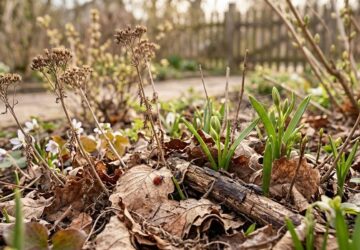
In the natural year, January 26 arrives when light is steadily gaining, yet the garden remains restrained. This is the season of limits clearly drawn: frozen soil defines where roots cannot go, bare branches reveal the true architecture of trees, and wind shows where shelter matters most.
Boundaries are not obstacles now — they are protections.
This is the phase when the garden teaches that survival depends not on expansion, but on knowing one’s place.
Titus and Timothy: Stewardship After the Turning
In the Christian calendar, January 26 follows immediately after the Conversion of Saint Paul. This sequence is not accidental. After the dramatic inner turning remembered on January 25, the calendar turns to those who carried Paul’s legacy forward in practice rather than proclamation.
Saint Titus and Saint Timothy were Paul’s closest companions and collaborators. Their task was not to spark change, but to stabilize it: to organize young communities, preserve teaching, and give durable form to what had just been reoriented.
This makes their presence on January 26 especially resonant with the garden’s rhythm. Late January is no longer about deciding direction — that turning has already happened. Now comes stewardship. Care. The patient work of making sure that what has shifted inwardly can endure outwardly.
Like a garden after planning but before planting, this is a time for structure rather than invention. Growth will come later. First, the framework must hold.
Alongside Titus and Timothy, the day also remembers figures such as Saint Alberic of Cîteaux, Saint Paula of Rome, and Blessed Gabriele Allegra — all associated with discipline, devotion, and the careful preservation of shared knowledge across generations. Together, they shape a calendar day defined not by beginnings, but by continuity.
Nations, Land, and Seasonal Identity
January 26 is also marked globally by national observances that revolve around identity and land.
Australia Day reflects a relationship with place on a continental scale — a reminder that land itself shapes culture, rhythm, and responsibility. Though it falls in the Southern Hemisphere’s summer, its symbolic weight resonates universally: a moment to reflect on belonging, stewardship, and contested histories tied to soil and settlement.
In India, Republic Day commemorates the formal shaping of civic order — a collective decision about how a society chooses to organize itself. Like a winter garden plan, it represents structure established before flourishing can occur.
In the Dominican Republic, Juan Pablo Duarte Day honors the foundation of national independence, reinforcing the idea that identity is rooted, built slowly, and defended over time.
Across hemispheres and cultures, January 26 returns to the same theme: land and people are bound together by frameworks that endure beyond seasons.
What the Garden Asks on January 26
Practically, this day invites a different kind of observation.
Noticing:
– Where protection matters most in cold winds. – Which parts of the garden remain stable under stress. – How paths, fences, and hedges define movement even in dormancy.
These are not temporary details. They are the bones of the garden — visible now precisely because nothing else distracts from them.
January 26 in the Arc of Winter
If earlier January days asked for alignment and inner turning, January 26 asks for commitment to form.
The season is not yet ready to grow. But it is ready to endure.
And the garden, stripped to its essentials, reminds us that what lasts is not what expands fastest — but what is rooted deeply enough to remain.