
January 18 has been watched closely for centuries — and in Hungarian folk tradition it carries a very specific name: Piroska napja. In older rural calendars, this was a day when people believed winter would “show its hand,” offering a clue about the weeks ahead.
For gardeners, farmers, and anyone living close to the land, this wasn’t treated as random superstition. It was experience compressed into a memorable rule — the kind you can repeat by the stove, and still remember in the field.
Europe (Carpathian Basin): Piroska Day and the Forty-Day Frost
In Hungarian folk weather lore, January 18 is tied to a blunt little rhyme that has survived in several regions and communities:
If it freezes on Piroska Day, the frost won’t let go for forty days.
The idea wasn’t that the exact number would always be literal, but that a hard, settled cold around this date often meant a stubborn winter pattern: deep nights, crisp mornings, and a long stretch before true thawing.
Piroska Day also carried a practical side. In some places people treated it as a day of restraint — a moment to respect the season’s grip. Traditions mention households avoiding heavy work or even not harnessing working animals on this day, as a sign that winter deserved to be endured rather than challenged.
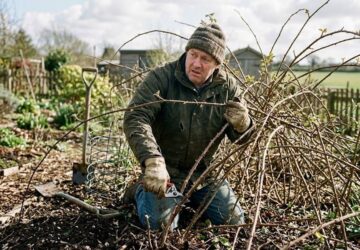
For a garden mindset, the message is clear: mid-winter isn’t the time to force change. It’s the time to protect what’s already there — roots, crowns, soil life — and let the season finish its work.
The Role of Snow as a Shield
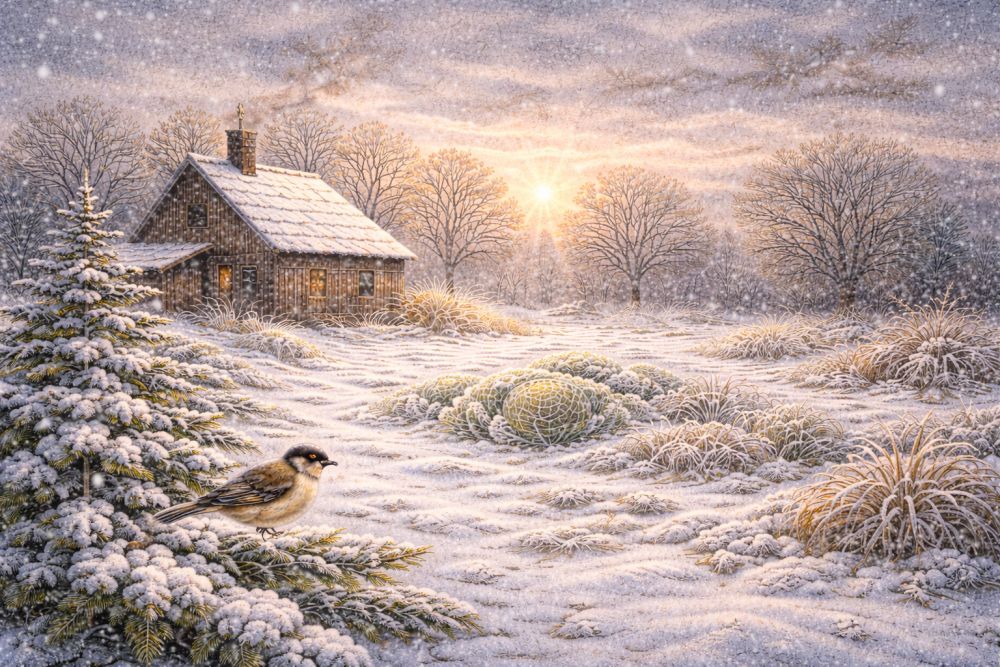
Across northern climates, snow on January 18 was considered a blessing. It protected overwintering plants, preserved soil moisture, and buffered roots against temperature extremes.
Modern science confirms this old wisdom. Snow acts as insulation, keeping soil temperatures more stable and reducing freeze–thaw stress that can damage roots and crowns.
What tradition framed as luck, ecology now recognizes as function.
Asia: The Deepest Quiet Before Movement
In East Asian seasonal thinking, January 18 often aligns with the final phase of winter’s inward dominance. Energy remains hidden, but the cycle has already begun to turn.
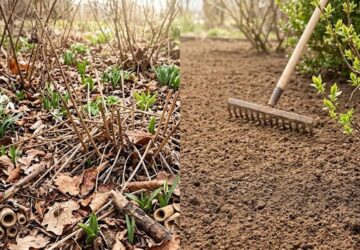
Roots stay active beneath cold soil, and internal plant processes prepare for future growth. Surface stillness masks underground motion — a theme echoed across cultures.
North America: Signs Written in Ice and Bark
Indigenous communities across North America also observed mid-January closely. Ice thickness, bark condition, and evergreen resilience were read as indicators of seasonal balance.
Plants that endured winter openly — pines, spruces, and hardy shrubs — were seen as guides, showing how life persists without growth.
January 18 reinforced a lesson gardeners still relearn each year: endurance is not inactivity.
The Southern Hemisphere: A Mirror Season
While the Northern Hemisphere watched winter’s signs, the Southern Hemisphere experienced the height of growth. In parts of South America and Oceania, January brought abundance — and the need for restraint.
Here, the lesson inverted. Too much growth could exhaust soil and plants alike. Pruning, thinning, and timing became essential skills.
The same date revealed opposite challenges, united by the same principle: balance.
Why January 18 Still Matters
January 18 reminds us that the garden is never silent without reason. Whether covered in snow or bursting with growth, plants respond precisely to their conditions.
This day was never about certainty. It was about attention.
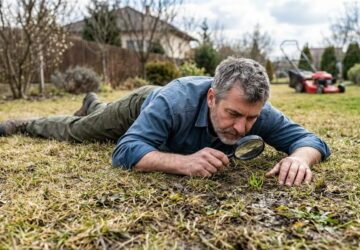
By watching closely — weather, soil, plants, and patterns — gardeners learned to work with the year ahead rather than against it.
That patient reading of nature’s signals is what secures January 18 its place in The Garden Almanac.