
Early April is full of motion, but not every spring day asks for boldness. Some days are better suited to quieter kinds of progress: clearing, resetting, checking, arranging, and making sense of what the season is becoming. April 5 feels like one of those days. It is less about dramatic action and more about creating the conditions in which good growth can continue with less confusion.
This makes it a particularly thoughtful almanac date. April 5 appears on English-language calendar summaries alongside the Cold Food Festival, a traditional East Asian observance tied to the 105th to 107th day after the winter solstice, and closely related to Qingming, the Clear and Bright festival of early April. These observances are associated with remembrance, grave-tending, seasonal clearing, and a more restrained mode of presence. Rather than rushing toward expansion, the mood is one of careful ordering. In a garden, that translates beautifully.
Clearing Is Not the Same as Emptying
One of the most useful truths for gardeners to remember at this stage is that tidying is not the same as stripping a space bare. Good spring ordering does not mean removing every trace of winter or eliminating every rough edge. It means restoring legibility.
When bed edges are clarified, emerging growth becomes easier to read. When paths are swept and reset, movement through the garden becomes calmer. When tools are gathered, ties checked, labels sorted, and supports reviewed, the season immediately feels more manageable. A garden does not need to be immaculate to feel coherent. It needs to make sense.
This difference matters, especially in early spring, when over-cleaning can remove shelter that beneficial creatures still need. There is wisdom in distinguishing between neglect, habitat, and clutter. Not everything left behind is a problem. Not everything that looks tidy is truly healthy.
The Work of Quiet Days
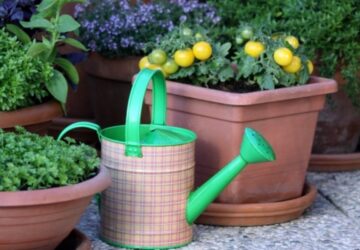
Some of the most important garden work happens on days that do not look impressive from the outside. A small pile of sorted pots. A repaired edging board. A compost area brought back into balance. Stakes gathered before they are urgently needed. A watering can moved where it belongs. Notes made about where the ground stays wet longest. These are modest acts, but they shape the season more than their appearance suggests.
Quiet days also help restore the gardener’s own clarity. The more organized a garden becomes in early April, the easier it is to notice what truly needs intervention and what can simply be watched. Good order creates better attention.
This is why April 5 can be such a useful threshold in the garden year. It invites a person to stop treating every spring task as equally urgent. Some things need doing now. Others need observing. Others need postponing. A little gentle ordering helps separate these categories.
What This Day Is Good For
April 5 is well suited to patient, foundational tasks.
- Walk paths and bed edges and refine them lightly.
- Review tools, supports, labels, covers, and ties.
- Check compost and storage areas for balance and order.
- Notice where the soil is ready and where it still needs time.
- Pay attention to how the garden is structured, not only to what is blooming.
This kind of work may not produce the thrill of sowing or planting, but it often makes all later work smoother and more intelligent.
Order as a Living Balance
There is a final lesson in a day like this. Garden order should remain alive. It should not become a sterile ideal. A healthy spring garden still contains soft edges, sheltering spaces, last year’s residues, and corners where life is only beginning to stir. The point is not perfection. The point is relationship: between care and restraint, access and habitat, readiness and patience.
That balance may be one of the most understated forms of gardening wisdom. To know what to straighten and what to leave. What to clear and what to protect. What to finish and what to let develop in its own time. April 5 speaks quietly, but it speaks directly to that skill.
In the Garden Almanac, this is a day for the kinds of tasks that rarely earn celebration and yet make the rest of spring feel steadier. A garden that has been gently ordered breathes differently. So does the person tending it.